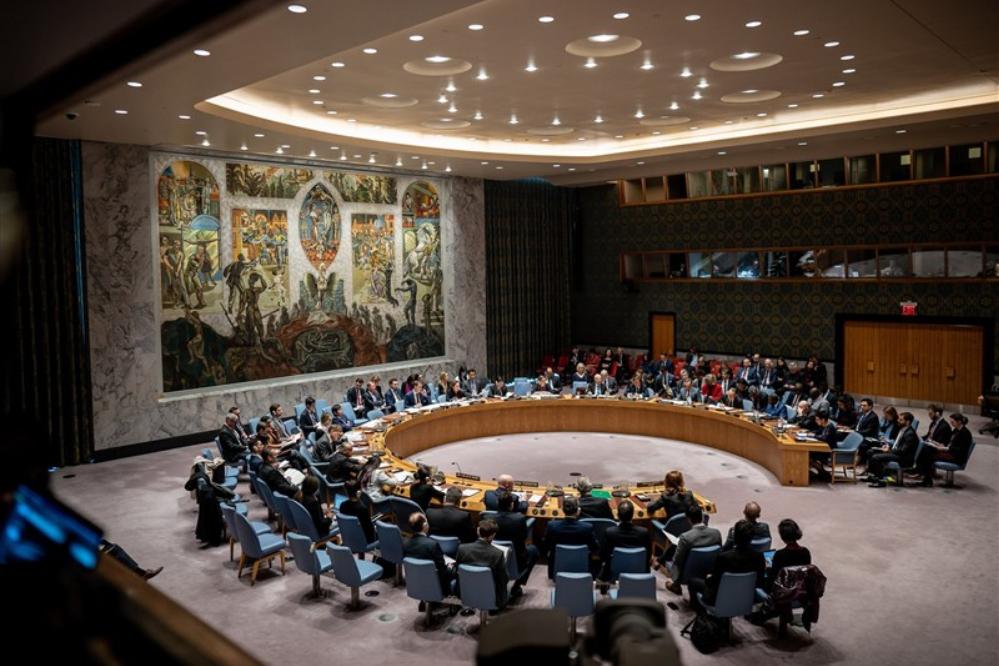
Russia and China Veto Bahrain Draft To Protect Shipping In Strait Of Hormuz
Key Takeaways
- Russia and China veto Bahrain-backed UN resolution to protect Hormuz shipping.
- Draft urged Iran to halt attacks and stop mining in the Strait of Hormuz.
- Veto reflects difficulty of US-led Gulf-backed action at the UN Security Council.
UN vetoes over Hormuz
The UN Security Council failed to adopt a draft presented by Bahrain to protect commercial shipping in the Strait of Hormuz after Russia and China used their veto, leaving the draft with 11 votes in favor and two votes against while Pakistan and Colombia abstained.
“US Secretary of State Marco Rubio has urged the United Nations to pressure Iran “to stop blowing up ships, remove the mines and allow humanitarian relief” in the Strait of Hormuz, he told reporters on Tuesday”
The vote came as Bahrain’s Foreign Minister Abd al-Latif al-Zayani said the Council had not taken decisive action to confront Iran's unlawful threats to maritime navigation and warned that failure would undermine the Council's credibility and invite further disruption in one of the world's most important trade routes.

In the same aftermath, Mike Waltz, the U.S. permanent representative to the UN, criticized Russia and China for using the veto against the draft and accused Iran of escalating the conflict by planting mines in the strait and launching missile and drone attacks on civilian infrastructure in Gulf states.
The Russian envoy Vasily Nebenzya said Russia voted against the draft because it unfairly assigns responsibility for the escalation to Iran and he warned it could set a dangerous precedent in international law.
The dispute over the Hormuz draft also fed into broader diplomatic maneuvering, with the U.S. urging countries to support its own UN resolution demanding Iran halt attacks and mining of the Strait of Hormuz while diplomats said China and Russia were likely to veto it.
Competing narratives and quotes
U.S. UN envoy Mike Waltz told reporters that any countries that “seek to throw it out, are setting a very, very dangerous precedent,” framing the vote as a test of whether the international community can rally behind a “simple proposition.”
Iran’s U.N. Ambassador Amir Saeid Iravani rejected the resolution as “deeply flawed, one-sided, and politically motivated,” saying the United States lacked the legal, political, or moral standing to portray itself as a defender of freedom of navigation or maritime security.
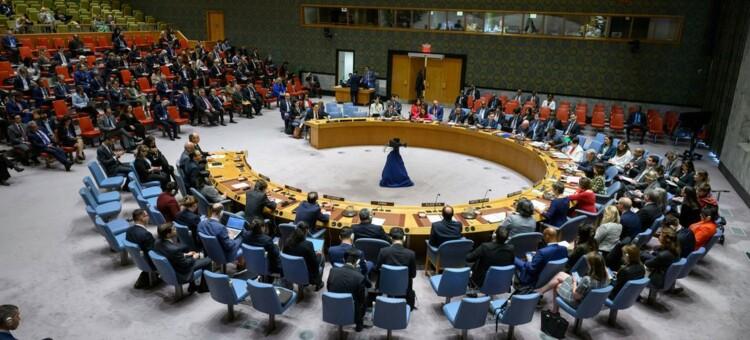
In parallel, Bahrain’s UN envoy Jamal Fares Alrowaiei said Bahrain looked forward “to working constructively with all council members in the days ahead to finalize this text,” while diplomats said the draft ran into strong Chinese and Russian objections in closed session.
Russia’s position, as described by the Russian mission to the United Nations, was that it “firmly rejects” unilateral and confrontational drafts that could trigger “a new wave of tensions in the Middle East with unpredictable consequences.”
The Russian delegate also argued that ensuring maritime security in the Persian Gulf is closely linked to ending the ongoing fighting and halting all military operations, while Iran’s Amir Saeed Iravani said the only durable solution is a permanent end to the war and the lifting of the naval blockade.
What’s at stake next
The failure of the Bahrain-backed draft raised the level of frustration with multilateral diplomacy, with Bahraini officials warning that disruption in the Strait of Hormuz could have “dire consequences for oil markets, food security, and international trade.”
“May 7 (Reuters) - The U”
After the veto, the U.S. position was that it would continue to defend its interests and those of its partners and that it reserves the right to collective self-defense, while warning that negotiations would not succeed if Iran continued what Waltz called a pattern of escalation.
Russia, for its part, said it hoped for a quick vote on its own alternative draft in cooperation with China, and it argued that its approach would heighten rather than reduce the risk of escalation if the submitted text were adopted.
The diplomatic standoff also intersected with the U.S. push for a revised draft resolution focused on the Strait of Hormuz, with the Palestine Chronicle Staff reporting that the amended text shifts emphasis toward maritime mining concerns, shipping security, and transit fees while reducing language that previously appeared to authorize direct military force.
In the same reporting stream, Iran’s Abbas Araqchi condemned the proposed resolution as a “tool for legitimizing illegal actions,” warning against attempts to invoke Chapter VII authorities under the pretext of maritime security.
More on Russia

U.S. Authorizes Iranian Oil Sales Through August After Talks in Switzerland
18 sources compared
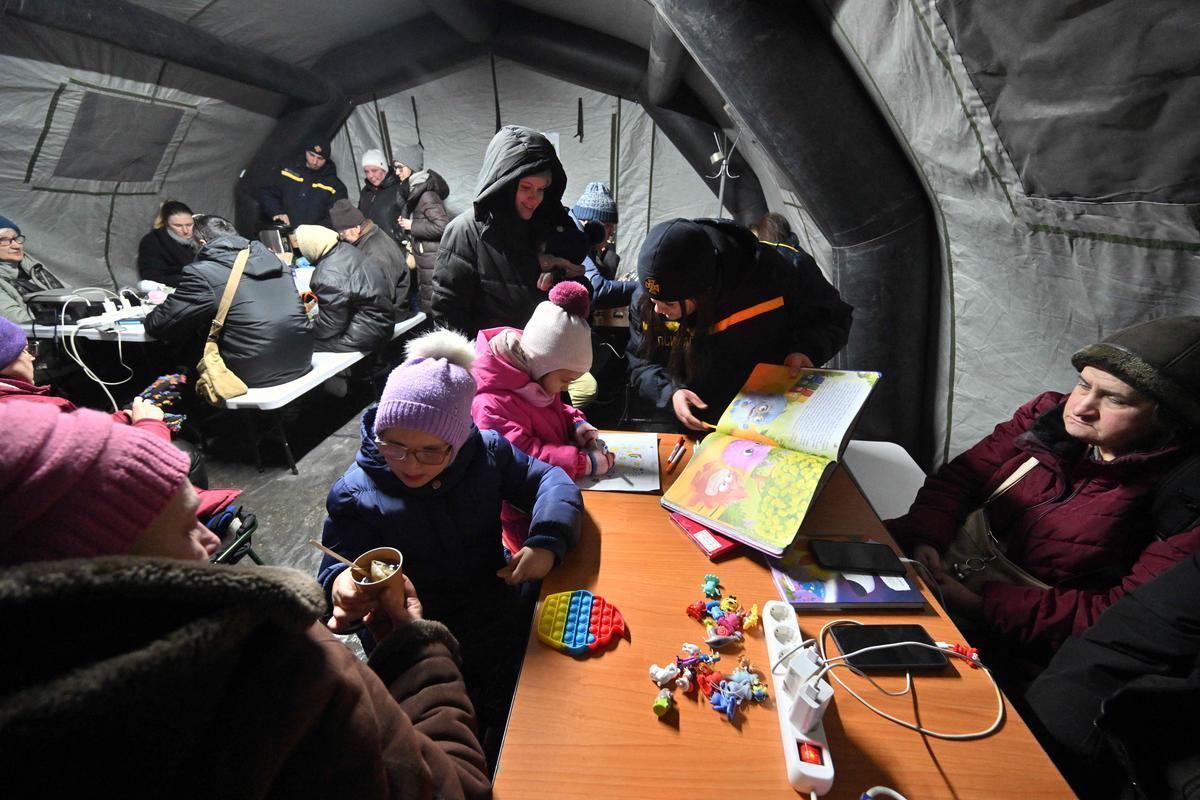
Russia Lancia Attacchi Massicci Su Kiev E Kharkiv, Colpiti Edifici Residenziali E Infrastrutture Energetiche
10 sources compared

Gunman Kills Russian Kremlin Critic Semyon Skrepetsky in Biała Podlaska
10 sources compared
Russian Admiral Grigorovich Fired Warning Shots At UK-Registered Yacht In English Channel
34 sources compared