
Russia · 02 May, 2026 · 8 min read
Russia’s Africa Corps Withdraws From Kidal After Attacks Kill Mali Defence Minister Sadio Camara
Russia's Africa Corps withdrew from Kidal after coordinated attacks killed Mali's Defense Minister Sadio Camara. Al-Qaeda-affiliated jihadists and Tuareg separatists coordinated attacks against Malian bases, triggering Africa Corps withdrawal.
Whether Russia’s support succeeded in keeping the presidential palace/major positions secure.
10 of 11 outlets skipped it: a senior Malian official told RFI that Russian forces had been warned three days in advance but took no action..
27outlets compared
Same story, two versions
tap a side to read it in full
Al Jazeera
““Assimi Goita on Tuesday said the situation was “under control”, with Russian security forces providing air support to prevent rebels from capturing key positions, including the presidential palace in capital Bamako.””Read the original ↗
Modern Ghana
““For a partnership built on the promise of restoring security, the optics—and implications—are difficult to ignore.””Read the original ↗
One account emphasizes operational containment and protection of sovereign sites, while another uses the same events to argue that the partnership failed to deliver security—shaping assessments of Russia’s credibility.
Russia’s Mali test
Russia’s role in Mali’s security and the wider Sahel region is being reassessed after a wave of coordinated attacks struck multiple Malian cities and killed Mali’s Defence Minister Sadio Camara, while Russian-linked forces withdrew from Kidal.
“Russian security forces providing air support”
In an account of the immediate aftermath, Al Jazeera reported that days after armed groups launched large-scale attacks on Malian Armed Forces’ bases, military ruler Assimi Goita said the situation was “under control,” adding that “Russian security forces providing air support” helped prevent rebels from capturing key positions, including the presidential palace in capital Bamako.A
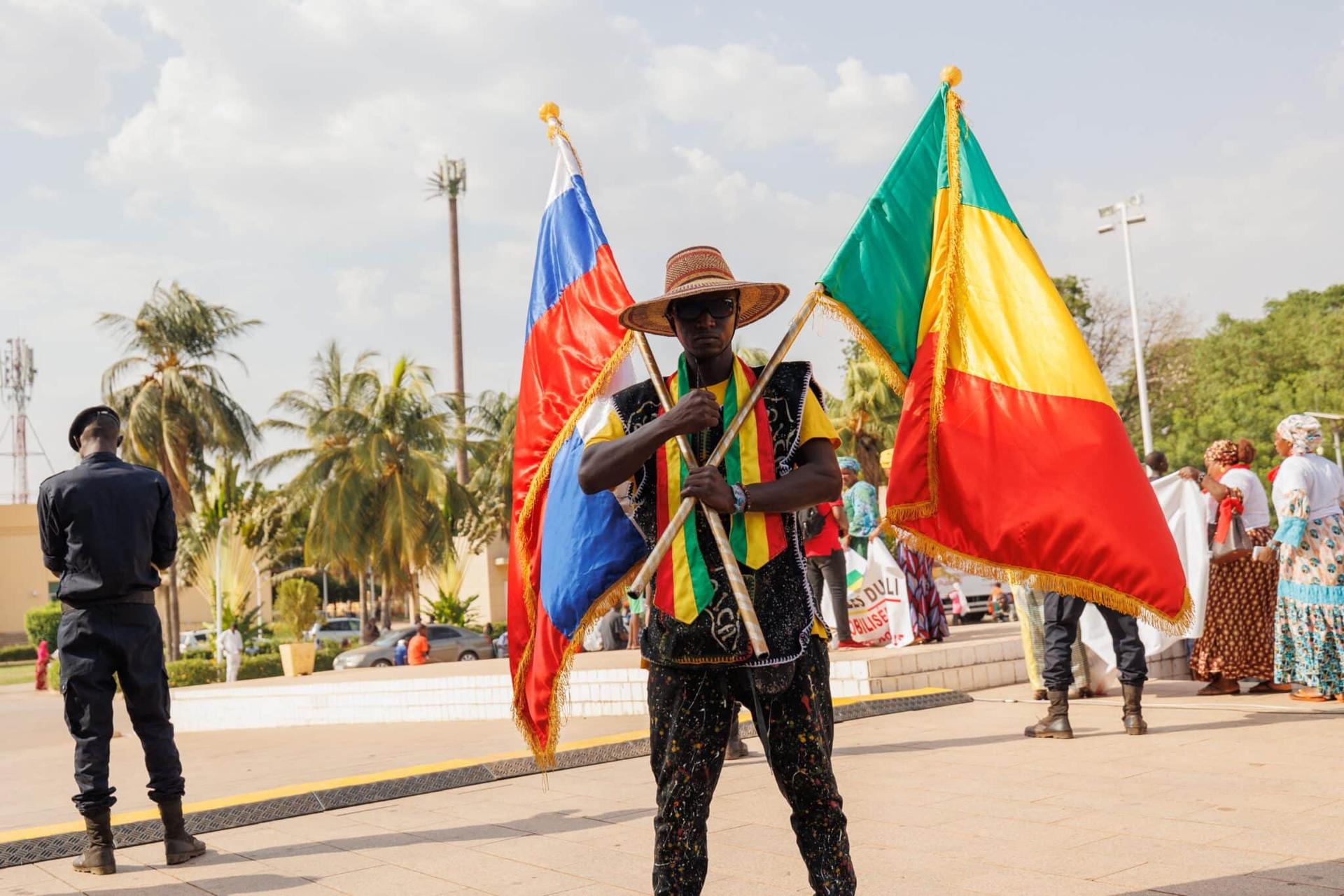
Al Jazeera also described how the security situation remained volatile as the government struggled to take back control of towns and cities from Tuareg and al-Qaeda-linked fighters, who had pledged to launch a total siege of Mali’s capital.A
The same report said the attacks were conducted jointly by the separatist, Tuareg-led Azawad Liberation Front (FLA) and the al-Qaeda-affiliated Jama’at Nusrat al Islam wal Muslimin (JNIM), and it listed cities seized or targeted including Kidal, Gao, Sevare and Kati.
It further stated that “Some 2,000 Russian fighters have been present in the country since 2021,” following the exit of thousands of French and United Nations troops, and that the Russians were originally deployed under Wagner before being renamed Africa Corps and placed under the Russian Ministry of Defence.
Against that backdrop, Al Jazeera said analysts were questioning the effectiveness of Bamako’s military partnership with Russia after reports emerged that Russian forces withdrew from Kidal, and it added that Africa Corps confirmed its forces had withdrawn from Kidal while saying the decision was made jointly with the Malian government.A
In parallel, StratNews Global framed the episode as a blow to Russia’s image as a security guarantor, saying the Russian-backed military junta faced pressure after “Russian-backed forces were also forced to withdraw from Kidal,” and it quoted Irina Filatova warning that failure to regain control quickly could damage Moscow’s credibility.
What led to the reversals
The attacks that triggered the reassessment of Russia’s role were described as a synchronized offensive across strategic locations, occurring in the context of Mali’s long-running armed violence and the presence of Russian-linked forces.
Al Jazeera said Mali has been experiencing armed violence since 2012, and it described Saturday’s massive coordinated offensive in multiple cities, including Bamako, as stunning the region.A
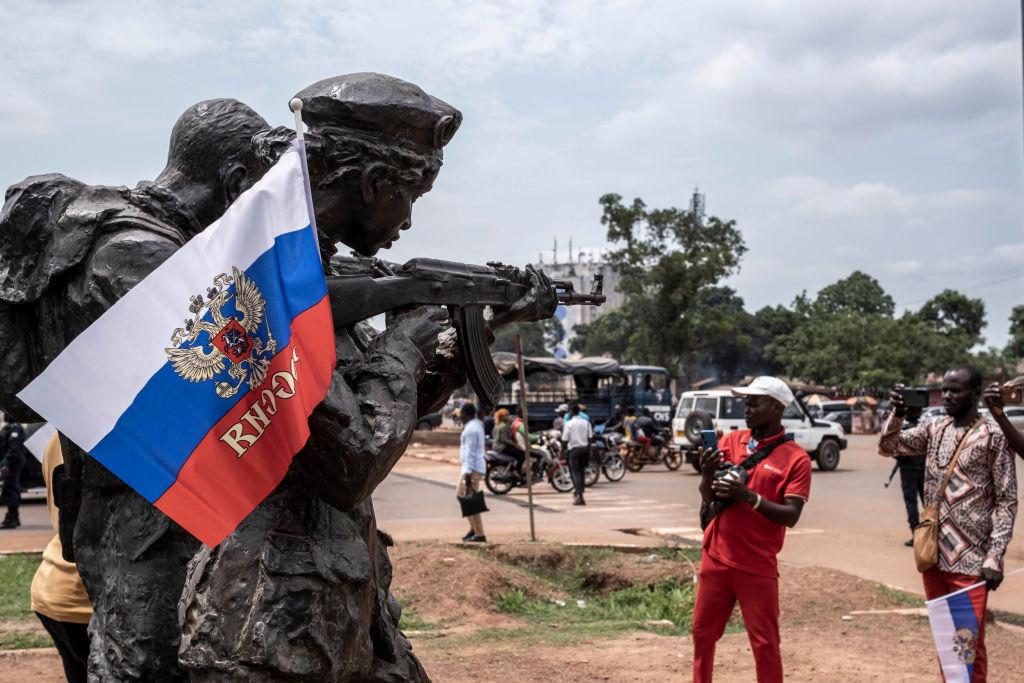
It also reported that Mali’s Defence Minister Sadio Camara was killed and that several cities, including the northern city of Kidal, were seized by the fighters, while the Malian military government said it killed more than 200 attackers.
Modern Ghana similarly described the coordinated jihadist assault on Mali as a turning point, stating that fighters linked to JNIM and the Azawad Liberation Front (FLA) struck Bamako, Kati, Gao, Kidal, Mopti, Bourem, and Sévaré simultaneously.M
Modern Ghana added that “A Russian Mi-8 helicopter was neutralised near Wabaria,” and it said checkpoints north of the capital were captured and armoured vehicles were destroyed.M
In the same Modern Ghana account, Mali’s Defence Minister, “General Sadio Camara,” was killed, while other senior military figures were wounded, including “the Chief of Defence Intelligence,” and it argued that the scale and precision pointed to “a serious intelligence collapse among both the Malian Armed Forces and their Russian-backed partners, the Africa Corps.”M
StratNews Global offered a different framing of the same sequence, saying the escalation saw the killing of Mali’s Russia-trained defence minister, Sadio Camara, in a suicide bombing, and it described Russia’s response as deploying helicopter gunships and strategic bombers to contain advancing insurgents.
Competing claims and voices
The episode produced competing narratives about what Russia did, what it did not do, and what the withdrawal from Kidal meant, with multiple named actors offering direct statements.
“In accordance with a joint decision by the leadership of the Republic of Mali, units of the African Corps that were stationed and engaged in combat in the town of Kidal have withdrawn from the area alongside Malian Army personnel.”
Al Jazeera reported that Africa Corps, in a Telegram statement on Monday, said its decision to withdraw was taken with Bamako, quoting: “In accordance with a joint decision by the leadership of the Republic of Mali, units of the African Corps that were stationed and engaged in combat in the town of Kidal have withdrawn from the area alongside Malian Army personnel.”A
The same Al Jazeera account said Africa Corps claimed it provided air support to Malian troops and helped hamper attacks on the presidential palace in Bamako, while it also said the Russian Defence Ministry claimed “some 12,000 fighters had attacked on Saturday.”A
Al Jazeera also included a counterpoint from a French publication, RFI, reporting a senior Malian official as saying that the regional governor in Kidal had warned the Russian mercenaries three days ahead of the attack, but “they did nothing”.A
StratNews Global added another voice by quoting ACLED analyst Héni Nsaibia, who said the setbacks point to “the failure of Russian intervention,” and it also quoted Flore Berger warning that “What happens to the junta will directly shape what happens to the Africa Corps,” while noting the government was “extremely weakened.”
South China Morning Post similarly quoted Irina Filatova, saying “Mali is one of the centres of power for Russia in West Africa,” and it described how Assimi Goita survived while the offensive threatened to seize swathes of Mali’s vast desert north amid Russian warnings that insurgents were regrouping.
In the background of these disputes, Al Jazeera also described how Russian fighters were seen driving out of seized Kidal in trucks, “reportedly after negotiating their exit through the mediation of neighbouring Algeria,” and it said some Malian soldiers were disarmed and captured.A
How outlets frame Russia’s role
Different outlets used different lenses to interpret the same Mali events, producing sharply contrasting emphasis on Russia’s effectiveness, the meaning of Kidal, and the implications for Russia’s broader ambitions.
Al Jazeera focused on the immediate security picture and the question of whether Russia’s air support and partnership were effective, stating that Goita said the situation was “under control” while also reporting that analysts were questioning the effectiveness of Bamako’s military partnership with Russia after reports of withdrawal from Kidal.A

StratNews Global framed the episode as a credibility and strategic-interest problem, saying the reversals “dealt a blow to Russia’s image as a security guarantor in Africa,” and it warned that failure to regain control quickly could damage Moscow’s credibility, while also tying the involvement to “gold and lithium projects” and “plans for energy cooperation.”
South China Morning Post similarly emphasized Russia’s image, describing how the killing of Sadio Camara, the withdrawal from Kidal, and Moscow’s use of helicopter gunships and strategic bombers were “a serious threat to Russian strategic and economic interests,” and it added that the events were being closely watched abroad because Russia’s forces were tied down fighting in Ukraine.
In contrast, Afrik’s French-language analysis argued that the fall of Kidal and the withdrawal of Africa Corps fissured “le récit d’une Russie protectrice,” and it described how “Les attaques coordonnées des 25 et 26 avril 2026” tested the narrative of a successful Russian model in Africa.
Afrik also reported that “Le Monde rapporte qu’au moins 400 paramilitaires de l’Africa Corps ont été évacués de Kidal sous escorte,” while Malians remained prisoners, using that detail to underline the political symbolism of the setback.
Modern Ghana, meanwhile, framed the episode as a security lesson for Ghana and the wider region, describing a “serious intelligence collapse” and arguing that the scale and coordination revealed gaps in intelligence, preparedness, and response within the Malian Armed Forces and their external partners.M
Stakes for Russia and Mali
The sources portray the stakes of the Mali crisis as both immediate—whether the Malian junta can stabilize the situation—and longer-term—whether Russia can sustain influence and security commitments across Africa.
“estimated to have around 2,000 troops in Mali”
StratNews Global said Russia’s Africa Corps is “estimated to have around 2,000 troops in Mali” and that its future depends heavily on whether the Malian junta can stabilize the situation, quoting Flore Berger: “What happens to the junta will directly shape what happens to the Africa Corps,” and noting the government was “extremely weakened.”

South China Morning Post added that Assimi Goita survived but faces the prospect of armed groups trying to seize swathes of Mali’s vast desert north amid Russian warnings that insurgents are regrouping, and it described the events as a serious threat to Russian interests being watched abroad.
Al Jazeera described how the security situation remained volatile as Tuareg and al-Qaeda-linked fighters pledged to launch a total siege of Mali’s capital, and it said the government had struggled to take back control of towns and cities from those fighters.A
Modern Ghana argued that the coordinated attacks that swept across Mali on 25 April 2026 marked a turning point for the wider West African region and warned that northern Ghana lies along the evolving corridor, with porous borders facilitating infiltration by small, mobile cells.M
It also warned that conflict in the Sahel fuels the proliferation of illicit arms and transnational criminal networks, and it described how disrupted trade routes and displacement ripple southward.
In parallel, Al Jazeera reported that Africa Corps claimed it provided air support and helped hamper attacks on the presidential palace in Bamako, while the Russian Defence Ministry said “some 12,000 fighters had attacked on Saturday,” suggesting that Russia is still asserting a role in preventing the most sensitive targets from falling.A