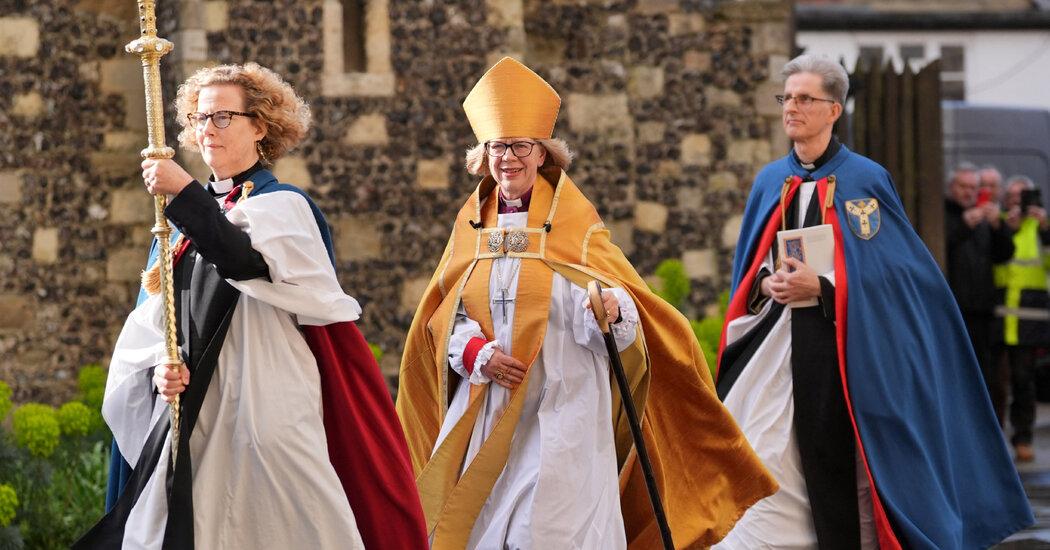
Sarah Mullally installed as first female Archbishop of Canterbury
Key Takeaways
- Mullally was installed at Canterbury Cathedral as leader of the Church of England.
- She is the Church of England's first female archbishop.
- Her leadership spans about 100 million Anglicans worldwide.
Historic Installation
Sarah Mullally's installation as the 106th Archbishop of Canterbury on Wednesday marked a groundbreaking moment in the 1,400-year history of the Church of England, shattering centuries of male leadership in the highest position of Anglicanism.
“Sarah Mullally will be installed Wednesday as the first female Archbishop of Canterbury, the leader of the Church of England and approximately 100 million Anglicans worldwide”
The ceremony at Canterbury Cathedral, rich with tradition and attended by British Prime Minister and the Prince and Princess of Wales, featured her name being inscribed on stone slabs alongside 105 previous male archbishops dating back to St. Augustine in A.D. 597.

The significance of this milestone was acknowledged by church leaders, with the Very Rev. Dr. David Monteith, dean of Canterbury Cathedral, noting that 'Installing Sarah as our first female archbishop would have almost been unimaginable even 50 years ago.'
While Mullally had legally taken up the role in January, the installation ceremony symbolized the official start of her ministry, where she delivered her inaugural sermon to around 2,000 people gathered at the historic cathedral.
Nurse to Archbishop
Mullally's journey to becoming Archbishop of Canterbury represents a remarkable transformation from a former cancer nurse to one of the most prominent religious leaders in the world.
At 63 years old, she took an unconventional path to the priesthood, becoming a priest at age 40 after a career in nursing.
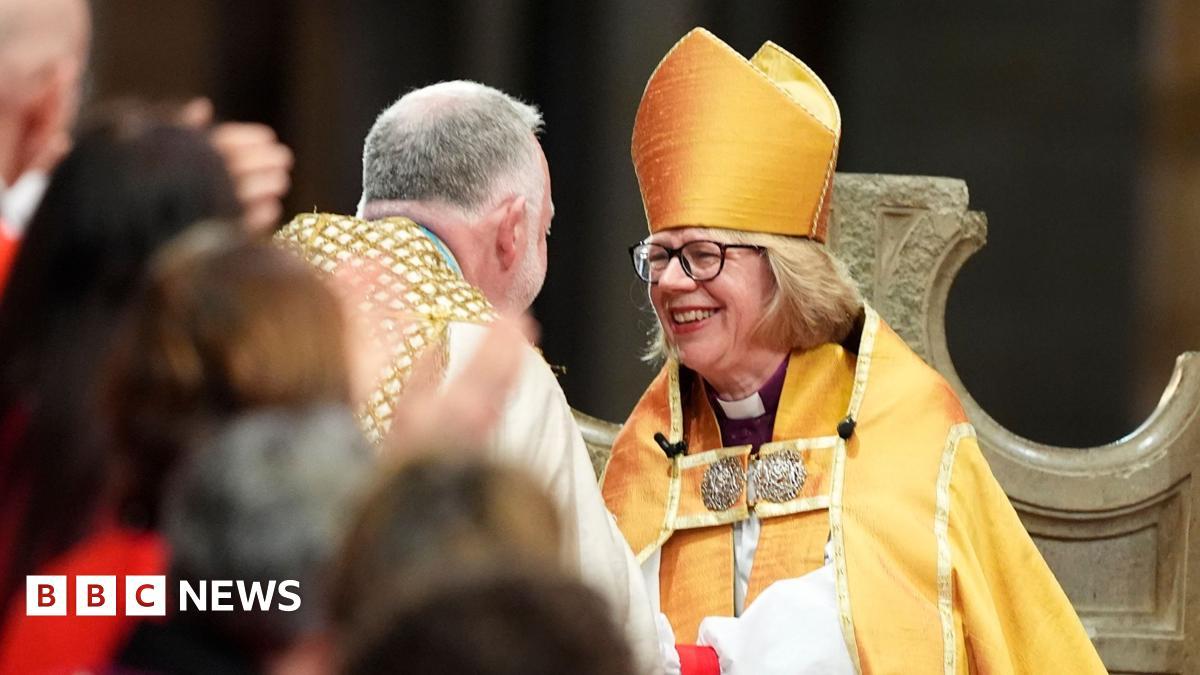
This background in healthcare brought a unique perspective to her ministry and leadership approach.
Her installation ceremony drew significant attention not only for its historical significance but also for the symbolism of her diverse professional background ascending to the highest position in Anglicanism.
The Associated Press highlighted that her appointment marked a 'cancer nurse turned archbishop' milestone, emphasizing how her previous career in healthcare informed her pastoral approach and understanding of human suffering.
Historical Context
Mullally's appointment occurs within the broader context of the Church of England's gradual acceptance of women in leadership roles, a process that began with the ordination of women as priests in 1994.
“When Sarah Mullally is installed as the 106th archbishop of Canterbury on Wednesday, it is her gender that will likely be the most remarked upon part of her ascent to “first among equals” among Anglican bishops”
Following this significant step, the Church's general synod agreed in 2006 that women should join the episcopate, a decision that was ratified two years later.
However, the journey to full equality has been challenging, with women clergy facing systemic barriers and cultural resistance.
The significance of Mullally's installation is amplified by the historical timeline of women's advancement in Anglican ministry - from priests to bishops to now the highest office in the communion.
The New York Times emphasized the ceremonial weight of this moment, noting that the installation was 'weighted with significance for many in the church' as it represented the culmination of decades of struggle for gender equality in religious leadership.
Leading Women Program
A crucial factor in Mullally's advancement through the church hierarchy was her participation in the Leading Women program, an Anglican organization that played a pivotal role in preparing women for leadership positions.
Founded in 2010 by June Osborne, Lucy Winkett, Keith Lamdin, and Jane Shaw, the program provided yearlong mentoring for women who had the potential to become bishops.
The founders recognized that in addition to developing leadership skills, the program needed to help women navigate the prevalent attitudes of male entitlement and micro-aggressions within the church.
Christina Rees, a long-time advocate for women's ministry, explained that 'What people don't understand is the impact of hundreds of years of patriarchy and male entitlement and micro-aggressions. They can make women feel that there is something wrong with them, contributing to imposter syndrome.'
Mullally joined Leading Women's second cohort in 2012, and just two months later, with encouragement from Osborne, she applied for and secured her first leadership role as canon treasurer at Salisbury Cathedral, setting her on the path to becoming bishop of Crediton in 2015 and eventually Archbishop of Canterbury.
Global Leadership
As the first female Archbishop of Canterbury, Mullally now serves as the spiritual leader of approximately 100 million Anglicans worldwide, representing a significant shift in the global Anglican Communion.
“Sarah Mullally will be installed Wednesday as the first female Archbishop of Canterbury, the leader of the Church of England and approximately 100 million Anglicans worldwide”
Her leadership comes at a time when the communion faces various challenges, including differing theological perspectives across its diverse member churches.
The Associated Press noted that she leads 'approximately 100 million Anglicans worldwide,' while The New York Times referenced the communion as including 'some 85 million Anglicans around the world' - highlighting the global scale of her responsibilities.
The installation ceremony, attended by senior members of the British establishment including the prime minister and royal family, underscores the position's importance within both religious and secular spheres.
Mullally's ascent to 'first among equals' among Anglican bishops represents not just a personal achievement but a broader transformation in religious leadership that will influence the future direction of Anglicanism worldwide.
More on Britain

Police arrest two men over arson attack on Jewish ambulances in Golders Green
13 sources compared
Britain's Nuclear Powered HMS Anson Arrives in Arabian Sea, Ready to Strike Iran
12 sources compared

Iranian Man and Romanian Woman Charged After Attempt to Breach Faslane Nuclear Submarine Base
24 sources compared
Iran Directs Spying on London Jews as Two Men Face UK Charges
12 sources compared