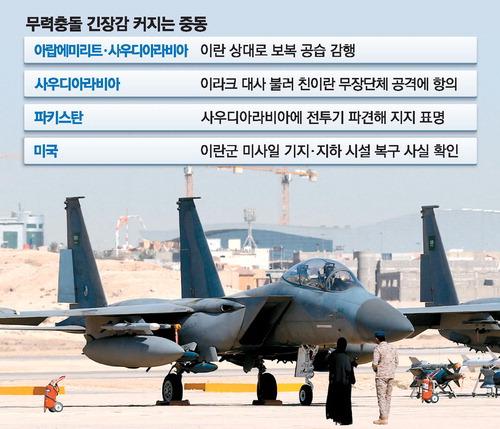
Saudi Arabia Carries Out Covert Airstrikes Against Iran, Then Threatens Further Aggression
Key Takeaways
- Saudi Arabia conducted covert airstrikes inside Iran in late March.
- Retaliatory strikes in response to Iranian attacks on the kingdom.
- Diplomatic engagement followed, yielding an informal understanding to limit escalation.
Covert strikes and retaliation
Saudi Arabia carried out a series of “covert” airstrikes against Iran in late March, before “threatening” the Islamic Republic with more aggression, a report said citing Reuters and “one Western official.”
“Following the strikes, Saudi Arabia informed Iran, leading to diplomatic engagement”
The report said the attacks were described as “tit-for-tat strikes” in retaliation for when Saudi Arabia was hit, and it added that Reuters was unable to independently confirm the targets of the attacks.

PressTV said Iran’s Armed Forces responded by staging at least 100 waves of decisive and successful retaliation against American targets throughout the region, including those lying in the kingdom and many of its fellow Arab states along the Persian Gulf’s coastline.
The same PressTV account said Tehran would advise those states against contributing to the aggression and noted that hosting enemy outposts had resulted in their insecurity rather than serving their interests.
In a separate Reuters-cited report carried by Firstpost, Saudi Arabia’s late-March strikes were described as tit-for-tat retaliation after Iranian strikes on Saudi Arabia, and it said diplomats from the two countries engaged afterward to de-escalate.
Peace terms and de-escalation
Iranian Vice Foreign Minister Kazem Garibabadi said on social media that Iran's peace agreement should include reparations, Iran's sovereignty over the Strait of Hormuz, and the lifting of U.S. sanctions, calling it “the minimum requirement for a serious and continuous agreement.”
Garibabadi added, “We cannot talk about the end of the war while continuing the blockade, we cannot discuss diplomacy while discussing sanctions,” and he argued that the United States’ position was an extension of a coercive policy disguised as diplomacy.

The same reporting said the United States and Iran continue to communicate and negotiate through Pakistan, a mediator, but have repeatedly failed to reach a satisfactory end-of-war.
In parallel, FSX Business said the Saudi strikes were followed by Saudi communication to Tehran and intensified diplomatic engagement, and it quoted an Iranian official confirming that both sides agreed to de-escalate with the objective to “cease hostilities, safeguard mutual interests, and prevent the escalation of tensions.”
FSX Business also said the reported de-escalation took place in the week leading up to a ceasefire agreement between Washington and Tehran on April 7.
Airspace, routes, and costs
As the war between the United States and Israel and Iran continued, BBC reported that airlines were forced to adjust their flight paths to avoid Iran’s airspace, and it said fuel prices rose as a result.
“From the Caucasus to Saudi Arabia: what are the new flight routes to bypass Iranian airspace”
BBC said Cathay Pacific announced that the fuel surcharge would nearly double, and it gave an example that for tickets bought in Canada the amount would rise from CAD 101 to CAD 202.60.
BBC also said Air India announced an increase in fuel costs that would apply to all domestic and international flights, with fuel costs for flights to Europe rising by $25 to $125 and North American tickets becoming $50 more expensive, bringing the cost to $200.
The BBC report described how flight path changes increased air traffic congestion on routes over the Arabian Peninsula and the Caucasus region, especially over Georgia’s airspace, and it said aircraft must pass through a relatively narrow corridor between Iran and Russia.
It added that the skies of some countries remain completely closed, including Iran, and it said fuel had risen from about $85–$90 per barrel to $150–$200 per barrel since the war began in Iran.
More on Iran

Iran Launches 4,000 Projectiles Against Gulf Cooperation Council States After June 17 U.S.-Iran MOU
12 sources compared
U.S. Strikes Iran After Drone Attack on Cargo Ship in Strait of Hormuz
32 sources compared

U.S. Strikes Iran After Trump Accuses Tehran of Ceasefire Violation in Strait of Hormuz
22 sources compared

Oman Warns Allies Ships Through Strait Of Hormuz May Face Transit Fees
12 sources compared