
'Saves $5,000 per lot': Why American builders are selling treeless homes to families
Key Takeaways
- Builders save $5,000 per lot by omitting trees.
- Traditional lush backyards and shade are replaced by treeless layouts.
- Modern subdivisions are marketed as aesthetic 'liminal spaces' rather than classic yards.
Shift in housing trends, costs
For decades, the "American Dream" followed a specific blueprint: a two-story home, a basketball hoop in the driveway, and, most importantly, a lush, shaded backyard.
“For decades, the "American Dream" followed a specific blueprint: a two-story home, a basketball hoop in the driveway, and, most importantly, a lush, shaded backyard”
A drive through an established neighbourhood offered a canopy of green that felt like an immediate escape from the heat of the road.
Today, that dream is being replaced by so-called aesthetic "liminal spaces."
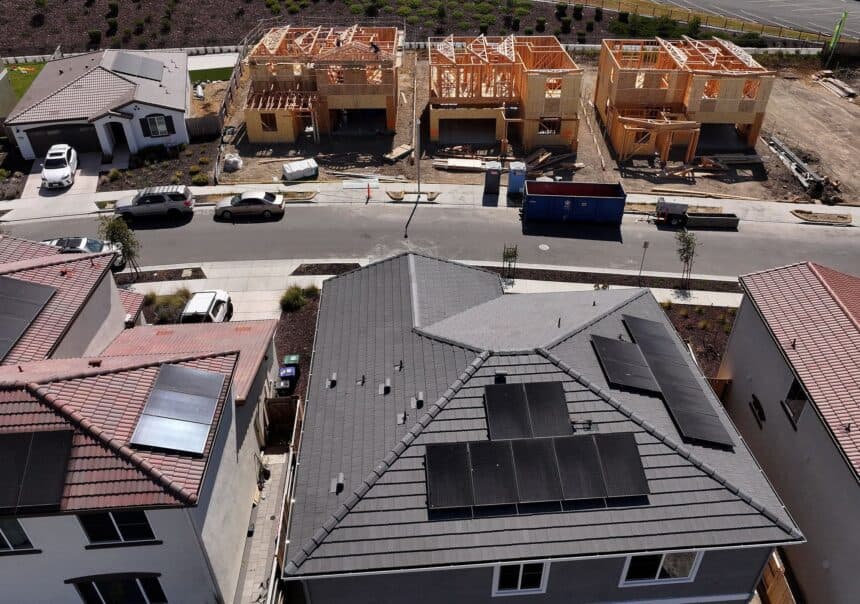
Modern subdivisions are often characterized by rows of identical beige houses, sprawling grey asphalt, and a total lack of greenery.
A viral post on X by Indian-origin content creator Aakash Gupta has recently sparked a massive conversation about why this shift happened and the staggering cost it leaves to the homeowner.
According to Gupta’s analysis, the reason why every new subdivision in US looks a certain way is because it allows a massive transfer of wealth from the buyer to the builder.
He stated that a mature tree increases the value of a house by 7-19 per cent.
"On a $400,000 house, that's $28,000 to $76,000," just by preserving what was already there.
For a homeowner, a single shade tree produces cooling equal to ten room-size air conditioners running almost 20 hours a day.
Gupta quoted data from the Center for Urban Forest Research, that a tree on the west side of a house cuts energy bills by 12% within 15 years.
According to research from the USDA Forest Service, a single 25-ft tall tree can reduce annual heating and cooling costs of a typical residence by 8 to 12 per cent.
Thus, for a family living in an abode surrounded by greenery, the costs are lower to live in and the resale is much faster and profitable.
However, for a builder, cutting down all these trees saves them roughly $5,000 per lot.
A bulldozer flattening 200 lots in a single day, reduces the movement problems for big machinery like concrete trucks and utility trenches, hastening the construction process.
"So the developer pockets $5,000 in savings and the buyer eats $50,000 in lost value for the next two decades. The person making the decision and the person paying for it have never been in the same room," wrote Gupta.
Woodlands-Katy contrast and costs
The Woodlands VS Katy Gupta cited an example of the Texas neighbourhood of Woodlands where George Mitchell bought 28,000 acres of Houston timberland in 1974 and preserved 28% as permanent green space.
When McDonald's wanted to build a store, he forced them to do it behind the tree canopy, following a "forest first" philosophy.
He claimed that McDonald's became one of the highest-volume locations in Texas and an office building created to reflect the surrounding forest was also completely leased.
The suburb was even named the number one community to live in America for two consecutive years.
"The Woodlands median home price today: $615,000. Katy, a comparable Houston suburb that clear-cut: $375,000," he wrote, revealing a whopping $240,000 price gap between the two.
"The trees are worth more than removing them saves. Developers clear-cut anyway because they sell the house once and leave. You live in it for 30 years," he concluded.
Until zoning laws or homeowner awareness force a change, developers will continue to pocket the $5,000 while leaving the American homeowner to absorb the $50,000 loss in value and bills.
Implications and takeaway
Taken together, the article describes a pattern where green space adds value and lowers energy costs for homeowners, while developers benefit from cheaper construction by clearing trees.
“For decades, the "American Dream" followed a specific blueprint: a two-story home, a basketball hoop in the driveway, and, most importantly, a lush, shaded backyard”
The Woodlands-Katy comparison is used to illustrate how greenery correlates with higher housing prices and living costs.
The piece suggests that preservation of greenery yields long-term financial and environmental benefits for residents, while its removal trades short-term savings for decades of higher expenses and lower value.
More on Business

OnlyFans owner Leonid Radvinsky dies of cancer at 43
42 sources compared

3,800 UFCW Local 7 workers strike at JBS plant in Greeley, Colorado.
10 sources compared

Senate Passes Bipartisan Housing Bill Banning Institutional Investors From Buying Single-Family Homes
19 sources compared
Senate Passes Bipartisan Housing Bill Banning Institutional Investors From Buying Single-Family Homes
29 sources compared