Scott Bessent Urges Senate Banking Committee To Advance CLARITY Act To President Donald Trump
Image: 디지털투데이

Scott Bessent Urges Senate Banking Committee To Advance CLARITY Act To President Donald Trump

08 April, 2026.Crypto.8 sources

Key Takeaways

  • Bessent urged the Senate Banking Committee to advance the CLARITY Act to President Trump.
  • Addresses regulatory gaps and defines crypto rules under U.S. law.
  • Urgency to prevent offshore shift and preserve U.S. crypto leadership.

Bessent pushes CLARITY Act

U.S. Treasury Secretary Scott Bessent urged the Senate Banking Committee to proceed with review of the crypto market structure bill known as the CLARITY Act and hand it to President Donald Trump.

Three prominent voices in finance, crypto, and policy urged Congress this week to move quickly on the Clarity Act, a long-awaited bill to define how cryptocurrencies and blockchain-based financial products operate under U

Bitcoin MagazineBitcoin Magazine

In a Wall Street Journal opinion piece, Bessent stressed the need to pass the CLARITY Act, and the push was described as “Bessent’s most direct public pressure yet on the legislation.”

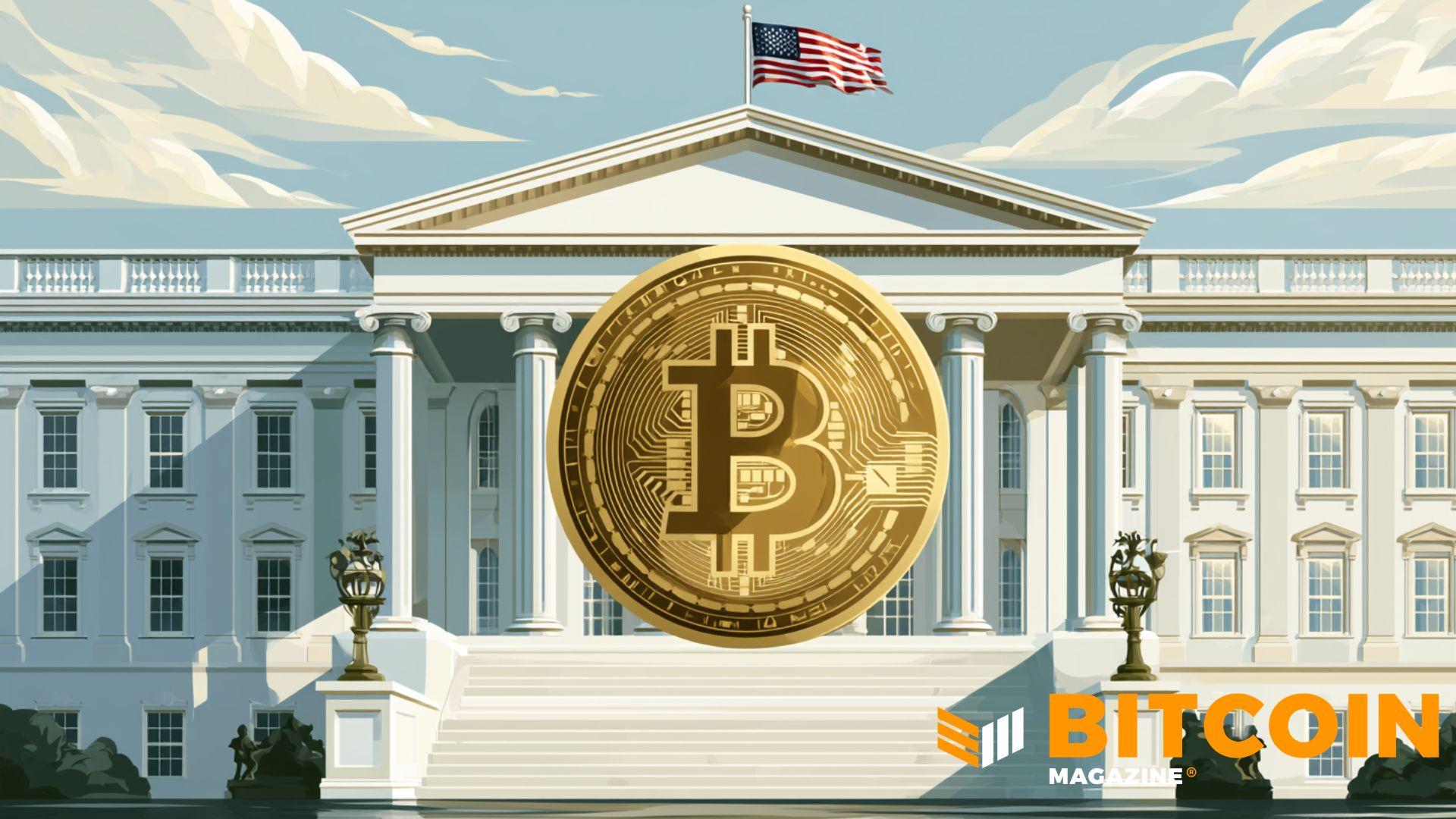
Image from Bitcoin Magazine
Bitcoin MagazineBitcoin Magazine

The House of Representatives passed the CLARITY Act in July 2025 with a bipartisan vote of 294 to 134, but the bill has stalled in the Senate amid disagreements over a stablecoin revenue provision and competing drafts by committees.

Bessent described the bill as an extension of the GENIUS Act, a dollar-pegged stablecoin regulation law that Trump signed in July 2025.

He argued that without the CLARITY Act, a stablecoin-only framework would make it difficult to build a market structure to support tokenised assets and decentralised exchanges.

Bessent also tied the timetable to Congress’s political calendar, warning that if the balance of power changes due to the 2026 midterm elections, crypto legislation could be delayed again beyond this year.

In the same push, Bessent warned that regulatory uncertainty has pushed crypto development to jurisdictions with clearer rules, specifically mentioning Abu Dhabi and Singapore.

Why the bill is stuck

Multiple reports describe the CLARITY Act’s Senate delay as rooted in a specific stablecoin dispute, with the disagreement centered on how the legislation treats stablecoin rewards and similar products.

디지털투데이 | Asian said the bill has stalled amid disagreements over a stablecoin revenue provision and competing drafts by committees, while also noting that “Some issues have been adjusted” after Senator Thom Tillis and Senator Angela Alsobrooks were reported to have reached a principle agreement in March on the stablecoin revenue provision.

Image from CoinCentral
CoinCentralCoinCentral

The Hill | Western Mainstream described the negotiations as locked in a battle over a provision in the GENIUS Act that barred stablecoin issuers from offering interest or yield payments to customers solely for holding the tokens, and it said the banking industry argued the provision left open a loophole that allows third parties to offer rewards to stablecoin holders.

The Hill further reported that the crypto industry contends rewards are necessary for stablecoins to be able to effectively compete in the payments market, and it said that despite several White House meetings between the two sides, a deal had yet to publicly emerge.

Coinpaper | Western Alternative added that “One of the main sticking points involves yield on stablecoins,” describing a banking-industry push for language that would block exchanges, brokers, and affiliates from offering returns that resemble interest on stablecoin balances.

Coinpaper said supporters of that approach argue it would protect traditional bank funding, while crypto firms pushed back that the bill should not go beyond limits already set under existing stablecoin law.

The same report also described the debate as centering on whether the CLARITY Act should close what critics call a “three-party model loophole,” where non-issuers can still offer reward-like returns tied to stablecoins.

Backers and their quotes

Support for moving the CLARITY Act forward came from multiple named figures across the crypto and policy ecosystem, with several quoting the urgency of congressional action.

Ripple CEO Brad Garlinghouse has backed a fresh push for U

CoinpaperCoinpaper

Coinpaper | Western Alternative reported that Ripple CEO Brad Garlinghouse backed the push after Bessent urged Congress to move the CLARITY Act forward, and it said Garlinghouse shared Bessent’s message on X and wrote, “Progress > Perfection,” aligning himself with the call for a federal market structure bill for digital assets.

The same report said SEC Chair Paul Atkins also backed the legislative push, and it quoted Atkins on X: “Project Crypto is designed so once Congress acts, @SECGov & @CFTC are ready to implement the CLARITY Act.”

디지털투데이 | Asian described Bessent’s argument that the CLARITY Act would create a registration pathway for trading platforms, set standards for which digital assets qualify as securities, and strengthen anti-money laundering oversight.

Bitcoin Magazine | Western Alternative added that David Sacks endorsed Bessent’s call and wrote that the CLARITY Act would provide “rules of the road” for all other digital assets.

Bitcoin Magazine also quoted SEC Commissioner Paul Atkins saying, “The project is designed so once Congress acts, the SEC and CFTC are ready,” and it framed the push as a way to “future-proof” the U.S. market.

In the same cluster of endorsements, Bessent’s own messaging on timing was captured as “Senate time is precious, and now is the time to act,” and it echoed his Wall Street Journal op-ed argument that the U.S. should “onshore the future of finance.”

Yield ban debate and numbers

A major flashpoint in the CLARITY Act negotiations is the proposed ban on stablecoin yield rewards, and one report ties that dispute to quantitative claims about bank lending and consumer benefits.

Coinpaper | Western Alternative said a new White House report released on April 8 by the Council of Economic Advisers tested how a wider yield ban might affect bank lending, stating that under the report’s baseline model, total bank lending would rise by only $2.1 billion, which it equated to about 0.02% of outstanding loans.

Image from Latest news from Azerbaijan
Latest news from AzerbaijanLatest news from Azerbaijan

Coinpaper reported that around 76% of that gain would go to the largest banks, and it said community banks defined as those with under $10 billion in assets would see about $500 million more in lending capacity.

Coinpaper also described more aggressive assumptions that favored the banking sector, saying that even then the maximum increase in total lending reached $531 billion, or about 4.4% of projected 2025 fourth-quarter loan volumes, and that for community banks the best-case gain reached 6.7%.

The report quoted the White House report’s conclusion: “In short, a yield prohibition would do very little to protect bank lending, while forgoing the consumer benefits of competitive returns on stablecoin holdings.”

PYMNTS | Western Alternative similarly described Bessent’s warning that the lack of clear rules is eroding U.S. leadership, and it said Bessent warned that regulatory uncertainty has “predictable consequences,” driving development to international hubs like Singapore and Abu Dhabi.

PYMNTS also said the proposed ban on stablecoin yield rewards is designed to protect traditional banks from “deposit flight,” and it included a figure that “some estimates suggest could reach $1.3 trillion if left unaddressed.”

What happens next

The next steps described in the coverage hinge on whether the Senate Banking Committee can begin reviewing the CLARITY Act before the 2026 midterm election season intensifies.

Treasury SecretaryScott BessentcalledThursday (April 9) for Congress to pass the Digital Asset Market Clarity Act (CLARITY Act), warning that the current lack of a clear regulatory framework is eroding U

PYMNTSPYMNTS

디지털투데이 | Asian said Senator Cynthia Lummis indicated last month that a Senate Banking Committee hearing could be held in late April, and it framed the timetable as tight, warning that if the Senate fails to begin the review process this year, the United States' crypto regulatory system could remain limited to stablecoin regulation while core market-structure legislation is pushed back again.

Image from PYMNTS
PYMNTSPYMNTS

The Hill | Western Mainstream reported that the Senate has not taken up the House bill and has sought to develop its own legislation, and it described how the market structure bill involves two separate committees in each chamber because it spans both securities and commodities markets.

The Hill said the Senate Agriculture Committee advanced its half of the bill in late January without Democratic support, while the Senate Banking Committee scrapped a planned markup after its latest draft lost the support of a key industry player.

It also said negotiations have largely remained at a standstill over the past two months over a dispute related to the GENIUS Act, and it noted that Sens. Angela Alsobrooks and Thom Tillis appeared to reach a bipartisan agreement late last month, though it was unclear whether the deal has the support of both industries.

Coinpaper | Western Alternative added that the debate now centers on whether the CLARITY Act should close a “three-party model loophole,” and it said lawmakers continued to debate the scope of the bill as stablecoin yield restrictions remained unresolved.

Bitcoin Magazine | Western Alternative described the CLARITY Act as establishing regulatory boundaries between the SEC and the CFTC, defining when a token qualifies as a security, setting operating pathways for trading platforms, and introducing new anti-fraud and anti-money-laundering measures.

More on Crypto