SEIU-UHW Says It Collected More Than 1.5 Million Signatures for California Billionaire Tax Ballot
Key Takeaways
- Backers report about 1.6 million signatures to qualify for the November ballot.
- Proposal imposes a one-time 5% tax on assets of California billionaires.
- Some billionaires reportedly changing residency to avoid the tax.
Signatures Push Ballot Bid
California billionaire-tax backers say they have collected enough signatures to qualify a one-time wealth tax for the November ballot, setting up a high-stakes fight over how the state should respond to federal healthcare funding cuts.
“Supporters of the proposed California billionaire tax, sponsored by SEIU, announced Sunday that they had gathered nearly twice as many signatures as necessary to qualify the controversial proposal for the November ballot”
The Los Angeles Times reported that supporters began submitting nearly 1.6 million signatures, “double the amount needed to qualify the measure for California’s November ballot,” and that the proposed tax would be “a 5% tax on assets exceeding $1 billion” generating “roughly $100 billion.”

The Killeen Daily Herald, citing an AP dateline from Sacramento, said the proposal had enough signatures to qualify and that backers collected “more than 1.5 million signatures, well over the roughly 875,000 they needed.”
NBC News said the union supporting the measure collected “more than 1.5 million signatures,” nearly twice the required number, and that if officials verify “875,000 are valid, the measure would be placed on the November ballot.”
The Desert Sun described a Monday April 27 news conference in downtown Los Angeles where Myra Castañeda said backers had collected “more than 1.5 million signatures” and planned to file them with the California Secretary of State on Monday.
CBS News similarly said the SEIU-UHW measure, called the “2026 Billionaire Tax Act,” would impose a one-time 5% tax on Californians with net worths of $1 billion or more and that the union said it obtained “more than 1.5 million signatures, exceeding the 875,000 required to qualify for the ballot.”
Across outlets, the signature threshold is tied to late-June deadlines and verification steps, with the Los Angeles Times saying proponents must submit signatures of “nearly 875,000 registered voters by June 24,” and the Hill reporting that state law requires “at least 874,641 registered voters” by June 24.
Tax Design and Deadlines
The proposed California measure is described by backers and multiple outlets as a one-time 5% tax on billionaire wealth, with details about thresholds, retroactivity, and how the money would be spent.
The Killeen Daily Herald said the proposal would impose “a one-time, 5% tax on individuals whose net worth exceeds $1 billion” and who were “living in the state as of Jan. 1, 2026,” with the goal of generating “$100 billion in revenue” to offset federal healthcare cuts for low-income people.

NBC News said the initiative would implement “a one-time 5% tax on the assets of Californians whose net worth exceeds $1.1 billion,” and it would require the state to spend the resulting revenue “almost entirely on healthcare.”
NBC News also reported that the taxes would apply retroactively to anyone living in the state “Jan. 1, 2026,” and that the proposal would implement “a smaller tax on individuals worth between $1 billion and $1.1 billion.”
The Desert Sun described the “2026 Billionaire Tax Act,” or “Initiative No. 25-0024,” and said “Ninety percent of the revenue from the tax would go toward health care programs, while the remaining 10% would go to education and food assistance programs,” with the tax “due in 2027.”
Fox Business said the tax would target “roughly 200 residents” and would impose a one-time 5% tax on net worth exceeding $1 billion, with the tax “due in 2027,” and it described a payment option where “taxpayers could spread payments over five years, with interest.”
Even as the signature fight moves forward, outlets emphasize that state officials must verify signatures and then decide whether the measure proceeds to the ballot, with the Hill saying officials must “count and verify the signatures and send them to California’s secretary of state before the measure can appear on the November ballot.”
Union Arguments and Opponent Warnings
Backers of the billionaire tax argue that the measure is necessary to prevent healthcare service cuts and to fill budget gaps tied to federal changes, while opponents warn it will damage California’s economy and budget by driving wealthy residents away.
“Topline Organizers of a proposal to impose a one-time, 5% tax on the wealth of California residents with assets worth at least $1”
The Los Angeles Times quoted Liz Perlman, executive director of AFSCME Local 3299, saying, “California’s health is at stake,” and adding that “Last year, Trump and Congress kicked 3.4 million Californians off their healthcare and doubled and tripled premiums for everyone else.”
Perlman also said, “Hospitals are closing and people will die,” and she framed the tax fight as a response to “another tax cut that they don’t need.”
The Desert Sun quoted Myra Castañeda saying, “With our signatures, we are demanding that billionaires pay their fair share so our hospitals, clinics, and emergency rooms can stay open,” and it said she argued “California voters have shown they are ready to fight to avoid health care cuts that will hurt millions.”
The Killeen Daily Herald included a warning from Rob Lapsley, president of the California Business Roundtable, that “This wealth tax would have a devastating impact on our economy, state budget, and the cost of living for all Californians,” and it said the measure “does nothing to reduce the state’s $35-billion-plus budget deficit.”
The Hill similarly quoted Lapsley saying the bill doesn’t fix the “$35-billion-plus budget deficit” and “does nothing to address the decade of overspending that led to the structural deficit.”
Opponents also warn about wealth flight, with the Killeen Daily Herald quoting Brian Brokaw, a longtime Newsom adviser, saying, “Enacting a so-called wealth tax in just one state wouldn’t target a small group -- it would impact all 40 million Californians,” and that “This proposal trades a short-term revenue bump for long-term losses.”
Competing Measures and Funding
As the billionaire-tax initiative advances, outlets describe a parallel political effort aimed at countering it, along with a complex funding landscape involving major tech figures and political committees.
The Los Angeles Times said supporters of a “Transparency Act,” described as a “poison pill” proposed for the November ballot, planned to submit “about 1.5 million signatures” on Wednesday and that the measure would require “all new special taxes to be subject to a voter-approved spending cap,” while “the proposed billionaire tax, as written, would be exempt from this cap.”

The Los Angeles Times also reported that if both measures qualify and are approved, “it would nullify the billionaire tax” if the Transparency Act receives more votes.
The Sacramento Bee reported that backers of the wealth tax gathered “more than 1.5 million signatures” and that the same day supporters of the rival effort said it would require “extensive audits of any program that receives funding from new or higher state taxes.”
The Los Angeles Times further detailed that Tech billionaire Chris Larsen and his cryptocurrency company, Ripple, “have contributed a combined $10 million to oppose the billionaire tax,” and that a committee established in March to fund the Transparency Act has collected “$36.3 million,” “the vast majority transferred from the Building a Better California committee.”
That same Los Angeles Times account said the Building a Better California committee “has received $57 million this year from Google co-founder Sergey Brin,” while the Guardian said Brin donated “at least $45m” to the Super Pac Building a Better California.
In the middle of these competing efforts, the Desert Sun said the tax would be due in 2027 and that taxpayers could opt to pay overtime with payments spread out over five years at a higher cost, while the Fox Business account said the tax could be payable over five years “with interest,” reinforcing that the measure’s financial mechanics are part of the broader political argument.
What Comes Next
With signatures submitted and verification pending, the next phase is an official check by state and county election officials and then a decision on whether the measure appears on the November ballot, with rival initiatives potentially complicating the outcome.
“After months of campaigning for a first-of-its-kind retroactive wealth tax in California, the union-led effort is now taking its next step”
The Los Angeles Times said proponents must submit signatures of “nearly 875,000 registered voters by June 24,” and that “county election officials” would verify the signatures and place the measure on the ballot.
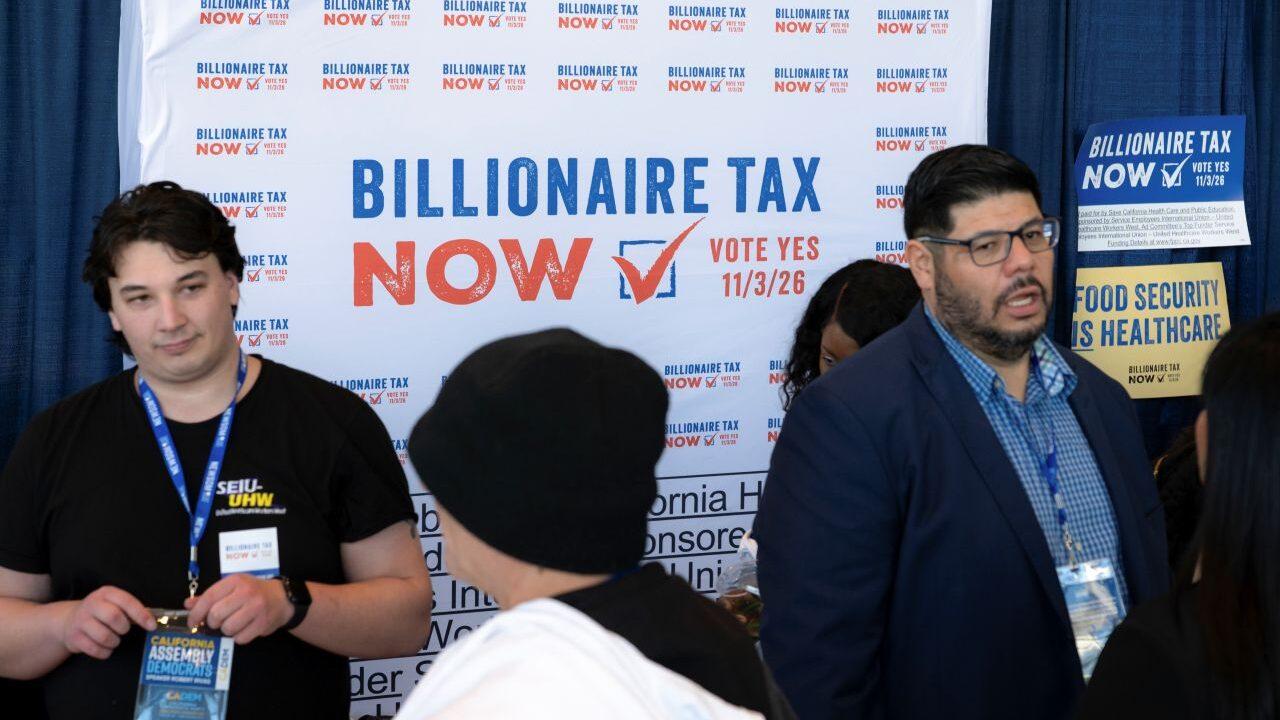
The Killeen Daily Herald said “The California Secretary of State still has to verify the signatures and officially place the measure on the ballot,” and it described how California allows ballot initiative campaigns to pay people per signature they gather.
The Hill said once signatures are received, officials have to “count and verify the signatures and send them to California’s secretary of state before the measure can appear on the November ballot,” and it added that a March poll showed “50 percent of respondents supported the Billionaire Tax Act, and 28 percent opposed it.”
The GV Wire account said election officials will go through a verification process and that if at least “875,000 signatures are valid,” proponents have “until late June to decide if they want to proceed with placing it on the ballot.”
The Fox Business account said opponents warned the tax could “kill an estimated 108,000 high-paying jobs over the next 20 years,” and it also said the Legislative Analyst’s Office warned of an “ongoing decrease in state income tax revenues of hundreds of millions of dollars or more annually” as billionaires flee the state.
Meanwhile, CBS News reported that the tax is projected to raise about “$100 billion over five years,” and it cited an analysis by the Institute on Taxation and Economic Policy.
More on Finance

Brazil Blocks 27 Prediction Market Platforms, Including Kalshi and Polymarket, After Ministry Directive
14 sources compared

Trump Administration Converts CHIPS Act Grants Into Intel Equity, Unrealized Gain Tops $26.5 Billion
14 sources compared

South Korean Police Seek To Arrest HYBE Chairman Bang Si-Hyuk Over $100 Million Investor Fraud
18 sources compared

Virginia Voters Approve Redistricting Plan That Could Give Democrats Up To Four House Seats
22 sources compared