Finance24 April, 20267 min read
Trump Administration Converts CHIPS Act Grants Into Intel Equity, Unrealized Gain Tops $26.5 Billion
This article is an automated aggregation of coverage from news outlets. Our editorials offer in-depth analysis curated by the NewsCord team.
U.S. government acquired about 9.9–10% of Intel under CHIPS Act. Unrealized gain of $26.5B; stake valued about $35 billion.
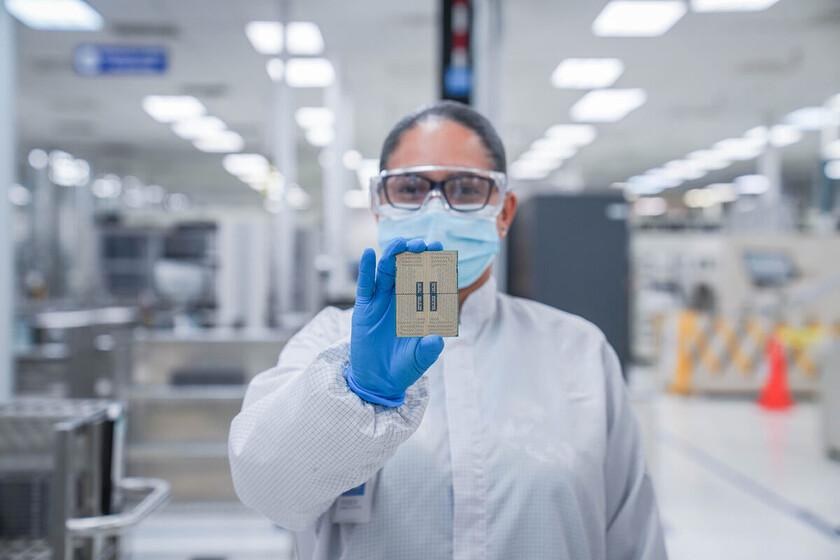
Intel stake reshapes
The U.S. government’s Intel investment has ballooned after Intel shares surged more than 22% following earnings, leaving the federal government sitting on an unrealized gain of roughly $26.5 billion.
“Donald Trump announced on Friday a 10% stake in Intel’s equity, saying it had ‘cost nothing.’”
CoinDesk says the government’s stake, acquired at $20.47 per share, is now worth approximately $35.4 billion, and that the position stems from an August deal in which the Trump administration converted $8.9 billion in CHIPS Act grants and Secure Enclave funding into 433.3 million Intel shares at $20.47 apiece.

CoinDesk also reports that the government holds warrants to purchase an additional 5% stake at $20 per share, describing those options as “deep in the money.”
Barron’s frames the same move as the U.S. “Just Made Nearly $30 Billion on Its Intel Investment,” and ties it to Intelstock “set to open at a fresh all-time high” on Friday.
BFM Bourse adds that the shares closed up 7.38% on Wednesday after Bloomberg reported the Trump administration was in talks to take an equity stake, and notes that the stock rose another 4.57% in after-hours trading.
In parallel, BFM says Donald Trump announced a 10% stake in Intel’s equity and that it “cost nothing,” while also stating the company said the U.S. government’s investment totaled $8.9 billion including subsidies not yet disbursed, with $2.2 billion already paid.
Across outlets, the transaction is repeatedly described as converting government support into equity, with ICTjournal stating Intel formalized an agreement providing for the federal government to acquire 9.9% of the company’s capital through 433.3 million common shares at a unit price of $20.47.
How the deal was built
The mechanics of the Intel equity deal are described in detail across multiple reports, with several outlets tying the stake to CHIPS Act support and Secure Enclave funding. CoinDesk says the August deal converted $8.9 billion in CHIPS Act grants and Secure Enclave funding into 433.3 million Intel shares at $20.47 apiece, producing about a 9.9% ownership stake. Le Mag IT reports that Intel was set to receive $8.9 billion instead of $5.7 billion remaining under the CHIPS Act, and that the government becomes an “actionnaire” at 9.9% in exchange, while also describing an additional $3.2 billion outside CHIPS Act.
Expansión says Trump announced from the Oval Office at the White House that the U.S. government would take a 10% stake, and that the plan would convert into equity the subsidies granted to Intel under the Biden administration’s Chips and Science Act. Expansión also states Intel had already received by January $2.2 billion, although it had been allocated a total of $10.9 billion, and that the amount would allow the administration to unlock a 10% stake.
Investir Les Echos, citing Reuters, says Intel warned Monday that the 10% stake could present risks for its activities, and it places the transaction timeline at completion expected on 26 août. It also says the actions would be bought with $5.7 billion of subsidies not yet disbursed under the CHIPS law and $3.2 billion attributed to Intel for the Secure Enclave program, and that the government would buy the shares with a $4 discount versus the Friday close of $24.80.
Intel’s risk warning
Intel’s own filings and public messaging emphasize that the government’s equity role could complicate the company’s future funding and international business.
“I don't need the subsidy, but I trust that the US Government will ultimately become our shareholder.”
Investir Les Echos, citing Reuters, reports that Intel said Monday that the 10% stake could present risks for its activities, “notamment en affectant les ventes internationales et la capacité du groupe à recevoir d'autres financements gouvernementaux.”
The Reuters-based report says Intel detailed new “facteurs de risque” in a stock-market document after the government decided to convert subsidies into equity, and it adds that Intel said it was not certain the agreement would encourage other government entities to convert existing subsidies into equity or to support future subsidies.
It also states that Intel said obligations under the CHIPS law would be considered “acquittées” to the extent permitted by applicable law, except for the Secure Enclave program.
Investir Les Echos further says Intel warned that its activities outside the United States could be affected because the government is an important shareholder, potentially subjecting Intel to additional regulations or restrictions, including foreign subsidy laws.
Xataka, quoting Intel’s CEO Lip-Bu Tan, says in a video published by the U.S. Department of Commerce that “I don't need the subsidy, but I trust that the US Government will ultimately become our shareholder,” and it then contrasts that with Reuters and CNBC reporting that Intel acknowledged the government’s entry could harm overseas business and limit access to future government subsidies.
In the same Xataka account, it states that “In 2024 76% of its revenues came from outside the US,” and that “China contributed no less than 29% of its total revenues,” while also stating that “no less than $15.4 billion came from China” out of $53.1 billion earned last year.
From chips to defense
After the Intel stake, the Trump administration’s attention could shift to defense contractors, according to remarks by the U.S. Secretary of Commerce Howard Lutnick.
BFM reports that Lutnick said on Tuesday that “After taking stakes in the semiconductor maker Intel, the U.S. government could become a shareholder in defense groups, especially Lockheed Martin,” and it quotes him arguing that “Lockheed Martin derives 97% of its revenue from the U.S. government.”

Lutnick told CNBC that “In short, they are an arm of the U.S. government,” and he added that Defense Secretary Pete Hegseth and his teams were “on the case,” with the U.S. “considering” equity entry into defense groups.
BFM also notes that major defense manufacturers including Lockheed Martin, Northrop Grumman, GE Aerospace, RTX and General Dynamics did not react immediately, while Boeing declined to comment.
The report says that around 3:00 p.m. GMT, sector stocks were rising on the New York Stock Exchange after Lutnick’s remarks, listing Lockheed (+1.58%), RTX (+1.05%), Northrop (+1.09%) and GE Aerospace (+1.65%).
BFM frames the broader approach by quoting Kevin Hassett, the president’s chief economic adviser, who said the state was ready to take equity stakes in other companies but without specifying a sector, adding “I am convinced there will be other transactions.”
It also quotes Hassett explaining that “In the past, the federal government gave money and taxpayers got nothing in return,” while “What is happening with Intel is that the money goes to the group as planned but, in exchange, the taxpayer obtains a stake in the capital,” and it describes the Intel stake as a “non-voting stake.”
Market reaction and governance
The Intel stake has been accompanied by shifting market expectations and questions about governance, with multiple outlets describing both the political context and the company’s internal steps. BFM Bourse says the shares closed up 7.38% on Wednesday after Bloomberg reported talks about a stake, and it ties the speculation to a period when Donald Trump called for the resignation of Intel’s chief executive, Lip-Bu Tan, over alleged ties to China. It quotes Kush Desai, White House spokesperson, telling Bloomberg that “Discussions on hypothetical deals should be treated as speculation until they are officially announced by the administration,” and it adds that Intel declined to comment on those discussions.
BFM Bourse also describes the lead-up to the final deal, saying Trump met Lip-Bu Tan on Monday, August 11, and “markedly softened the tone,” describing the meeting as very interesting, and it says Trump added that Tan would work with his staff and provide suggestions. Boursier.com reports that Intel named Robin Colwell to head its Government Affairs Department, and it says the position had been vacant since the departure of Bruce Andrews after the November elections.
Boursier.com also says Intel named James Chew as vice president of the Intel Government Technologies unit and appointed Annie Shea Weckesser as Senior Vice President and Director of Marketing and Communications. CoinDesk ties the market move to Intel’s performance, saying first-quarter revenue was $13.6 billion and non-GAAP earnings per share came in at $0.29, and it quotes CEO Lip-Bu Tan saying the shift in AI computing toward inference and agentic workloads is “significantly increasing the need for Intel’s CPUs.”