
Ship Seized Near United Arab Emirates as Another Cargo Ship Sinks Near Oman
Key Takeaways
- Incidents near the Strait of Hormuz involve maritime clashes and attacks.
- Responsibility for the incidents remains unclear amid escalating regional tensions.
- Disruptions threaten energy shipments via the Strait of Hormuz.
Seizure and sinking
Tensions flared near the Strait of Hormuz after a ship anchored off the United Arab Emirates was seized and taken toward Iran, while another cargo ship near Oman sank after being attacked, authorities said Thursday.
“Toggle Play Al Jazeera’s exclusive report from the Strait of Hormuz Heavy ship traffic and rising regional tensions fuel fears of a wider confrontation over one of the world’s most critical energy routes”
The U.K. Maritime Trade Operations center said the seized ship was taken by unauthorized personnel while anchored 38 nautical miles (70 kilometers, 44 miles) northeast of the UAE port of Fujairah, and the British military said the vessel is heading toward Iranian waters.
Indian authorities said an Indian-flagged cargo ship sank off the coast of Oman after an attack sparked a fire aboard the vessel while it was en route from Somalia to Sharjah, and Mukesh Mangal, a senior official in India's shipping ministry, said all 14 Indian crew members were rescued by Oman's coast guard and were safe.
Iran’s senior vice president, Mohammadreza Aref, said Thursday that the strait belongs to Iran and that Tehran would not give it up "at any price," state TV reported.
In the same reporting, the White House said both sides had agreed that the Strait of Hormuz must remain open, as U.S. President Donald Trump met with Chinese leader Xi Jinping in Beijing.
Negotiations and rhetoric
As the Strait of Hormuz remained a flashpoint, Iranian Foreign Minister Abbas Araghchi said Iran does not trust the United States and that Tehran is open to negotiations only if Washington shows seriousness, while also prepared to resume fighting if necessary.
NPR reported that the turmoil in the strait has been a sticking point for weeks in talks between the U.S. and Iran to end the conflict, and that the White House said both sides had agreed that the Strait of Hormuz must remain open.

Al Jazeera’s account said UN Secretary-General Antonio Guterres expressed concern about the escalation between Iran and the United States in the Strait of Hormuz, according to spokesman Stéphane Dujarric, and urged maximum restraint to avoid further tension.
In the same Al Jazeera reporting, CENTCOM said its forces disrupted oil tankers Sea Star 3 and Sevda before entering an Iranian port in the Gulf of Oman, in violation of the U.S.-imposed blockade, after an F/A-18 Super Hornet from the USS Abraham Lincoln disabled the tankers by firing precision rounds at their smokestacks.
Al Jazeera also reported that President Donald Trump said he expected Iran to respond on Saturday to American proposals aimed at ending the war, and that he planned to receive a message from Iran that night.
Energy stakes and workarounds
Oil markets moved sharply as tensions escalated, with Brent crude futures settling at $109.26 a barrel, up $3.54, or 3.35%, and U.S. West Texas Intermediate rising to $105.42 a barrel, up about $4.25, or 4.2%, according to Reuters on Saturday, May 16, 2026.
“Tensions continue to flare in the Strait of Hormuz, as hours after Iran announced a return to calm in the region and CENTCOM said it was not seeking to escalate, both sides announced clashes and military operations in the Strait that targeted each other’s ships”
The same Reuters-based report said Brent logged weekly gains of 7.84% and WTI jumped 10.48%, while an analyst at Commerzbank said the tone of rhetoric between the United States and Iran had clearly escalated again.
Separately, The المتداول العربي reported that the United Arab Emirates plans to double its oil exports outside the Strait of Hormuz by 2027 by speeding up the Western–Eastern Pipeline project to transport oil from Abu Dhabi fields to the port of Fujairah on the Gulf of Oman.
That report said the project is expected to double export capacity via Fujairah and that the Habshan–Fujairah pipeline enables transporting up to about 1.8 million barrels per day out of the Strait of Hormuz.
In Al Jazeera’s reporting, the Strait of Hormuz was described as a critical energy route with heavy ship traffic, and it said the ceasefire since April 8 was being tested as both sides announced clashes and military operations targeting each other’s ships.
More on Iran
Russia Presses Toward Kharkiv as Vovchansk Fighting Continues, BBC Reports
12 sources compared

Mahmoud Abbas Casts Ballot in Fatah Leadership Elections in Ramallah, Gaza, Cairo, and Beirut
16 sources compared
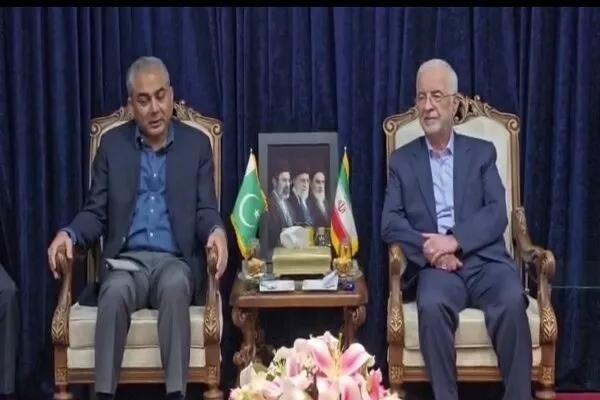
Iran And Pakistan Interior Ministers Meet In Tehran To Restart U.S.-Iran Peace Talks
12 sources compared

United States and Israel Prepare Renewed Strikes Against Iran As Early As Next Week
13 sources compared