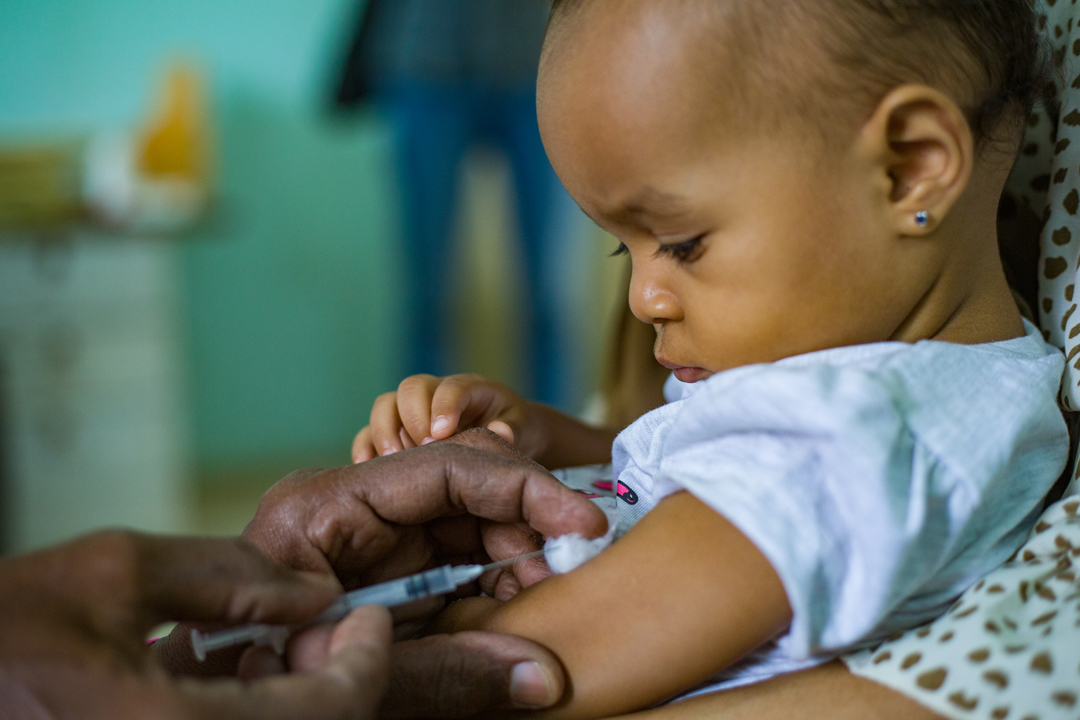
South Darfur launches measles vaccination campaign for 390,000 children
Key Takeaways
- Campaign targets 390,000 children for measles and rubella immunisation.
- Ministry of health announced vaccination for children aged nine months to 15 years.
- Campaign responds to a recent surge in infections across multiple localities.
Vaccination campaign scope
Health authorities in South Darfur have launched a large-scale vaccination campaign against measles and rubella, targeting hundreds of thousands of children across the state amid a surge in infections in recent months.
“Health authorities in South Darfur have launched a large-scale vaccination campaign against measles and rubella, targeting hundreds of thousands of children across the state amid a surge in infections in recent months”
The campaign, announced by the state’s ministry of health, aims to immunise children aged between nine months and 15 years across multiple localities.
Mohamed Haroun, director of the expanded immunisation programme at the ministry, said during the launch that the campaign is expected to reach more than 390,000 children across South Darfur.
According to health officials, the largest numbers of children targeted are in several key areas: El Salam locality (81,816), Beleil (50,176), Kass (157,073) and displacement camps across the state (102,946).
The campaign will be carried out through 267 vaccination centres using around 400,000 doses of vaccine.
Authorities plan to deploy a combination of fixed and temporary vaccination sites as well as mobile teams to reach children in remote communities.
Programme structure and goal
Haroun said the effort forms part of a broader immunisation initiative that also targets children aged one to five in several localities.
The programme will be conducted in two phases: a first round covering nine localities, followed by a second round reaching a further 12 areas.
Officials say the aim is to boost vaccination coverage and prevent outbreaks of diseases that can be avoided through routine immunisation.
Outbreak causes and response
Abbas, director general of the South Darfur health ministry, said health reports over the past six months have recorded a widespread outbreak of measles across all 21 localities in the state, with more than 8,000 cases reported.
“Health authorities in South Darfur have launched a large-scale vaccination campaign against measles and rubella, targeting hundreds of thousands of children across the state amid a surge in infections in recent months”
He said the scale of the outbreak had prompted the ministry, in cooperation with the national immunisation programme and health organisations, to launch the comprehensive campaign.
Abbas added that the war had disrupted vaccine supplies to the state for nearly three years, contributing to the re-emergence of several infectious diseases, including diphtheria, whooping cough and measles, as well as waves of cholera.
The ministry is now working with government and local authorities to rebuild the health system and restore essential services, he said, with a focus on protecting children and improving access to healthcare.
Abbas also praised medical staff and health workers who have continued to provide services throughout the years of conflict despite difficult conditions.
Renewed epidemics nationwide
The outbreak of epidemics in Sudan has resumed after a period of decline, with 2,576 cases of malaria recorded.
There were 211 new cases of dengue fever in the cities of Khartoum and Omdurman, and 39 deaths in the capital as a result of dengue fever.
Statistics showed that the most vulnerable groups were the most affected, with 22 deaths recorded among women and six among children.
These developments occurred amid a severe and terrible shortage of medicines and basic medical supplies.
More on Sudan

Drone Strike in Goma Kills French UN Aid Worker; M23 Blames Congolese Forces, Kinshasa Denies
10 sources compared
M23 Rebels Accuse Congolese Army of Drone Strikes That Kill French Aid Worker in Goma
10 sources compared

Chad Shuts Border With Sudan After RSF Cross-Border Attack Kills Chadian Soldiers, Civilians
21 sources compared
UN Fact-Finding Mission Finds RSF Siege of El-Fasher Bears Hallmarks of Genocide
33 sources compared