
Study Finds Rare Hybrid B(A) Blood Type in Thailand, Detected in Three of 544,000 Samples
Key Takeaways
- Thailand study identified an extremely rare hybrid blood type in 3 individuals among 544,000 samples.
- Described as a hybrid or hybrid-like blood type by multiple outlets.
- Raises questions about genetic diversity and implications for transfusion safety.
A hybrid B(A) phenotype
A study conducted in Thailand has identified an extremely rare hybrid blood type, described as a “hybrid-like” blood type linked to what scientists call the B(A) phenotype.
“One of the most extensive blood-typing studies conducted to date, an international team of scientists discovered an extremely rare blood type that was detected in only three people among more than half a million samples, a finding that raises new questions about human genetic diversity and transfusion safety”
The finding emerged from analysis of 544,000 blood samples collected at Siriraj Hospital over several years, with the hybrid phenotype detected in only three individuals.
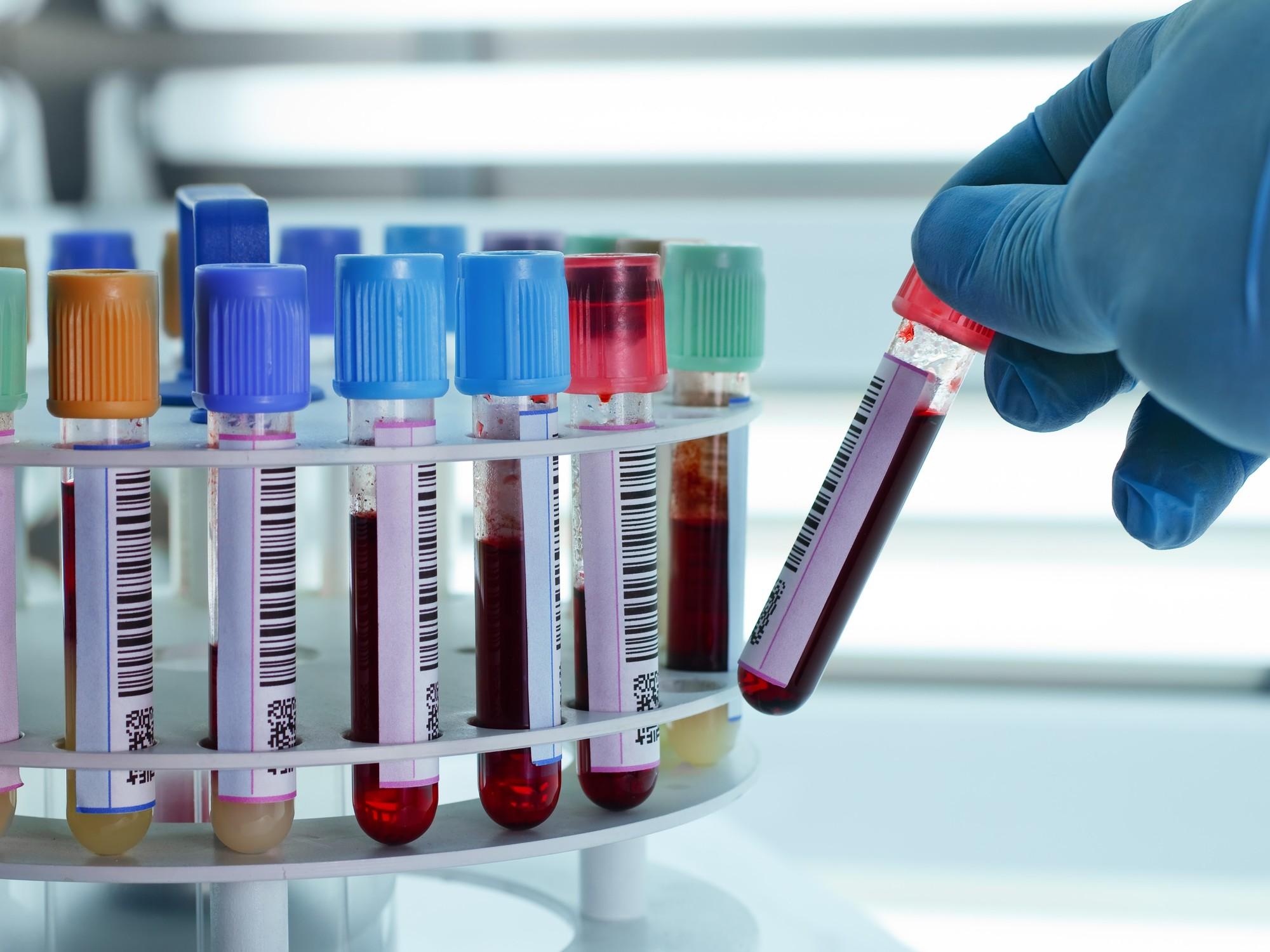
Clarín reports that the phenotype was “found in only three people among more than half a million samples,” and it says the result “raises new questions about human genetic diversity and transfusion safety.”
The Times of India similarly states that the condition “was found in just three individuals out of more than half a million samples,” and it adds that it was “linked to what scientists call the B(A) phenotype.”
Clarin also specifies that the three individuals were “clinically classified as blood type B,” while showing “traces of the A antigen.”
The CSR Journal frames the discovery as “World’s Rarest Hybrid Blood Type Discovered in Thailand,” saying it was “discovered in only three individuals from a total of 544,000 samples analysed.”
Across the reports, the hybrid blood type is positioned as a challenge to the traditional ABO categories, because it “does not fit cleanly into the traditional categories of the ABO system,” according to Clarín.
How it was found
The discovery was not described as a targeted hunt for a known anomaly, but as a large-scale effort to detect rare blood phenotypes that might be missed by conventional hospital testing.
Clarin says the analysis was “led by hematologist Janejira Kittivorapart, from Mahidol University in Thailand,” and it adds that she and her team examined “544,000 blood samples collected at Siriraj Hospital over several years.”

The Times of India likewise says researchers “examined around 544,000 blood samples collected over several years from both donors and hospital patients,” and it emphasizes that “the discovery didn’t come from a targeted hunt for rare blood.”
El Cronista describes the approach as a team from Thailand’s National Blood Center analyzing samples from “544,000 people” with the objective “to detect rare blood phenotypes that are not typically detected by standard hospital tests.”
The Times of India further identifies the study’s publication venue and title, stating it was published in “Transfusion and Apheresis Science” and naming it as “A novel allele of B(A) blood group detected in a donor and a patient during a retrospective review of ABO group anomalies in a tertiary hospital.”
It also reports that “around 396 patient samples showed what doctors call ABO discrepancies,” where “the red blood cells and plasma didn’t agree on the blood type result.”
The CSR Journal adds that the methodology involved “comprehensive genomic and serological analyses,” which it says are “essential for classifying blood types accurately.”
The genetics behind B(A)
The reports attribute the B(A) phenotype to rare mutations in the ABO gene that alter the enzyme responsible for blood antigen expression.
“The recent study conducted in Thailand has identified an extraordinarily rare hybrid blood type, marking a significant discovery in the field of transfusion medicine”
Clarin says the “unusual characteristic” is “caused by rare mutations in the ABO gene,” and it explains that these mutations make the “AB transferase enzyme” have “activity for both the B antigen and, to a lesser extent, for the A antigen.”
El Cronista similarly frames the phenomenon as “cis-AB or B(A) variants,” and it says these individuals carry “a genetic mutation that allows a single allele to produce both enzymes, or a mutant enzyme with dual function.”
The Times of India describes the mechanism in terms of enzyme activity and “tiny sugar molecules sitting on red blood cells,” saying the B(A) phenotype is “technically type B blood, but with a twist.”
It adds that “A mutation in the ABO gene slightly changes the enzyme responsible for building these surface sugars,” producing “a faint “A-like” activity even though it is still classified as B.”
Clarin also reports that “the scientists identified four distinct mutations that appear to be responsible for the appearance of this hybrid phenotype,” while noting that “the exact mutations and their function are not fully understood.”
Across the articles, the genetic explanation is paired with a warning that standard typing may not fully capture such variants, because the phenotype can create “ABO discrepancies” in routine testing.
Why it matters for transfusions
The articles connect the B(A) phenotype to transfusion risk by describing how incorrect ABO classification can trigger immune reactions.
Clarin states that “This classification is fundamental to ensuring that blood transfusions are safe, avoiding dangerous immune reactions,” and it warns that variants like B(A) “might not be detected by standard methods.”
It explains that “These discrepancies can complicate diagnoses or the selection of compatible blood if they are not properly identified,” and it says genetic variants could represent “an unrecognized risk” if “there are not sufficiently sensitive technologies to detect them.”
El Cronista is more direct about the clinical danger, saying that “In a blood transfusion, an incorrect classification can trigger a severe immune reaction,” where “The immune system attacks what it identifies as foreign, destroying the transfused red blood cells and generating a potentially lethal condition within minutes.”
The Times of India similarly links the phenotype to practical delays, stating that “Tests don’t fully agree on what they are seeing” and that this “can slow down transfusions while doctors double-check compatibility.”
The CSR Journal frames the discovery as having “significant implications for transfusion medicine,” emphasizing that “Blood transfusions are critical in various medical treatments” and that “the increasing diversity of blood types poses challenges for matching donors and recipients.”
Clarin adds that the study’s objective was “to better understand blood variations that could be hidden by conventional tests and that could influence clinical procedures such as transfusions or routine diagnoses.”
What comes next
The study’s authors and coverage emphasize that further work is needed to understand how the underlying mutations affect the AB transferase enzyme and the resulting immune and transfusion outcomes.
“One of the most extensive blood-typing studies conducted to date, an international team of scientists discovered an extremely rare blood type that was detected in only three people among more than half a million samples, a finding that raises new questions about human genetic diversity and transfusion safety”
Clarin quotes the research team stressing that “Further studies are needed to elucidate the structural and functional consequences of the mutated AB transferase enzyme,” and it adds that this finding “could be just the tip of the iceberg of yet-unknown variations in human blood.”
The CSR Journal says the researchers “aim to encourage further studies on this hybrid blood type and its implications for transfusions, as well as understanding its genetic basis,” and it describes future research directions as exploring “rare blood types and their genetic underpinnings.”
The Times of India frames the discovery as a prompt to consider hidden layers of biology, stating that “Experts say it might point to hidden layers of human biology that standard blood tests simply don’t pick up.”
It also raises the question of whether more variants exist, saying “How many more like this are out there, unnoticed?”
El Cronista similarly argues that the challenge for medicine is to adapt protocols and recognize that “even in something as studied as blood, there are still secrets to be uncovered.”
In addition to scientific follow-up, the CSR Journal says institutions may need to “reconsider their donor screening processes to ensure that all variations are adequately accommodated,” and it links this to patient safety and transfusion outcomes.
More on Technology and Science

Hospices Civils de Lyon Says Vaccination Cuts Infarction Risk and Dementia Risk From Zona
10 sources compared

Australia’s Under-16 Social Media Ban Takes Effect, UK Plans Australia Plus
13 sources compared

NHC Tracks Invest 90L as Gulf Low Pressure Threatens Life-Threatening Flooding in Texas
11 sources compared

Keir Starmer Announces UK Ban On Under-16s Using Snapchat, TikTok, YouTube
16 sources compared