USA19 April, 20267 min read
Supreme Court Blocks Obama Clean Power Plan in Shadow Docket Memos Leak
This article is an automated aggregation of coverage from news outlets. Our editorials offer in-depth analysis curated by the NewsCord team.
Leaked memos reveal expansion of the Supreme Court's shadow docket. The memos show the court using the shadow docket to block Obama-era climate rule.

2016 Shadow Docket Shift
ANew York Timesdeep dive into internal Supreme Court memos, as described by Newser, traces a change in how the court used its “shadow docket” over the course of five days in 2016, when the justices took the unusual step of blocking an Obama-era climate rule before lower courts had finished weighing in. Newser says Chief Justice John Roberts wrote, "I recognize that the posture of this stay request is not typical," after other justices warned about the unprecedented move, and that Roberts argued the court had to act because the Obama plan to regulate coal-fired plants was "the most expensive regulation ever imposed on the power sector." Samuel Alito, in the same Newser account, wrote that the court's "institutional legitimacy" would be at risk unless it acted.
The Daily Beast frames the turning point as a quick ruling against the Obama-era Clean Power Plan, describing it as a February night in 2016 that was "unsigned by any justices" and "with just one paragraph and little explanation and reasoning." Daily Kos adds that the Supreme Court issued a cryptic, one paragraph ruling “Just after 6 p.m. on a February evening in 2016,” and says the order halted President Barack Obama’s Clean Power Plan by a “5-to-4 vote along partisan lines.”

AlterNet similarly describes the debate as spanning “Over five days in the winter of 2016,” producing “an order halting the program by a 5-to-4 vote — without any explanation,” and says the episode yielded “the birth of the modern shadow docket.” Across these accounts, the common thread is that the court acted quickly on a major presidential initiative, using truncated procedures and secrecy rather than the full, public process.
Roberts, Alito, and Kagan
The memos described in the reporting place Chief Justice John Roberts at the center of the push to act, while Justice Elena Kagan and other liberal-leaning justices raised objections about precedent and timing. Newser quotes Roberts writing, "I recognize that the posture of this stay request is not typical," and says he argued the court had to act because the Obama plan to regulate coal-fired plants was "the most expensive regulation ever imposed on the power sector." Newser also says Samuel Alito wrote that the court's "institutional legitimacy" would be at risk unless it acted, tying the urgency to the court’s standing.
The Daily Beast adds that internal memos show Kagan “staunchly opposed to the effort,” quoting her as writing, “The unique nature of the relief sought in these applications gives me great pause,” in a memo to fellow liberal, former Justice Stephen Breyer. Daily Beast further says the outcome was driven by conservative justices Roberts, Alito, Clarence Thomas, Antonin Scalia, and swing Justice Anthony Kennedy, who “wound up ruling against the Obama rule.”
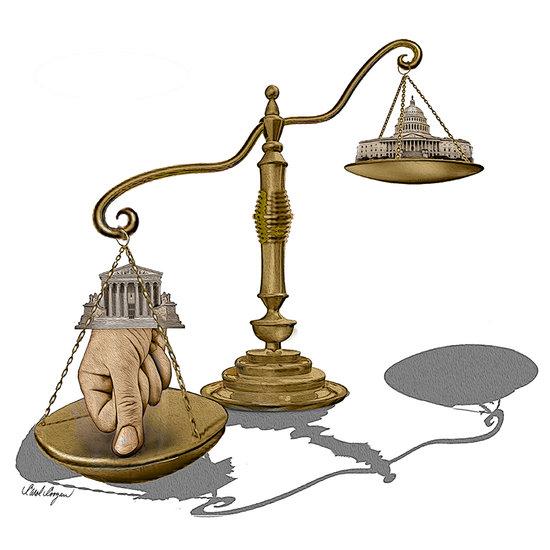
AlterNet describes the debate as including private correspondence in which Kagen was “not buying” Roberts’ insistence that immediate action by the court was necessary to save power companies the costs of upgrading or shutting down dated technology. Fox News, meanwhile, ties the memos to a specific concern about the Environmental Protection Agency, quoting Roberts as noting that the EPA was using ongoing litigation to force utilities to spend billions of dollars, and quoting Roberts: "In other words the absence of stay allowed the agency to effectively implement an important program we held to be contrary to law."
Critics, Defenders, and Jackson
The leak coverage described by Substack and Fox News centers on the argument that the shadow docket has become a routine mechanism for major decisions, often without the public reasoning associated with traditional Supreme Court rulings.
“No oral arguments. No briefing in the normal sense.”
The Substack post says the Supreme Court has “two ways of deciding cases,” contrasting the visible process with the shadow docket, which it describes as “No oral arguments. No briefing in the normal sense,” and “often unsigned, usually with no explanation of why they ruled the way they did.”
It also claims that “the shadow docket stopped being rare” and became “a way to decide some of the biggest questions in American law,” including “Immigration policy. Environmental regulation. Voting rights. Presidential power.”
Fox News, while focusing on leaks and institutional confidentiality, also references the memos’ substance and says the controversy includes Justice Ketanji Brown Jackson’s public criticism of the shadow docket, quoting her speech at Yale Law School: "There is value in avoiding having the court continually touching the third rail of every divisive policy issue in American life," and adding, "Today, the court routinely opts to enter the fray, and it fails to acknowledge the harms that follow when the Supreme Court of the United States consistently and casually divests the lower courts of their equitable authority."
The Daily Beast likewise reports that Jackson criticized the use of the shadow docket, noting that when she clerked for the Supreme Court in 1999, “the emergency docket was used almost exclusively for death row inmates,” and it quotes Jackson’s Yale Law School remarks about avoiding the “third rail.”
Newser frames the debate as a “fierce debate over the court's role and transparency,” saying critics argue the shadow docket allows the justices to make consequential decisions “without fully explaining themselves,” while defenders counter that the rulings are only temporary and that the court needs flexibility to respond quickly in urgent situations.
AlterNet adds that the Times reports the confidential papers are normally not disclosed until after a judge’s death, meaning “the public might not learn what happened, and why, for decades,” and it describes the court’s preference for decisions “without argument or public scrutiny.”
Leaks, Civility, and Accountability
Beyond the shadow docket itself, the sources describe a parallel controversy over leaks of confidential Supreme Court information and what those leaks mean for institutional confidentiality. Fox News says “another leak of confidential information rocked the Supreme Court,” and it notes that “The prior leak of the Dobbs decision went unsolved,” framing the new disclosure as a second strike. It argues that for an institution that “prides itself on its confidentiality and insularity,” the court is “looking increasingly porous and partisan in these leaks,” and it says “the most recent leak was published by the New York Times.”
Fox News also ties the leak to internal concerns about the Environmental Protection Agency, quoting Roberts again about the absence of a stay allowing the agency to implement a program held contrary to law. The same Fox News account describes a broader breakdown in civility and confidentiality, referencing Justice Sonia Sotomayor attacking Brett Kavanaugh as “essentially an out-of-touch prig,” and saying Sotomayor later apologized.

The Daily Beast, in contrast, focuses on the content of the memos and says the report reveals how the court began bypassing traditional procedures to issue rulings on “high-stakes matters,” while also emphasizing that the opinions are “largely unsigned” and often “lack the detailed reasoning that traditional Supreme Court rulings provide.” Newser, meanwhile, describes the debate over transparency and says the court has increasingly turned to the shadow docket to intervene in “high-stakes disputes,” issuing “brief, unsigned orders” that carry “sweeping consequences.”
Policy Effects and What Comes Next
The sources connect the shadow docket’s evolution to concrete policy outcomes and to the question of what happens next for the court and for public oversight.
Newser says that “Since then, the court has increasingly turned to the shadow docket to intervene in high-stakes disputes,” and it adds that “Generally speaking, such orders have often "empowered" President Trump, though they were used to stymie former President Obama.”
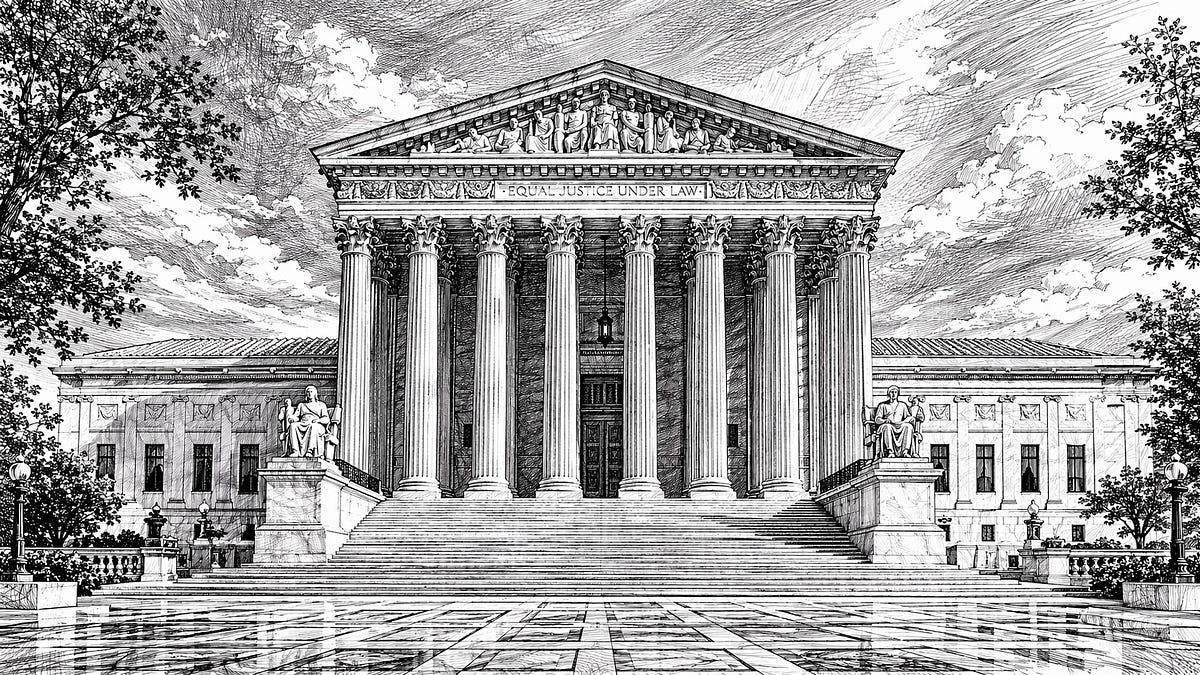
The Daily Beast similarly claims that “The ‘shadow docket’ has widely helped Trump push through his agenda throughout his second term,” and it lists examples including “allowed the Trump administration to cut the federal workforce” and “allowed a ban on transgender military service to remain in effect while the case moved through the courts.”
Substack frames the stakes in terms of direct impact on “Your business. Your rights. Your vote,” and it argues that the shadow docket’s secrecy means “No oral arguments. No briefing in the normal sense,” with orders “often unsigned” and “usually with no explanation.”
AlterNet adds that the Times reports the confidential papers are normally not disclosed until after a judge’s death, so “the public might not learn what happened, and why, for decades,” and it describes the memos as revealing how the court used truncated procedures to block or allow major presidential initiatives in terse rulings.
Fox News, meanwhile, argues that Roberts must respond to the leak and to the court’s transparency problem, saying “Roberts has to set his reservations aside and bring in the FBI to find the culprit,” and it calls for “total transparency in allowing the public to see the results wherever they may lead.”
Daily Kos, in a more political register, says the story “shines a light on Roberts’ duplicity,” and it argues that “the next Democratic president must demand Roberts’ resignation,” while also calling for Supreme Court reform as a “top priority.”