
Swiss Voters Reject SRG Licence Fee Cut From CHF 335 to CHF 200, Forecasts Show
Swiss licence-fee referendum
Swiss voters decisively rejected a right-wing initiative to cut the public-broadcaster licence fee, with early forecasts on 8 March 2026 showing roughly 62% opposed.
“- Published Swiss voters have rejected an initiative to sharply reduce the annual licence fee to the national broadcaster, the Swiss Broadcasting Corporation (SBC), according to initial projections”
Multiple outlets reported the same projected margin.
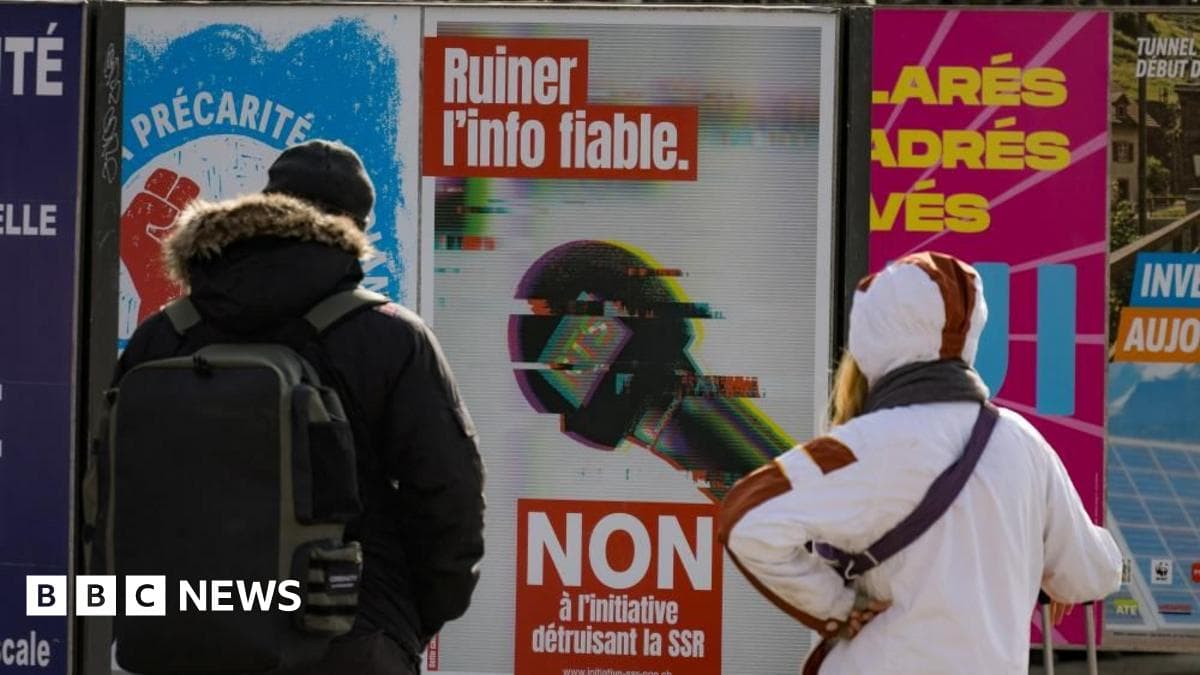
Global Banking & Finance Review said Swiss voters were projected to "decisively reject a referendum ... with early forecasts showing about 62% opposed."
The BBC reported the initiative "received only about 38% support versus 62% against."
SWI swissinfo.ch described the result as Swiss voters having "overwhelmingly rejected the referendum."
Swiss broadcasting fee initiative
The initiative, driven largely by right‑wing forces including the Swiss People’s Party, sought to reduce the household fee from CHF 335 to CHF 200 and to exempt businesses.
Coverage emphasised who backed the proposal and the arguments put forward by its supporters.
Global Banking & Finance Review noted it was "backed mainly by right‑wing groups including the Swiss People’s Party" and argued SRG was "bloated and politically biased."
The BBC summarised the mechanics of the proposal as a cut to "200 francs and exempted businesses."
SWI highlighted that the campaign laid bare deep disagreements about the broadcaster’s funding and editorial direction.
SRG funding debate
Opponents, including the government and all other parliamentary parties, warned that a large reduction would damage SRG's ability to provide programming across Switzerland's four national languages.
“Six things to take away from the battle over the SSR initiative The Swiss overwhelmingly rejected the initiative on Sunday that sought to reduce the license fee to 200 francs”
They said it would also jeopardise foreign news, sports, cultural and regional coverage.
The BBC reported that government and parliamentary parties opposed the move, arguing the fee is vital to fund programming in Switzerland's four national languages and to maintain foreign news and sports coverage.
Global Banking & Finance Review echoed opponents' concerns that lower funding would weaken news, sports, cultural and regional coverage, reduce media diversity and make Switzerland more vulnerable to disinformation.
SRG stressed its commitment to diverse, high-quality programming.
Swiss broadcasting vote impact
Observers noted the vote does not end debates over public broadcasting.
SWI said the campaign "will shape future political fights and reforms around the SSR".
Global Banking & Finance Review quoted campaigners who argued the rejection "prevented a major dismantling of the country’s media infrastructure."
The BBC put the result in context of earlier adjustments, noting Switzerland had already trimmed the fee in recent years and "plans to lower it to 300 francs by 2029 while extending exemptions for more companies."
Coverage of referendum outcome
Mainstream and financial outlets presented the referendum as a clear defeat for the right-wing push to shrink public broadcasting funding.
“Published by Global Banking & Finance Review® Posted on March 8, 2026 2 min readLast updated: March 8, 2026 Published by Global Banking & Finance Review® Posted on March 8, 2026 2 min readLast updated: March 8, 2026 Swiss voters on March 8, 2026, were projected to decisively reject the initiative to cut the SRG licence fee from CHF 335 to CHF 200—early forecasts indicated around 62% opposed—raising concerns about diminished regional coverage, cultural diversity, and resilience against disinformation”
Reporting also underscored ongoing tensions over editorial direction, funding levels and the role of SRG/SSR in a multilingual country.
Headlines stressed both the scale of the rejection and the argument that preserving the licence fee protects media diversity and regional coverage.
Those points were highlighted across coverage by the BBC, SWI and Global Banking & Finance Review.
Key Takeaways
- Swiss voters rejected the initiative to cut the licence fee to CHF 200.
- The licence fee currently stands at CHF 335 per household annually.
- Early projections showed a decisive rejection, with polls indicating roughly 62% opposed.
More on Europe

U.S. and Israel Kill Iran's Supreme Leader, Trigger Regional War
49 sources compared

France Deploys Warships To Eastern Mediterranean After Drone Strike On Cyprus
11 sources compared
Macron Sends Nuclear Aircraft Carrier Charles de Gaulle To Mediterranean To Shield Shipping, Defend Bases
17 sources compared
France Announces Expansion of Nuclear Arsenal, Will Temporarily Deploy Nuclear-Armed Jets to European Allies
20 sources compared