Iran-Israel08 March, 20264 min read
U.S. and Israel Kill Iran's Supreme Leader, Trigger Regional War
This article is an automated aggregation of coverage from news outlets. Our editorials offer in-depth analysis curated by the NewsCord team.
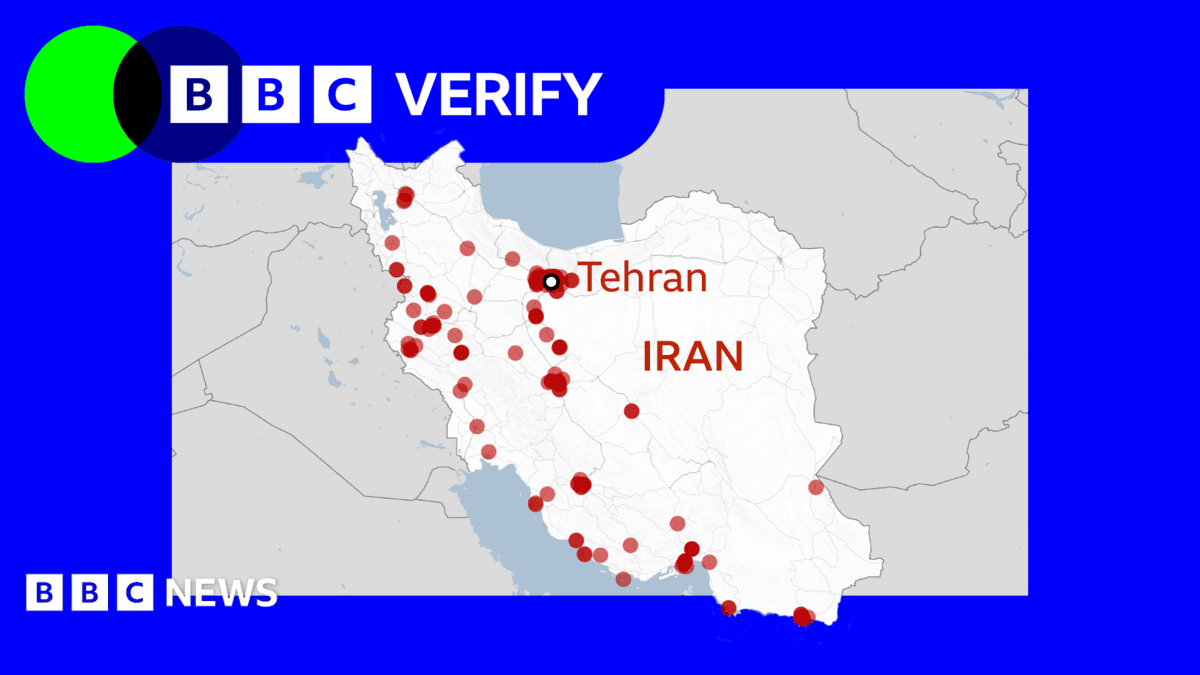
U.S. and Israeli strikes killed Iran’s Supreme Leader and several senior officials. Israeli and U.S. strikes hit Iranian oil depots and critical infrastructure near Tehran.

U.S.–Israeli strike overview
A joint U.S.–Israeli operation on Feb. 28 killed Iran’s supreme leader and senior officials and precipitated a rapid, region‑wide conflagration.
“On February 28, 2026, a joint U.S.–Israeli strike on Iran killed the country’s Supreme Leader and senior officials and triggered a full-scale regional war.”
Analysts describe the attack as the opening strike of a broader U.S.–Israeli campaign that has expanded into multiple theatres and drawn in regional states and militias, marking the start of a full‑scale regional war.
Gulf International Forum reports: "On February 28, 2026, a joint U.S.–Israeli strike on Iran killed the country’s Supreme Leader and senior officials and triggered a full-scale regional war."
The New York Times frames the succession amid that war: "The succession occurred nine days into a U.S.–Israeli war that began with the airstrike that killed the former supreme leader."
Al Jazeera notes the scale of the initial campaign: "Overall, at least 1,332 people have been reported killed since U.S.–Israel strikes began on Feb. 28."
Regional casualties and damage
The fighting quickly produced heavy but still uncertain casualties and widespread infrastructure damage across the Gulf and Levant.
Multiple outlets report high and conflicting death tolls and damage to civilian and military sites.

Al Jazeera summarized the human cost and calls for probes after major attacks, saying, "Overall, at least 1,332 people have been reported killed since U.S.–Israel strikes began on Feb. 28."
The New York Times stressed the uncertainty and geographic spread, saying, "Casualties across the region are heavy and uncertain," and cited strikes that killed civilians in several countries.
Time Magazine highlighted Lebanon’s losses from Israeli operations, reporting, "Israeli strikes on Hezbollah have killed 394 people — including 83 children, the Lebanese health minister says."
GMA Network and other outlets noted that U.S. and allied forces have also suffered losses, saying, "the Pentagon reported a seventh U.S. service member died of wounds from an Iranian attack."
Iran leadership succession
The Assembly of Experts convened to name a successor in Iran. Reports indicate Mojtaba Khamenei has been chosen, a move observers say signals continuity with the IRGC and existing power structures. The New York Times’ summary headline stated: 'Iran names Mojtaba Khamenei as new supreme leader amid regionwide fighting and heavy, uncertain casualties.'
“Iran names Mojtaba Khamenei as new supreme leader amid regionwide fighting and heavy, uncertain casualties.”
NBC News reported: 'Iran’s Assembly of Experts has reportedly named Mojtaba Khamenei, the second son of Ayatollah Ali Khamenei, as the country’s new supreme leader,' and noted criticism that his appointment 'signals continuity rather than the reform many Iranians hoped for.' The South China Morning Post likewise reported the Assembly 'appointed Mojtaba Khamenei, the son of the slain Ayatollah Ali Khamenei, as the country’s new supreme leader.'
Fox News added that Mojtaba 'has been sanctioned by the U.S. under EO 13867 and has reportedly been chosen by Iran’s Assembly of Experts as the country’s new supreme leader.' Sources differ on wording about Ayatollah Ali Khamenei, with SCMP describing him as 'slain' while other outlets do not use that term.
U.S. and Israel planning
Strategic and military planning by the U.S. and Israel has broadened the confrontation’s scope, with officials reportedly weighing special‑operations missions, strikes on Iranian infrastructure and moves to secure nuclear material. Al Jazeera noted that U.S. and Israeli officials have reportedly discussed a special‑forces plan to seize Iran’s highly enriched uranium, and that Iran says the Strait of Hormuz remains open while threatening to target U.S. or Israeli ships. Al Jazeera added that shipping activity dropped and Brent crude spiked roughly 27% for the week.
GMA Network and UnionLeader likewise reported that the U.S. and Israel have discussed sending special forces into Iran later in the war to secure its stockpile of highly enriched uranium. شفق نيوز reported U.S. intelligence assessments that Iran could be able to produce weapons‑grade nuclear material in about 10 days and that enriched uranium is believed stored at sites hit in June 2025 — Natanz, Isfahan and Fordow. These accounts show both the operational reach contemplated by Washington and Israel and the nuclear escalation risks driving strategic calculations.

Civilian tolls and investigations
Human-rights groups, media outlets, and regional authorities have called for investigations after strikes that killed large numbers of civilians, including children, and for scrutiny of the effects on displaced populations and infrastructure. Al Jazeera reported that human-rights concerns mounted after a strike on a primary school in southern Iran reportedly killed at least 160 people, many of them children, and said Human Rights Watch and Al Jazeera called for investigations. Time Magazine documented heavy civilian tolls in Lebanon, saying Israeli action killed 394 people, including 83 children.
“Human‑rights concerns have mounted after a strike on a primary school in southern Iran reportedly killed at least 160 people (many children); Human Rights Watch and Al Jazeera called for investigations.”
The Associated Press reported collateral deaths elsewhere after air defenses failed, saying debris from an aerial interception in the United Arab Emirates struck a vehicle, killing the driver and raising the death toll from the incident to four, all of whom were foreign nationals. NPR summarized the widening confrontation and diplomatic fallout, saying reciprocal strikes and mounting casualties are testing alliances and regional stability as the confrontation expands.