Syria18 April, 20269 min read
Syria Takes Full Control Of Qasrak Air Base After US Forces Withdraw From Hasakah
This article is an automated aggregation of coverage from news outlets. Our editorials offer in-depth analysis curated by the NewsCord team.
U.S. forces completed withdrawal from Syria, ending a decade-long military presence. Syrian army took control of Qasrak air base after U.S. withdrawal.
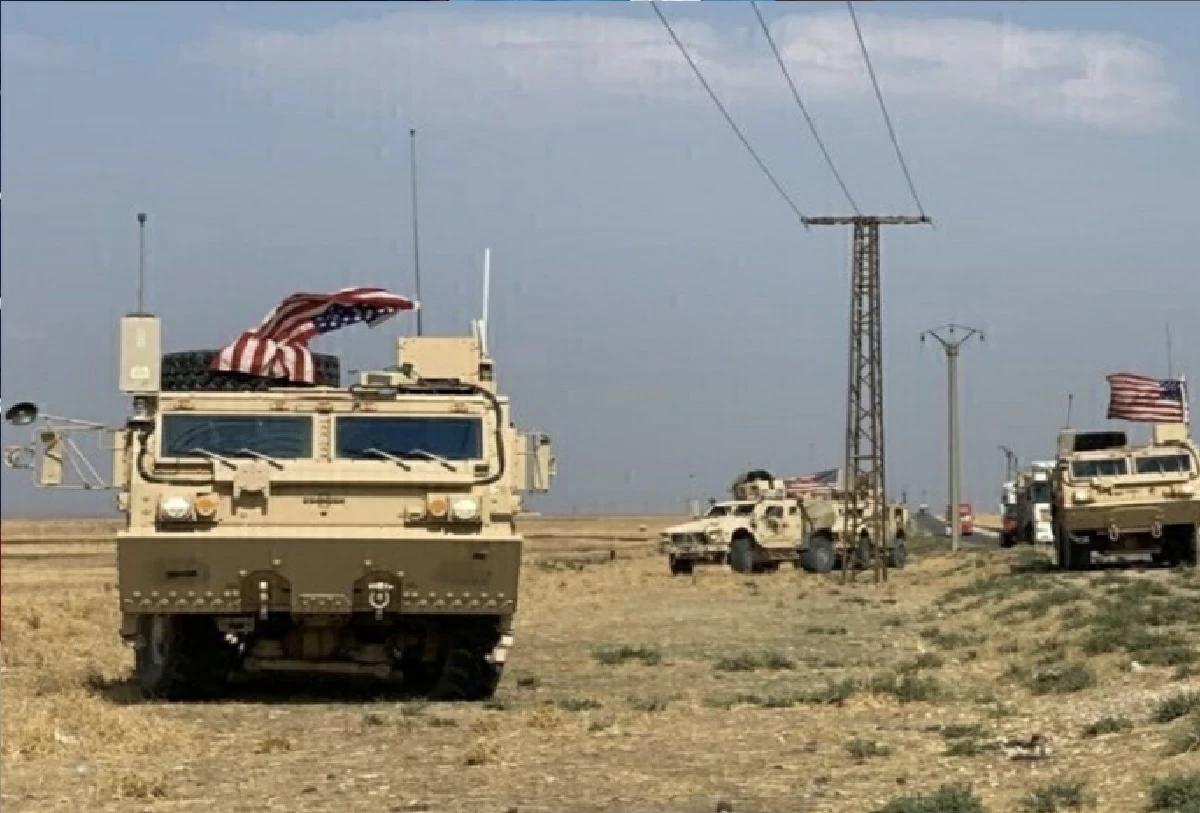
Final handover at Qasrak
Syria announced on Thursday that it had taken full control of all military sites where US forces had previously been deployed, completing a handover that Damascus said reflected the successful absorption of Kurdish-led fighters into national structures. The announcement came after the final convoy of US soldiers and equipment departed Qasrak air base, located in the northeastern governorate of Hasakah, ending a military presence that began in 2014 when US forces entered the fight against ISIL (ISIS) alongside Kurdish fighters who later led what became known as the Syrian Democratic Forces (SDF). Al Jazeera reported that Syrian President Ahmed al-Sharaa received the two most senior figures in the SDF—its military commander, Mazloum Abdi, and the head of its political wing, Ilham Ahmad—in Damascus on Thursday, with Foreign Minister Asaad Hassan al-Shaibani and the presidential envoy overseeing the integration process also present.
The Syrian Ministry of Foreign Affairs and Expatriates welcomed the completed handover, saying it reflected efforts to bring the country under a single state authority, including border areas and the northeast, which had long operated outside Damascus’s control. The ministry said the transfer was carried out in full coordination with the US, pointing to what it described as a constructive relationship developed since al-Sharaa met US President Donald Trump at the White House in November.

US Central Command told AFP that US forces “have completed turning over all of our major bases in Syria as part of a deliberate and conditions-based transition,” while Syria’s defence ministry said the army “took over the Qasrak air base… after the withdrawal of international coalition forces.” An AFP correspondent near Qamishli saw a convoy of American military vehicles heading toward the Iraqi border as the Qasrak base was evacuated and described as “empty of any American presence since their total withdrawal.”
Timeline of withdrawals
The Qasrak handover was presented by multiple outlets as the culmination of a staged US drawdown that had already included withdrawals from other bases and repositioning of forces across Syria. Courrier international framed the process as a planned end to a US military presence lasting since 2014, citing Washington’s February 12 announcement that it would withdraw troops from the Al-Tanf base on the Syrian border with Jordan and Iraq, and then reporting that three days later the evacuation of American soldiers from the Al-Chaddadi base in the Hasakeh region was announced. Middle East Eye said the last remaining US troops in Syria left their base in Hasakah on Thursday, ending a 10-year presence aimed at fighting the Islamic State group, and it described the Syrian military entering the last base previously under American control known as Qasrak, including an airstrip.
Al Jazeera’s account linked the handover to a deal struck in January between Damascus and the SDF, which had governed large swaths of northern and eastern Syria with tacit US backing, and it said Syrian government forces fought a brief conflict with the SDF before both sides came to a new agreement in March. Middle East Eye added that earlier this year US forces withdrew from two major American bases in Syria—southern al-Tanf and al-Shaddadi in the northeast—and it reported that American troops had been in Syria since 2015. Al Jazeera also described how Syria joined the international coalition against ISIL in November, a milestone that recast Damascus as a partner rather than an obstacle and altered the rationale for a continued US military presence.

Courrier international quoted Al-Thawra, saying the withdrawal was “within the framework of the complete withdrawal of the Americans from Syrian territory,” with the “departure of the last American soldier” from Syria scheduled for “mid-2026.” Al Jazeera Net, meanwhile, described a broader “strategic compass” shift and asserted that “Qasrk base was the final stop,” while also citing a US Army handover of the Rmelan base on March 16 and a February handover of the Shaddadi base. Even as the outlets differed in framing, they converged on the idea that the Qasrak departure closed a chapter of direct US presence and transferred operational control to Damascus.
Integration and official messaging
Across the reporting, Damascus tied the base handovers to the integration of Kurdish-led fighters into national structures and to Syria’s claim of sovereignty over areas that had operated outside central control. Al Jazeera said the handover reflected “the successful absorption of Kurdish-led fighters into national structures,” and it reported that the Syrian Ministry of Foreign Affairs and Expatriates welcomed the completed transfer as part of government efforts to bring the country under “a single state authority, including border areas and the northeast.” Pakistan Today echoed the same linkage, saying Syria’s foreign ministry welcomed the handover and that it reflected “the successful integration of the SDF into state structures,” while also quoting Damascus describing the move as reflecting “a shared assessment that the circumstances which originally necessitated the American military presence in Syria… have fundamentally changed.”
TRT عربي described the Syrian Ministry of Defense’s Media and Communications Administration as saying the army forces took over the Qasrk airbase after the withdrawal of international coalition forces, and it said the Syrian Foreign and Expatriates Ministry welcomed the final handover as the “fruit of government efforts aimed at unifying the country within the framework of a single state.” TRT عربي also stated that the completion of the handover was a “natural result” of the success of integrating what it called the SDF, described as “the front for the PKK/YPG terrorist organization,” into national structures, and it said the state bears full responsibilities in countering terrorism and confronting regional threats on its soil. Ici Beyrouth reported the Syrian Foreign Ministry saying the Syrian state is “today fully capable of conducting the fight against terrorism within its territory, in cooperation with the international community,” and it quoted US Central Command describing the transfer as “a considered transition conditioned on certain conditions.”
Middle East Eye said the Syrian foreign ministry welcomed the handover and added that it reflected “the Syrian state’s assumption of full responsibility for combating terrorism and addressing regional threats on its territory.” Türkiye Today, while focusing on broader diplomacy, included the same operational claim by stating that al-Sharaa said “Today the last foreign base exited northeast Syria,” and it described the integration of SDF into the Syrian state as a “major achievement.” Together, the outlets show Damascus presenting the handover not as a discrete event but as the visible end of a longer integration process that the government says now enables it to lead counterterrorism from within.
Different interpretations of what it means
While the handover itself was described consistently, the outlets diverged in how they interpreted the meaning of the US exit and the risks that could follow. Al Jazeera and Pakistan Today emphasized Damascus’s narrative of integration and sovereignty, with Al Jazeera reporting that the Syrian Ministry of Foreign Affairs and Expatriates said the transfer was carried out in full coordination with the US and reflected government efforts to unify the country. Courrier international, by contrast, framed the withdrawals as a shift in the balance between Washington and Damascus, quoting Al-Thawra that the process was “within the framework of the complete withdrawal of the Americans from Syrian territory,” and it added that the “departure of the last American soldier” was scheduled for “mid-2026.”
Middle East Eye focused on the operational timeline and the composition of forces taking over, quoting Charles Lister’s social media post that the force taking over the base was the Syrian army’s 60th Division, composed primarily of Kurdish fighters affiliated with the SDF. Al Jazeera Net offered a more strategic reading, asserting that the withdrawal was “the official declaration of a shift in the American 'strategic compass' toward the major fronts with China and Russia” and describing it as a practical implementation of a “'zero commitments' doctrine.” That same report also warned that the withdrawal left “security gaps” and claimed that a US security project report described “a security catastrophe” in January involving the absence of Syrian authorities’ control over the Al-Hol camp after its handover from the SDF, leading to the escape of “more than 15,000 detainees loyal to ISIS.”

It further claimed that “ISIS spokesperson Abu Hudhaifa al-Anzari broke a two-year silence” with an audio message calling fighters to target the Syrian government, and it said a UN monitoring team report confirmed ISIS’s success in planting sleeper cells inside all Syrian provinces. Even within the more mainstream accounts, the framing of the US rationale differed: Al Jazeera said Syria joined the coalition in November and that this “fundamentally altered the rationale for a continued US military presence,” while Al Jazeera Net described the withdrawal as taking advantage of an “open window.” The result is a picture where the same event—US forces leaving Qasrak and other bases—was interpreted either as the completion of a sovereignty-and-integration process or as the start of a new security uncertainty.
What comes next
The sources also point to what the handover is expected to change for counterterrorism, regional security, and diplomatic relations. Al Jazeera said the handover followed a deal in January and a new agreement in March, under which Kurdish fighters are being brought into the Syrian national army, Syrian security forces have deployed to the city centres of Hasakah and Qamishli, and control of border crossings and civilian institutions has transferred to Damascus. It also reported that Syria joined the international coalition against ISIL in November, “a milestone that recast Damascus as a partner rather than an obstacle,” and it said this “fundamentally altered the rationale for a continued US military presence in Syria.”
Pakistan Today quoted the US Central Command saying “US forces continue to support partner-led counterterrorism efforts, which are essential to ensuring the enduring defeat” of IS, even as it said the transfer of major bases was completed. Middle East Eye added that the US decision to withdraw followed President Ahmed al-Sharaa's defeat of Bashar al-Assad in December 2024 after more than a decade of civil war, and it said Washington previously had around 1,000 US troops in Syria. Türkiye Today reported that al-Sharaa said negotiations with Israel have not collapsed but are advancing under severe strain, and it quoted him accusing Israel of “acting with great brutality” toward Syria and of occupying areas near the Golan Heights while insisting Damascus chose the diplomatic path to avoid further escalation.

Al Jazeera Net, however, warned that the withdrawal did not leave “peace” but “security gaps,” and it claimed that ISIS sleeper cells had been planted across “all Syrian provinces,” including “the capital Damascus.” In the same report, it argued that with SDF forces merged into the Syrian government, “this information infrastructure is threatened with collapse and vulnerable to breach at any moment,” and it said the US report argued Washington’s gamble did not account for Damascus’ ability to fill the complex security vacuum. Even the more official accounts included operational details that suggest near-term movement: TRT عربي said dozens of military trucks left the Qasrk base toward the Iraqi border, and Ici Beyrouth described Qasrak as a logistics hub for convoys and military equipment bound for the neighboring country.