Africa23 April, 20268 min read
Tanzania Inquiry Finds 518 Killed in Post-Election Protests, Commission Chair Mohamed Chande Othman Says
This article is an automated aggregation of coverage from news outlets. Our editorials offer in-depth analysis curated by the NewsCord team.
518 people died in Tanzania's postelection violence last October. A government-appointed commission conducted the postelection violence inquiry.

518 deaths, inquiry findings
A government-appointed commission of inquiry in Tanzania announced that 518 people died in the widespread protests that followed last year’s general election, with the BBC reporting that the deaths were from “unnatural causes” and that 197 were “shot dead.” The BBC said commission chairman Mohamed Chande Othman did not say who was responsible for the deaths, while recommending further investigations, and it described the announcement as the first time authorities had said how many people died. The AP News report similarly said the commission formed to investigate the bloodshed announced “at least 518 people died,” and it tied the violence to an internet shutdown.
“The death toll stood at 518, comprising 490 males (94.6 percent) and 28 females (5.4 percent).”
AP also reported that thousands of people were injured, with “more than 800 people having gunshot wounds,” and it said the commission’s chairman Mohamed Chande Othman recommended further investigation on the use of firearms. APAnews, presenting the commission’s final report, said commission chairperson Retired Chief Justice Mohamed Chande Othman told the public that “The death toll stood at 518,” and it added that the findings were based on “extensive medical and forensic investigations.”
APAnews further stated that the commission said “the majority of the victims died from gunshot wounds,” and it reported that the commission’s work included interviews with “80 doctors and specialists,” as well as postmortem examinations and hospital records from across the country. The commission’s findings also included a breakdown of the dead, with APAnews saying the 518 comprised “490 males (94.6 percent) and 28 females (5.4 percent)” and that “Among the deceased were 21 children,” while the BBC said Othman reported that “490 were male, 21 were children and 16 were security officers.”
Election, shutdown, and blame
The violence the commission investigated followed Tanzania’s general election on 29 October, when President Samia Suluhu Hassan was declared the winner with 98% of the vote, a result the BBC said the opposition described as a “mockery” of democracy after her main challengers were excluded.
The BBC reported that at the time, the president said the election was fair and transparent and blamed foreigners for the violence, saying it was part of a plot to overthrow her, while international observers raised concerns over the lack of transparency with the African Union and Sadc saying the election had fallen short of democratic standards.

AP News said the postelection violence happened on Oct. 29 after young people took to the streets accusing the government of silencing the opposition, while it also reported that the internet was shut down in the country for days and that Hassan later apologized to the diplomatic community and promised it would never happen again.
AP added that Hassan was seeking a second term after serving out the term of her predecessor John Magufuli, who died in office, and it said Hassan won with 97% of the vote, with some international observers saying the election fell short of a free and fair vote.
Reuters, via Internazionale, reported that the commission’s chair Mohamed Chande Othman said the death toll could be an undercount because of difficulties identifying victims, and it said he did not name those responsible but said the commission had “indisputable evidence” the violence was planned and funded by “trained people.”
The BBC said the commission identified underlying causes of the violence, citing economic, political and social issues including demands for political reforms, unemployment and “lack of patriotism,” and it said politicians and activists used these issues to persuade citizens to take part in protests.
The BBC also reported that the commission concluded the demonstrations were neither peaceful nor lawful and would not qualify for legal protection, and it said the commission recommended that a new constitution be in place by 2028 and a new commission to foster reconciliation.
In contrast, The New York Times reported that the commission’s findings were “at odds with details from human rights groups,” and it said the commission said the violence was fomented by well-trained agitators with outside help while authorities were not to blame.
Hassan, Othman, and opposition
After receiving the report, President Samia Suluhu Hassan told the BBC that it “shook our nation” and that the government would take lessons from it, while she defended the actions of the security agencies by saying they had prevented the state from sliding into anarchy.
The BBC quoted Hassan saying, “We have learnt. The commission has told us that all the violence was planned coordinated, financed and executed by people who were trained and given equipment for committing crimes,” and it reported that she believed the objective was “to create a leadership vacuum” and make the country “ungovernable.”
The BBC also said Hassan announced the establishment of a criminal investigation body to examine offences linked to the post-election unrest, and it quoted her saying the investigation would “examine the deaths of children, address claims of missing bodies, and probe allegations of abductions.”
In the same BBC report, commission chairman Mohamed Chande Othman recommended further investigations and did not say who was responsible, while the BBC said Othman also recommended a national day of mourning and free medical treatment and psychosocial support.
Opposition parties and human rights groups rejected the commission’s work, with the BBC reporting that the main opposition party Chadema told AFP the report was a “cover-up” and described it as “an attempt to whitewash the regime's crimes.”
Reuters reporting relayed by Internazionale said CHADEMA rejected the commission’s work, stating in a statement that “a government accused of carrying out violent abuses cannot investigate itself,” and it said the commission’s report was not immediately made public.
Arab News PK, quoting AFP, reported that Chadema’s John Kitoka said the report was “an attempt to whitewash the regime’s crimes,” and it quoted him saying, “It’s all a cover-up actually. Like many other statements that the president has made, the report is all designed to whitewash the regime’s crimes.”
The BBC also reported that Othman said claims of mass graves “could not be substantiated,” alleging that AI was used to manipulate some images, while the opposition and religious groups had said thousands were killed and that bodies were taken from hospitals and allegedly buried in mass graves.
Numbers, injuries, and missing bodies
Beyond the headline death toll, the commission’s report described how victims were identified and how many people received treatment, while also addressing allegations about mass graves and missing bodies. APAnews said that “out of the 518 deaths, 373 victims were brought to health facilities already deceased, while 121 died while receiving treatment,” and it reported that “480 bodies were identified and collected by relatives, while 24 remain unidentified or lack full information.” APAnews added that “Six unclaimed bodies were buried under local government procedures, and three remain at Muhimbili National Hospital pending DNA analysis,” and it quoted Justice Othman saying “Some families declined postmortems and opted for immediate burial due to cultural and personal reasons.”
The BBC reported that Othman said the death toll could be higher because some victims had been buried without the authorities being told, and it said “More than 2,000 people were injured, including 120 security officers.” AP News similarly said that “Thousands of people were injured” and that “more than 800 people having gunshot wounds,” and it reported that “245 people remain unaccounted for” and that “39 families reported having seen the bodies of their loved ones in morgues before they later disappeared.” The BBC and AP both said the commission ruled out mass graves as alleged by human rights groups, with the BBC saying Othman said claims of mass graves “could not be substantiated” and AP saying the commission ruled out the presence of mass graves.
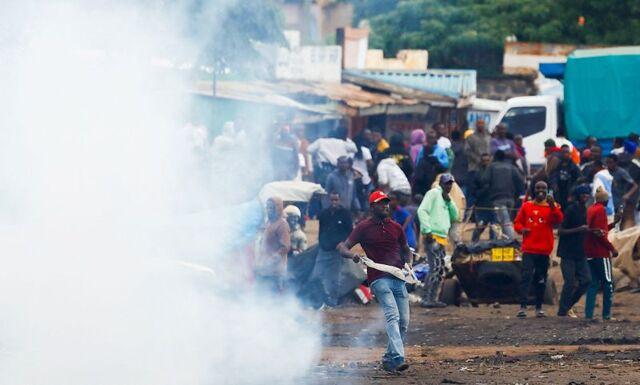
Internazionale, quoting Reuters, said the commission was unable to substantiate earlier reports of a mass grave and that it recommended a commission of criminal investigation to probe specific incidents. The New York Times also described the commission as unable to substantiate earlier reports of a mass grave and said the commission concluded security forces used force proportionately, while human rights groups estimated hundreds and possibly thousands were killed.
Next steps and contested narratives
The commission’s recommendations and the government’s planned follow-on investigations set out a path that both supporters and critics viewed through sharply different lenses. The BBC reported that the commission made recommendations including free medical treatment and psychosocial support for victims and that a national day of mourning be set aside in honour of those who died, and it said the commission also proposed setting up a commission of criminal inquiry to determine who is to be held accountable. The BBC further reported that the commission recommended that a new constitution should be in place by 2028, before the next general election, and that it would also create a new commission to foster reconciliation.
AP News said Hassan promised the establishment of a reconciliation commission and that the president announced the formation of a criminal investigative body to review the postelection unrest, with the body tasked to identify those who planned, financed and were involved in criminal acts such as looting and damaging infrastructure. AP News also reported that Hassan said the body would investigate claims of missing bodies and allegations of abductions, and it described the commission’s conclusion that the demonstrations were “acts of violence” because they contravened laws requiring a 48-hour police notice and because it was an election day, thus denying some citizens the right to vote. Reuters reporting relayed by Internazionale said the commission chair Mohamed Chande Othman acknowledged receiving allegations that people were shot in homes and shops, including near a cafe in the northern city of Mwanza, and it said Reuters reporting found that police officers massacred more than a dozen unarmed young men at the cafe.
The New York Times described the commission’s account as blaming “outside forces” and said the commission presented a picture at odds with human rights groups, which estimated hundreds and possibly thousands were killed. Arab News PK, quoting AFP, said Chadema’s John Kitoka told AFP that “There’s nothing new and we expected to be like that,” and it quoted him saying the president herself was an accused in the process, undermining trust.