
Tennessee Republicans Pass New Gerrymander Splitting Memphis Majority-Black District
Key Takeaways
- Tennessee lawmakers pass a new U.S. House map fracturing Memphis into three districts.
- Aims to give GOP a favorable map across Tennessee's nine districts.
- Follows Supreme Court ruling gutting Voting Rights Act, prompting rushed map before 2026 midterms.
Tennessee redraw after ruling
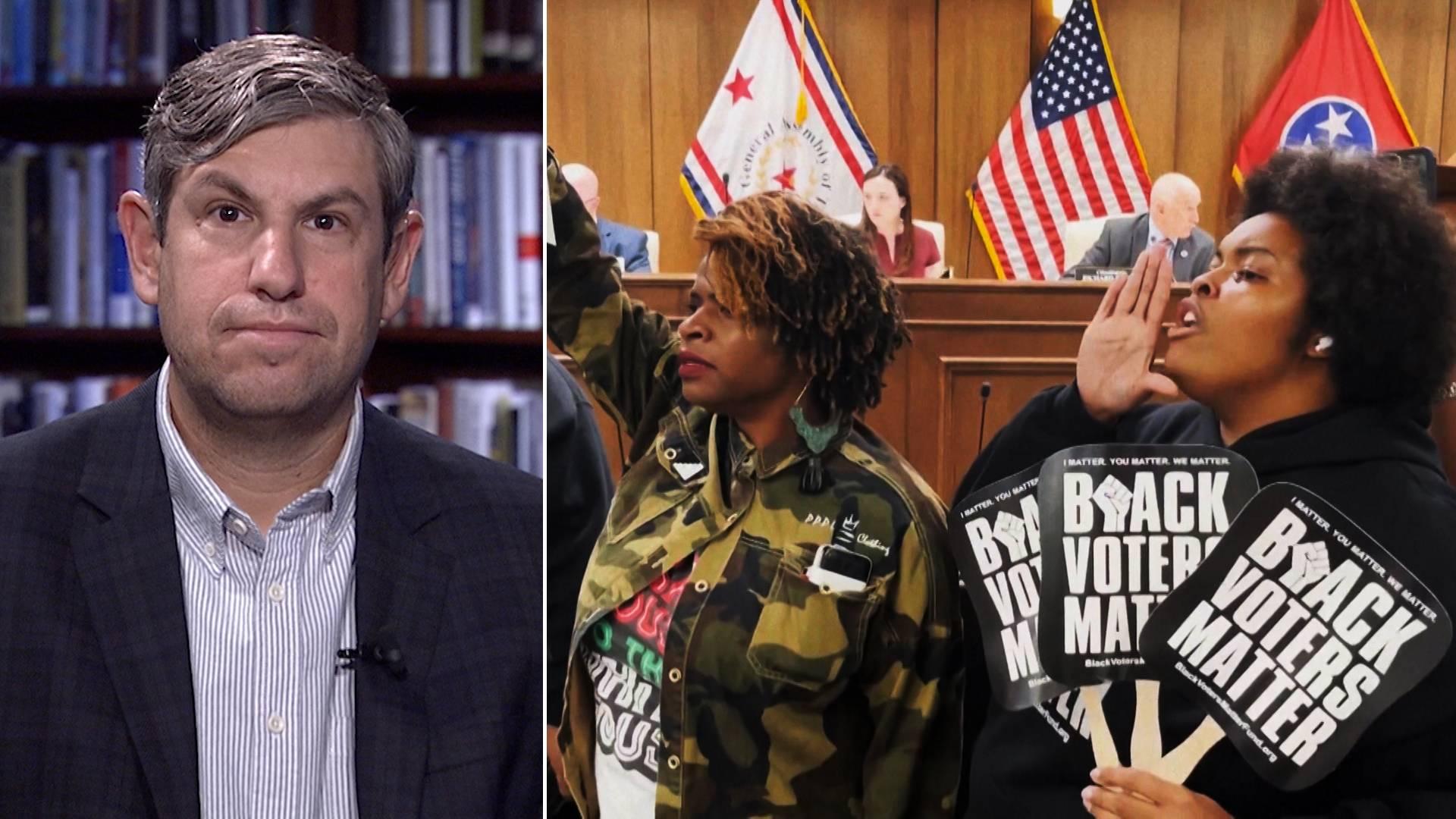
Tennessee Republicans approved a new U.S. congressional map Thursday that dismantles the state’s majority-Black district by fracturing Black-majority Memphis across three districts, a move that Tennessee Gov. Bill Lee is expected to sign into law imminently.
“By Gary Fields and Kim Chandler Washington (AP) — President Lyndon B”
The redraw follows last week’s Supreme Court decision weakening Section 2 of the Voting Rights Act, and Politico reported the map aims to give Republicans a clean sweep of the state’s nine congressional districts.

Tennessee Lookout said the bill passed Thursday and is expected to be quickly signed by Lee as state lawmakers faced a tight deadline to get the maps approved ahead of the state’s August primary election, set to take place in 90 days.
Tennessee Lookout also said the new map splits the state’s last majority-minority U.S. House district in Memphis across three seats as Republicans attempt to flip the last Democratic-held district.
The Hill framed the broader backdrop as Chief Justice John Roberts telling 3rd U.S. Circuit judges and lawyers that the Supreme Court does not feature “purely political actors,” after the Voting Rights Act decision.
Voices clash over race
Tennessee Lookout quoted state Sen. London Lamar, a Memphis Democrat, saying during a speech on the state Senate floor, “This map diminishes Memphis,” and she added, “Racism doesn’t become less racist just because it’s called partisan.”
Tennessee Lookout also reported House Speaker Cameron Sexton, a Crossville Republican, said multiple times the map was about “politics” and “population,” and it quoted him saying “No racial data was used” when he first presented the map.
Politico said Tennessee House Speaker Cameron Sexton told Tennessee Gov. Bill Lee, “We owe it to Tennesseans to ensure our congressional districts accurately reflect the will of Tennessee voters,” and it described the Supreme Court’s approach as treating redistricting as “color-blind.”
Tennessee Lookout reported that Democrats are expected to file a lawsuit over the new map, arguing Republicans are trying to change the rules too close to the election and that the changes were made based on racial demographics.
The Hill added that Roberts said people view the court as “purely political actors,” which he said is “an accurate understanding of what we do.”
What’s at stake next
Tennessee Lookout said the Supreme Court ruling on April 29 struck down a provision in the Voting Rights Act requiring states with a history of racial discrimination, like Tennessee, to draw majority-minority districts, and it said Tennessee lawmakers were pressured by President Donald Trump to draw a new map.
““The country’s most important civil rights law no longer effectively exists, and that’s going to have ramifications on American democracy for a very long time”
Tennessee Lookout reported that the new map could ensure the state sends no Democrats to Congress next year, and it said as recently as 2020 Tennessee had two Democratic congressmen, one based in Nashville and another in Memphis.
Politico said Tennessee is the first state to finalize a new congressional map after last week’s Supreme Court decision, and it reported Louisiana’s GOP-controlled legislature is expected to unveil a new map as soon as this week.
The Hill described the Supreme Court’s Voting Rights Act shift as a 6-3 decision that weakened a central provision of the Voting Rights Act, with Justice Elena Kagan warning that “At this last stage, the Court’s gutting of Section 2 puts that achievement in peril.”
Tennessee Lookout said Tennessee finished its legislative session on April 23, but Lee called lawmakers back for a special session after the April 29 Supreme Court ruling, with hundreds of protesters descending on the State Capitol in Nashville to push back against the redistricting effort.
More on USA

U.S. Fires on Iranian-Flagged Tankers in Strait of Hormuz After Exchanging Fire
11 sources compared

Pentagon Releases 161 Declassified UFO Files, Including “Football-Shaped” White Light Video
28 sources compared

Virginia Supreme Court Strikes Down Voter-Approved Democratic Redistricting Plan, Boosting Republicans
14 sources compared

Lebanese Army Accuses Israel of Ceasefire Violations as Hezbollah Bombs Israeli Soldiers Near Khiam
11 sources compared