
The Israeli settlers sow terror in the West Bank while the world watches Iran.
Key Takeaways
- Palestinian man Farea Hamayel, 57, was shot dead in the West Bank.
- Rocks were placed around the blood-stained stones at the scene.
- The report describes ongoing settler violence in the West Bank.
Abu Falah attack details
An unsettling calm reigns in the place where a bullet killed the Palestinian Farea Hamayel.
“An unsettling calm reigns in the place where a bullet killed the Palestinian Farea Hamayel”
Beside one of the olive trees he had tried to hide behind, someone has surrounded with larger rocks the stones on which his blood spilled, as if to preserve the memory of the grim end that befell this 57-year-old man.
A trail of red stains runs along part of the dirt path along which his neighbors vainly tried to help him.
Night had taken hold on March 8 of the fields surrounding Khirbet Abu Falah, a town in the center of the occupied Palestinian territory of the West Bank, when a mob of more than a hundred Israeli settlers opened fire on the town’s inhabitants, who had come to aid a family whose house was being attacked.
One bullet entered above Farea Hamayel’s ear; another struck between the eyebrows of his cousin Thaer Hamayel, 24, recalls another distant relative of both, Omar Hamayel, beside the olive trees.
As is often the case, Israeli soldiers came to assist, not the Palestinians, but the colonists armed to the teeth.
Another neighbor of the town, Mohammed Murra, 56, later died from asphyxiation caused by the tear gas the soldiers fired.
The ambulance taking him to the hospital could not pass through one of the barriers that Israel has kept closed in the West Bank since the start of the war against Iran, a little more than two weeks ago.
His heart stopped, recalls his brother, Basel Murra, with tearful eyes.
Israel began its war against Iran, together with the United States, on February 28.
Since that day, at least eight Palestinians have been killed by gunfire from radical settlers, not counting Mohamed Murra.
If you include that man who died from asphyxiation during one of those attacks, the death toll rises to nine.
They are the same people who perished at the hands of settlers across 2025 in the West Bank, according to data from the Israeli NGO B’Tselem.
In the last two weeks, settlers have carried out at least 11 shootings in that occupied territory, in which more than 40 people were also wounded, according to data from the Palestinian Authority.
B’Tselem sees a direct link between this unprecedented increase in violence and the international attention focused on the bombings against Iran.
With the pretext of war, cooperation between the army and the armed militias of Israeli settlers is deepening ethnic cleansing in the West Bank, the NGO states.
All with one objective, the organization emphasizes: to sow fear, expel Palestinians, and seize their land.
The Abu Falah attack, with its three dead, has been the worst settler assault in the West Bank in the last two weeks, but it has not been the last.
Unpunished killings, settler links
In another incident in the early hours of last Friday, Israeli settlers attacked the Bedouin community of Jumsa, in the Jordan Valley.
The assault ended with four Palestinians in the hospital, 14 beaten, and more than 300 sheep and personal belongings stolen by the settlers, who also sexually assaulted one of the men, according to the Israeli independent outlet Mekomit.
On Saturday, several settlers also shot and killed Amir Odeh, 28, as the young man tried to protect his flock in Qusra, in northern West Bank.
Like the olive trees, which these Israelis often cut down or burn, the sheep are the target of ongoing theft.
The settlers appropriate them for their farms or kill them to deprive their Palestinian owners of their livelihood and force them to abandon their land.
Finally, this Sunday, another four Palestinians, a couple and their two young children, aged 5 and 7 — the latter almost blind — were shot dead by Israeli soldiers in Tammun, also in the north of the Palestinian territory.
Palestinians have been denouncing for years that the two protagonists of this rising violence, settlers and soldiers, often cooperate.
The line that separates them is also ambiguous.
At times, the settlers are also soldiers or reservists and go in uniform, even if they are not on duty.
Other times they are civilians, but wear military uniforms provided by the Israeli authorities, as well as the weapons, many times automatic rifles — or the licenses to own them — with which they threaten the Palestinians, reports another Israeli NGO, Yesh Din.
The victims of these assaults sometimes do not know whether the person in front of them is a settler or a soldier.
These Palestinian deaths are not random, notes Allegra Pacheco, head of the West Bank Protection Consortium, which groups together various NGOs working in the Palestinian territory.
They obey, she notes, an agenda that could not succeed without the support of the authorities.
One of the fundamental manifestations of that support is that for settlers and soldiers killing Palestinians often goes unpunished.
They enjoy a sense of impunity now heightened by the war against Iran, Pacheco stresses.
More than 90% of violence reports filed by Palestinians do not lead to charges, the aid worker notes, citing data from another Israeli NGO, Yesh Din.
A February report from that organization states that only 3% of the complaints filed by Palestinians resulted in total or partial judgments against Israelis.
Context and annexation framing
Even in those tiny cases where charges are brought, Pacheco laments, the judicial cases rarely entail serious prison sentences.
“An unsettling calm reigns in the place where a bullet killed the Palestinian Farea Hamayel”
The Palestinians are defenseless.
Killing and Occupation.
Omar Hamayel points to a nearby hill that looms over the olive grove where his cousins were shot.
Men lurk near a makeshift tent built from tarpaulins.
About 300 meters away, someone has also set up a shack with a blue cloth.
The cries of those settlers tear through the air.
Mohamed, the alias of a 31-year-old Abu Falah neighbor, describes a revealing sequence of events.
In the months prior, the settlers had burned a nearby farm, prevented the town's residents from harvesting the olives, and forced several shepherds to take away or sell their sheep due to the ongoing attacks they suffered.
On March 8, they killed the two Palestinians and the third died from asphyxiation.
The army promised to investigate the deaths as it does when a case becomes high-profile but there is no record that anyone had been detained.
The day after killing Farea and Thaer, the settlers settled on those hills, recalls Mohamed.
Those two shacks are what is known as outposts, the seed of new settlements built without official permission, but which, increasingly, end up legalized by Israel.
In 2025, 31 obtained that recognition, according to the NGO Peace Now, which raises the number of Israeli settlements in the West Bank to 141 and the outposts to 224, which include settler farms on land and pastures of Palestinian communities, often expelled by violence that has almost emptied Palestinian residents from parts of the West Bank.
In February, Israel effectively reopened the official land registry in the West Bank, halted since 1967, allowing it to declare parcels state land and facilitate their use by settlers.
Whether legalized by Israel or not, all settlements are illegal under international law.
Of the three million inhabitants in the West Bank, half a million are settlers.
Mohamed points to the burned livestock operation months ago and the fields where the Hamayel cousins were shot.
There is only one farm left here, he laments.
He then recounts how the settlers threw stones at the shepherds and terrorized the livestock with their ATVs, all-terrain quad bikes that in many cases are provided by the Israeli authorities.
In Taybeh, another Palestinian town 12 kilometers from Abu Falah, Jereis, the alias of a 34-year-old Palestinian, works at his food stand preparing sandwiches for his Muslim neighbors to break the fast during the month of Ramadan.
Like most of the town's inhabitants, Jereis is Christian.
It is a detail that matters little; Christian or Muslim, Palestinians suffer the settlers' violence.
Taybeh, from which the Jordan Valley is seen majestically, is surrounded by five settlements, the man says.
Nearby there is another new unfinished dwelling.
It is unoccupied.
Jereis opens the gate of the property and shows a burnt-out car, with a child's chair inside.
He was the one who pulled from that house through a side door the family that was living there—a young couple with a one-and-a-half-year-old child—when a group of settlers set fire to his car last summer.
A few meters from the vehicle there are two butane cylinders.
After that the family left.
They had taken five years to build that house that no one wants to buy now, recalls Jereis.
On a nearby wall, a Hebrew graffiti reads: You are going to pay the price.
Since October 2023, when the Israeli offensive in Gaza began, more than a thousand Palestinians have been killed in the West Bank mainly by Israeli soldiers.
At least 27 of them have perished in settler attacks, according to B’Tselem.
So far this year, that NGO counted 16 Palestinians killed by Israeli gunfire.
They are added to the couple and their two young children shot dead on Sunday by the soldiers in Tammun, and five of the nine men killed in settler attacks since the start of the war against Iran.
For the government led by Prime Minister Benjamin Netanyahu, Haaretz said on Monday, these deaths form part of a plan to annex the West Bank to Israel and expel its Palestinian population.
More on Gaza Genocide
Kuwait State Security Service foils Hezbollah-linked terror plot targeting key facilities, 10 arrested
10 sources compared
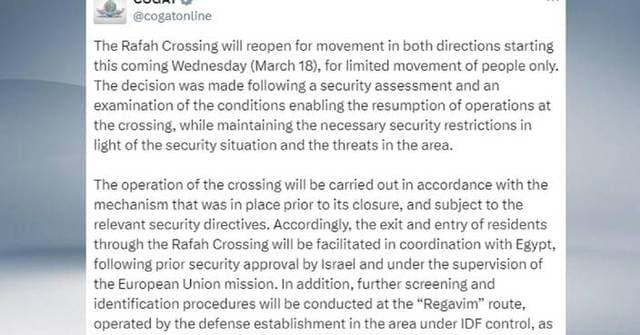
Israel to Partially Reopen Rafah Crossing for Limited Gaza Travel
13 sources compared

Israel Kills Palestinian Parents and Two Children in a West Bank Car
24 sources compared

UEFA Cancels Finalissima as Argentina Rejects Alternatives Amid Middle East War
11 sources compared