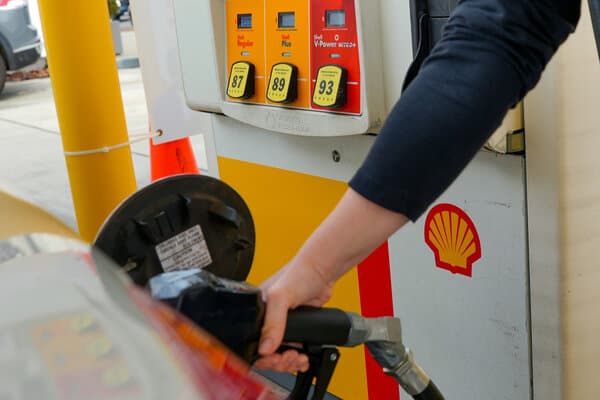
The Middle East conflict has raised concerns about energy supplies, and international oil prices have topped $100 per barrel.
Key Takeaways
- Gasoline prices rose about 16% since Feb. 28 U.S. and Israel attack on Iran.
- Crude oil briefly topped $110 per barrel after markets opened Sunday night.
- Markets fear continued Middle East war could severely disrupt energy supplies.
Energy markets after Iran strikes
Since Feb. 28, when the United States and Israel attacked Iran, the price of a gallon of regular gasoline has risen by about 16%.
Crude oil prices spiked sharply on Sunday night, briefly topping $110 a barrel shortly after markets opened.
The global benchmark Brent crude crossed $100 a barrel for the first time in nearly four years.
The article says oil is now about 50% higher than it was before the U.S. and Israel began strikes on Iran on Feb. 28.
Traders cited growing worries about the stability of Persian Gulf oil and gas exports after the Strait of Hormuz, off Iran’s southern coast, has been effectively blocked for more than a week, preventing fuel produced in the region from reaching overseas markets.
Normally about one-fifth of the world’s oil and a substantial share of its natural gas are transported daily through that strait.
Asian markets plunged in early Monday trading, with Japanese and South Korean markets each falling roughly 6%.
U.S. stock futures for the S&P 500, the Nasdaq Composite and the Dow Jones Industrial Average were all down by about 1.5% that night.
Energy price impacts
The surge in oil and gas prices is already raising consumer costs; the American Automobile Association reported that, as of Sunday, the national average retail price for regular gasoline had risen to $3.45 per gallon, about a 16% increase since the attacks began, while diesel prices have risen about 22%.
Natural gas used for home heating and power generation has become more expensive, particularly in Europe and Asia, though the article notes the impact on the United States is relatively smaller because the U.S. is the world’s largest gas producer; U.S. natural gas prices had risen by about 17% since the attacks began.
Energy Secretary Chris Wright told CNN that "what you now see is some 'fear premium' in the market, but currently the world is not short of oil or gas."
President Trump, who had pledged during his campaign to lower energy costs, posted on Truth Social; last week Mr. Trump said the U.S. Navy might escort tankers through the Strait of Hormuz, but Wright said the U.S. military's current focus is on limiting Iran's missile and drone capabilities.
Oil surge and inflation outlook
The article says the sudden surge in oil and gas prices has renewed concerns about inflation and will continue to push up retail pump prices, while Americans worry about the economic outlook.
It notes that the Federal Reserve typically combats rising prices by keeping interest rates high, but weaker-than-expected jobs data on Friday strengthened the case for future rate cuts, creating a tug of war over policy decisions.
Measures of investor inflation expectations have climbed sharply, with investors now expecting inflation over the next 12 months to be about 4.5%, up from a forecast of 2.3% at the start of the year.
Those expectations have pushed up government bond yields, raising borrowing costs; the two-year U.S. Treasury yield, which is sensitive to interest-rate expectations, has risen by about 0.2 percentage points since the conflict began, reaching 3.56%.
More on Iran-Israel

Escalation in Iran Pushes Oil Near $120, Sparks Gas Price Surge in Los Angeles
10 sources compared
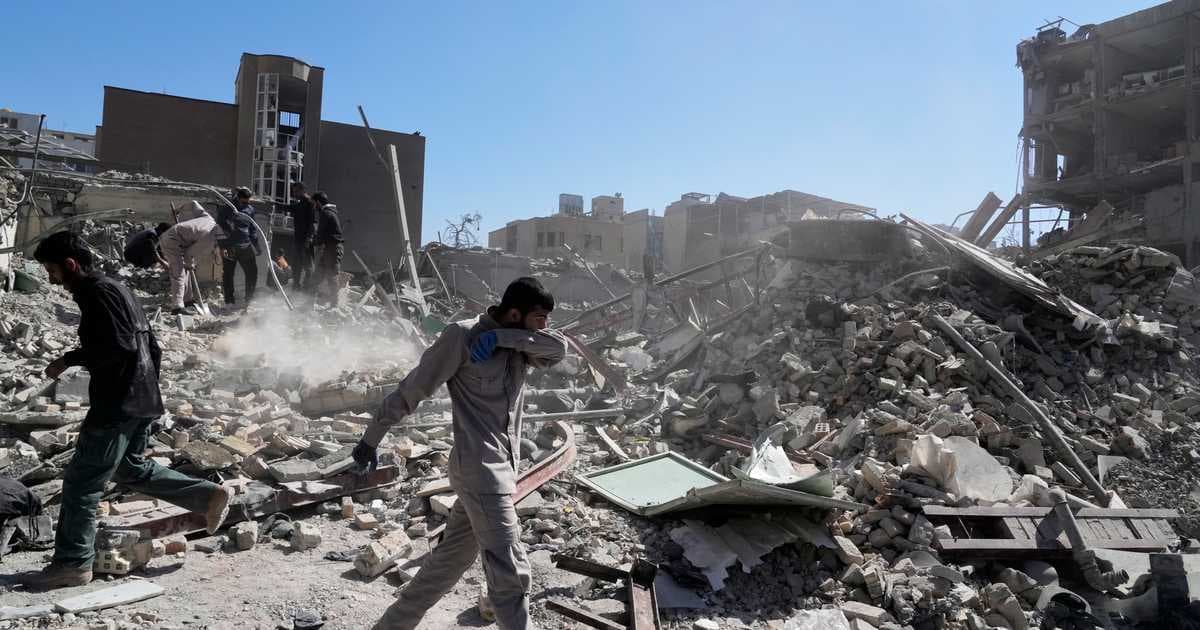
U.S. Intercepts Iran Message Activating Sleeper Cells After U.S.-Israel Strike Kills Khamenei
14 sources compared

Iran Threatens To Confiscate Property Of Iranians Abroad Who Support US And Israel
14 sources compared

Ukraine Sends Drones, Experts to Shield U.S. Bases in Jordan From Iran
16 sources compared