USA · 01 May, 2026 · 7 min read
Thousands Join May Day Economic Blackout Against President Donald Trump’s Policies Across U.S.
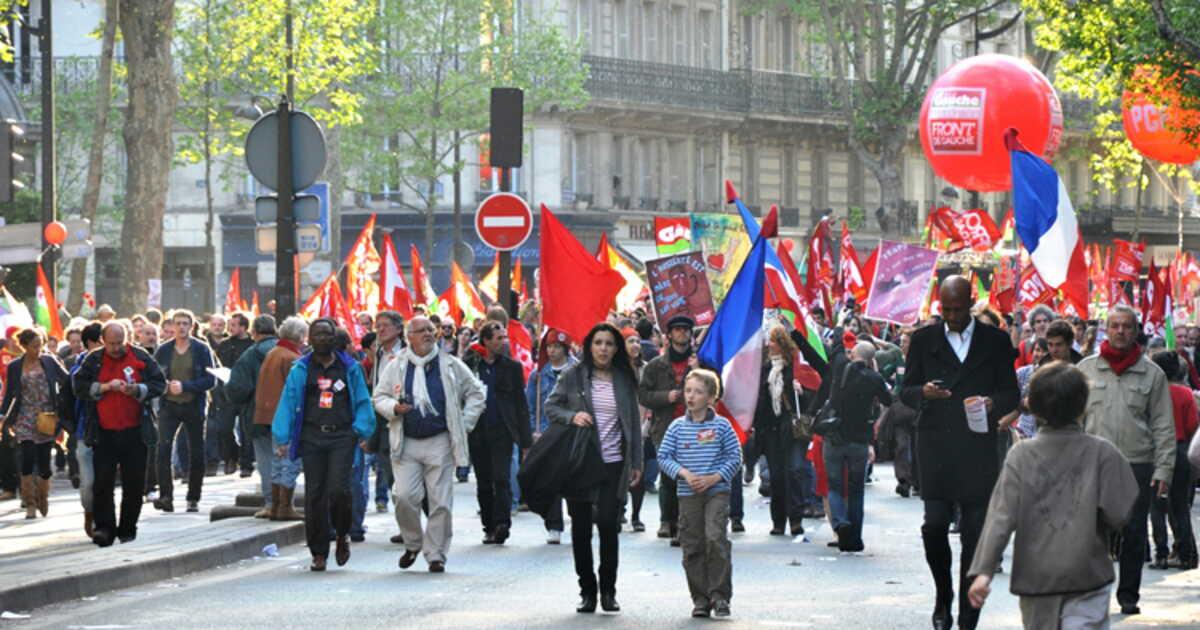
Nationwide May Day protests plan an economic blackout: no work, no shopping, no school. Organizers include the May Day Strong coalition, coordinating thousands of rallies and teach-ins.
Scale estimates of how many US actions/events are occurring.
7 of 12 outlets skipped it: the protests include attention to immigration/immigrant rights and immigration enforcement..
25outlets compared
Same story, two versions
tap a side to read it in full
NBC10 Philadelphia
““The rallies will all be part of ongoing May Day -- or International Workers Day -- celebrations intended to highlight support for workers' rights, calls to lift up the country's working class and protect those who have immigrated to this country.””Read the original ↗
NBC10 frames events primarily as local Philadelphia rallies within May Day celebrations focused on worker and immigrant rights, while NPR frames them as a continuation of a specific earlier anti-Trump protest campaign ('No Kings'), shifting the emphasis from labor rights broadly to a recognizable political lineage.
May Day, US-wide
Across the United States, May Day protests and boycotts are being organized under the banner “Workers Over Billionaires,” with organizers describing the day as an “economic blackout” aimed at President Donald Trump’s policies.
“at 10 a.m. at City Hall and, later in the day, a "Workers Over Billionaires May Day Rally" at 4 p.m.”
In Philadelphia, NBC10 Philadelphia reported that rallies are planned “at 10 a.m. at City Hall” and later at “4 p.m.” for a “Workers Over Billionaires May Day Rally,” with organizers saying the morning event will unveil “The Working People's Vision for Philadelphia.”N

In Los Angeles, FOX 11 Los Angeles said MacArthur Park will serve as a central rallying point, with a “major march and rally” scheduled to begin “at approximately 10 a.m.” and a route that organizers said will run from Westlake to downtown Los Angeles.
MyNewsLA similarly described a downtown Los Angeles march beginning “at 10 a.m. Friday at MacArthur Park,” followed by a march planned to Grand Park, and it said organizers are urging an “economic blackout” to skip “work, school and shopping.”
USA Today framed the protests as walkouts and boycotts, describing Terrence Wise, 46, of Kansas City, who said, “We won't go to work on May 1. Nor will they go to school. The family won't spend any money.”
NPR added that May Day events are expected to draw crowds in cities including “Boston to San Francisco,” and it said the “May Day Strong” protests are meant to mark International Labor Day with a boycott of work, school and shopping.N
Why organizers say now
Organizers and participants tied the May Day actions to economic pressure, immigration policy, and what they describe as a billionaire takeover of government.
Scripps News said May Day rallies worldwide are calling for “peace, higher wages and better working conditions” as workers face “rising energy costs and shrinking purchasing power tied to the Iran war,” and it quoted the European Trade Union Confederation saying, “Working people refuse to pay the price for Donald Trump’s war in the Middle East.”

In the United States, Scripps News said activists opposing Trump’s policies are planning “marches and boycotts,” and it described the rising living costs linked to the conflict in the Middle East as a key theme in Friday’s rallies.
Al Jazeera echoed the economic framing, reporting that trade unions are calling for solidarity and “the protection of workers’ rights as the United States-Israeli war on Iran and rising energy costs raise concerns about the global economy,” and it quoted the same European Trade Union Confederation message: “Today’s rallies show working people will not stand by and see their jobs and living standards destroyed.”
In Los Angeles, FOX 11 Los Angeles said the primary demands include a “pathway to citizenship,” “affordable housing,” and a “tax on the wealthy” to fund social programs, and it described the demonstration as part of a national “No School, No Work, No Shopping” boycott.
MyNewsLA reported that organizers said the Los Angeles demonstrations are part of International Workers’ Day and are calling for “expanded worker protections and immigration reforms,” while also urging an “economic blackout” to skip work, school and shopping.
Voices from the rallies
Multiple named organizers and participants described May Day as a call for collective action and non-cooperation, while also linking the protests to immigration enforcement and education funding.
“Our broken immigration system is at the core of many of our political and economic challenges—impacting working families and everyday costs, regardless of political affiliation”
In Los Angeles, FOX 11 Los Angeles quoted Anglica Salas, Executive Director for the Coalition for Humane Immigrant Rights (CHIRLA), saying, “Our broken immigration system is at the core of many of our political and economic challenges—impacting working families and everyday costs, regardless of political affiliation,” and it added that Salas described May Day as “a call to action.”
MyNewsLA quoted Francisco Moreno, executive director of the Council of Mexican Federations in North America, saying, “Our vision includes an economy that works for everyone with a living wage, strong labor protections and programs that keep families housed, fed, educated and healthy,” and it reported that Kristal Romero, press secretary for the Los Angeles County Federation of Labor, told LAist, “Starting there really sends a message that we’re here,” and “We’re standing with this community, and if you take on one of us, you take on all of us.”
In Philadelphia, NBC10 Philadelphia quoted organizers describing “The Working People's Vision for Philadelphia,” saying, “For far too long, working people across the United States and here in Philadelphia have been crushed by systems intentionally rigged against them and in favor of the billionaire elite.”N
USA Today quoted Terrence Wise directly, saying, “If you want to see real change, you've got to be a part of the solution. Because if you're not out organizing and you're not out in the streets and you're not talking to your neighbors, you're part of the problem,” and it described his role as a leader with the Missouri Workers Center.
NPR quoted NEA President Becky Pringle, saying the message this year is that the country should be “focusing on workers over billionaires,” and it quoted her describing “bus drivers in New York and teachers in Idaho and nurses in Louisiana” feeling impacts of a system that puts “billionaires ahead of everyone else.”N
How schools and cities respond
As May Day approaches, several reports described how school districts and local institutions are adjusting schedules, while organizers plan rallies and marches across major metropolitan areas.
NPR said that “Education” is a major part of the protest strategy, reporting that “school walkouts and a high number of teachers taking personal days have led school districts in Georgia, Illinois, North Carolina, Oregon and Wisconsin to close for May Day,” and it said “some 20 public school districts will be closed” in North Carolina due to planned staff absences.N
NPR also reported that the Charlotte-Mecklenburg Board of Education “issued a statement saying it had voted to call off school on May 1 due to the number of staff absences expected that day,” and it quoted spokesperson Tom Miner saying, “The Charlotte-Mecklenburg Board of Education and Charlotte-Mecklenburg Schools know that teachers want to live in the communities they serve and to continue doing what they love: teaching children.”N
In North Carolina, USA Today said nearly “20 school districts have canceled classes ahead of the protests,” and it quoted North Carolina Association of Educators Vice President Bryan Proffitt saying, “You're seeing the accumulated dissatisfaction of people who work in public schools across the state. And this year things reached kind of a breaking point,” while it added that educators expect “thousands to gather at the state Capitol in Raleigh for the "Kids over Corporations" rally and march.”
FOX 5 New York described city-level logistics and protest locations, saying events are planned across all five boroughs, including a “morning gathering in Bryant Park” and a later rally in “Washington Square Park,” with a larger labor and community rally scheduled for the evening at the “United Federation of Teachers headquarters on Broadway.”
In Los Angeles, FOX 11 Los Angeles provided a detailed timeline and route, including a march departing “heading east on Wilshire Boulevard” and concluding “at Gloria Molina Grand Park Performance Lawn,” while it warned commuters to expect “significant traffic delays and rolling street closures along the Wilshire corridor.”
Debate over the tactics
The May Day actions are being described by organizers as a boycott and “shutdown,” while some coverage also frames the strategy in terms of whether it qualifies as a general strike.
“more than 3,500 marches, rallies, and teach-ins”
Mother Jones reported that “tens of thousands of people across the US will walk out of school, skip work, and refrain from shopping as part of a nationwide economic blackout against President Donald Trump’s agenda,” and it said organizers with the May Day Strong coalition are helping oversee “more than 3,500 marches, rallies, and teach-ins.”

In that same report, labor historian Erik Loomis, described as “a labor historian at the University of Rhode Island,” discussed what a general strike is and said, “A regular strike comes out of a workplace,” while explaining that a general strike is about “workers writ large” walking out “in favor of some goal.”
Loomis also said that “sympathy strikes” and general strikes were declared illegal by the United States as part of the Taft-Hartley Act of 1947, stating, “A union cannot actually legally engage in what would be required to hold a [true] general strike today.”
The American Prospect, co-published with Capital & Main, described organizers distributing flyers urging, “No Work, No School, and No Shopping on May 1st,” and it quoted Roofers Union Local 36 business manager Cliff Smith calling Trump “the “fascist in the White House”” and saying, “May Day will show them that we are serious in our threats.”
NPR described May Day as a day reserved for protest in the U.S., and it said May Day goes back to the 19th century movement for an eight-hour workday, while also noting that in the U.S. NMay 1 is “traditionally been reserved as a day of protest.”