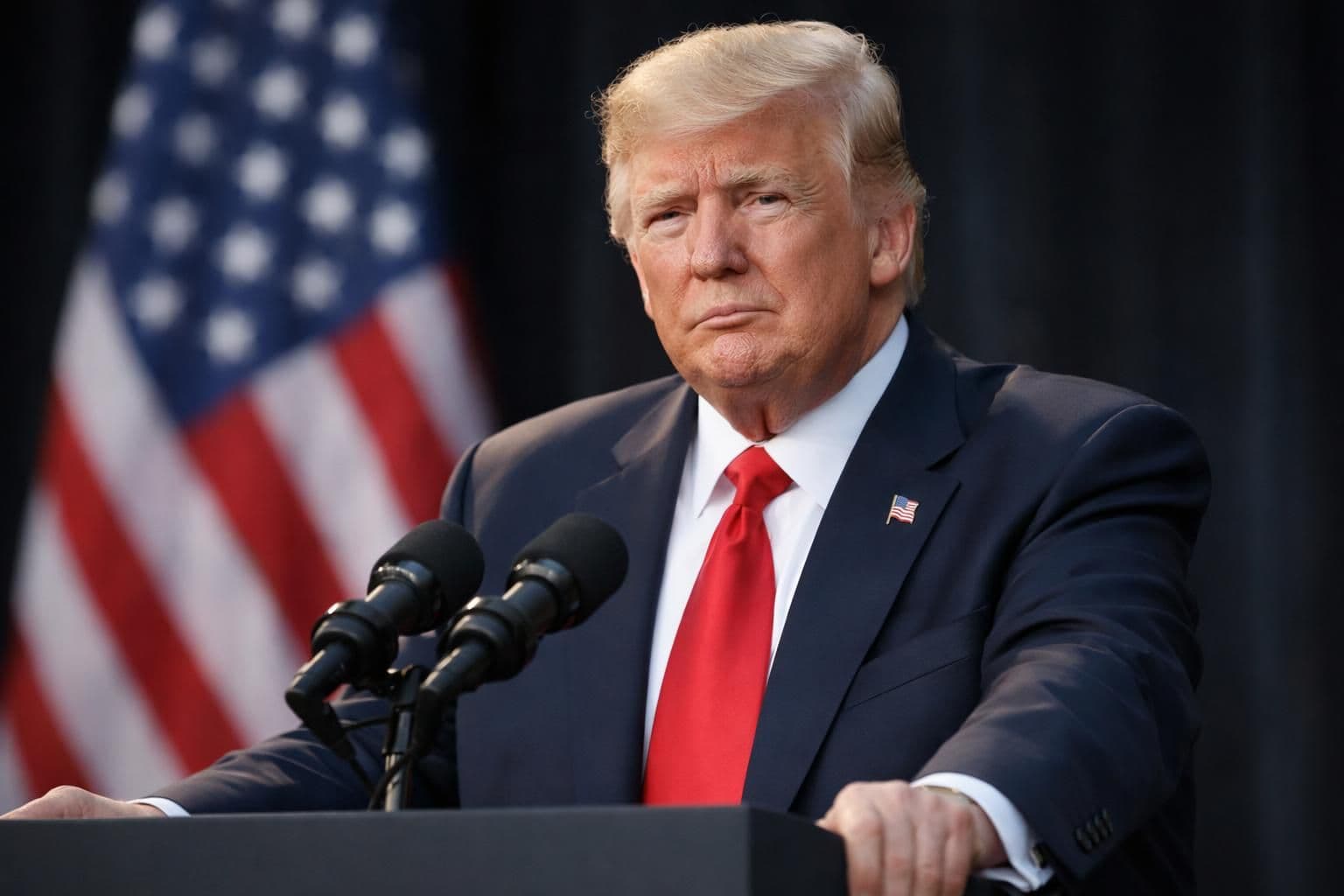
Trump called the war against Iran 'very complete' after previously demanding a total victory.
Key Takeaways
- Trump shifted rhetoric from demanding 'total victory' to calling the Iran war 'very complete'.
- He previously urged total victory and, in some speeches, suggested Iranian capitulation.
- The remark was reported during a media exchange and surprised diplomatic circles.
Donald Trump's Iran remarks
Donald Trump's rhetoric about the war with Iran shifted rapidly, moving from a demand for a 'total victory' to calling the conflict 'very complete' and 'more or less' over.
“In a few days, Donald Trump’s rhetoric on the war against Iran shifted from a tone of demand — “total victory” and, in some speeches, the idea of a capitulation — to a much more ambiguous, almost administrative formula: an armed conflict described as “very complete,” “more or less” over”
That remark was reported during a televised exchange and surprised diplomatic circles because strikes, counterstrikes and military signals at the time suggested escalation rather than an exit.
Markets reacted before any official clarification, sending the price of a barrel above $110 and prompting renewed fears of inflation, higher fuel costs and supply-chain tensions.
Social networks recycled comparisons with historical episodes of prematurely declared victories and sparked a debate over whether this represented a policy shift or a communications maneuver to regain control of an uncontrollable narrative.
Rhetoric of "very complete"
The article argues that "very complete" is not classical diplomatic or military vocabulary.
It says the expression functions like an "unidentified political object" that claims a result without specifying objectives or criteria and leaves the public to fill in the blanks.
It lists possible concrete indicators the phrase lacks, such as neutralized sites, disrupted chains of command, and weakened air or naval capabilities.
The article warns that without such an inventory the formulation becomes a screen.
The piece says words create facts.
It argues that an announcement of an imminent end can accelerate third-party negotiations, provoke last-minute strikes, or serve as rhetorical cover that lets a leader say "mission accomplished" without a timetable.
The article uses a fictional analyst, Samira, to illustrate how each statement shifts assessments of regional extension, energy transit closure, and partner posture.
Rhetoric, strikes and economics
The article links rhetoric to a chain of strikes and counterstrikes involving U.S. and Israeli forces against Iran.
“In a few days, Donald Trump’s rhetoric on the war against Iran shifted from a tone of demand — “total victory” and, in some speeches, the idea of a capitulation — to a much more ambiguous, almost administrative formula: an armed conflict described as “very complete,” “more or less” over”
It describes a tactical objective of rapidly degrading key capabilities—air defenses, command centers, communications, logistics, and naval elements—without occupying territory.
Declaring a war “very complete” is presented as a maneuver that can either narrow focus to visible successes or misread asymmetric risks such as proxy actions and maritime threats.
On the economic side, the piece uses a fictional purchaser, Laurent, to show how higher oil prices and uncertainty force firms to stockpile and pass on costs, turning geopolitical signals into diffuse inflation.
The article concludes that de‑escalation is credible only when it produces new behaviors, not just words.
It also warns that ambiguity in Trump’s phrasing risks handing narrative initiative to adversaries and forcing partners to constantly recalibrate exposure and strategy.
More on USA

US Air Force KC-135 crashes in western Iraq, six airmen killed
29 sources compared

Judge James Boasberg Blocks DOJ Criminal Probe of Federal Reserve, Deems It Trump Pressure Campaign
15 sources compared

Pentagon Deploys Marines and USS Tripoli to Middle East After Iran Blocks Strait of Hormuz
22 sources compared
FBI Warns of Iranian Drone Plot Based on Unverified Tip; California Says No Credible Threat
10 sources compared