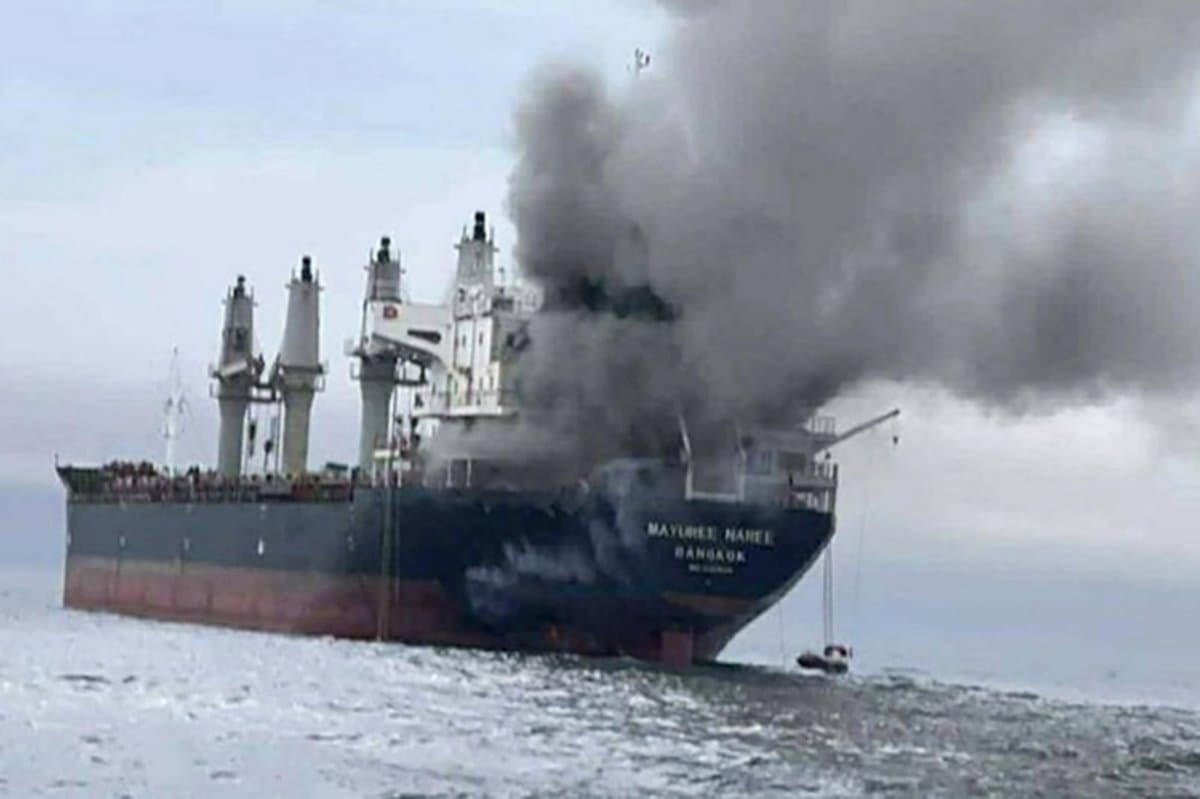
Trump demands allies deploy warships to keep Strait of Hormuz open as Iran threatens closure.
Key Takeaways
- Trump sought seven countries to send warships; no commitments or responses yet.
- Effort aims to reopen Hormuz as Iran threatens closure; oil prices rising.
- Officials seeking coalition to escort ships through Hormuz; some nations reportedly agreed.
Trump's Coalition Demands
President Donald Trump has demanded approximately seven countries deploy warships to police the Strait of Hormuz amid escalating tensions during the Iran war.
“Trump demands other nations send warships to police Strait of Hormuz During the United States-Israeli war on Iran, Tehran has said the Strait of Hormuz is open to all except the US and its allies”
His appeals have not secured any commitments as oil prices continue to surge.

Trump made the demands while traveling back to Washington from Florida aboard Air Force One.
He claimed that the shipping channel is not something the United States needs to protect due to its own energy independence.
Trump emphasized that China relies heavily on the strait for about 90% of its oil imports.
The U.S. receives minimal amounts from the strategic waterway.
One-fifth of the world's traded oil normally flows through the strait.
The administration has been negotiating with countries heavily dependent on Middle Eastern crude.
They aim to join a multinational coalition for security operations in the region.
Iranian Threats & Oil Surge
Iran has significantly escalated tensions by declaring the Strait of Hormuz "closed" and threatening to burn any vessels attempting to cross.
The Islamic Revolutionary Guard Corps (IRGC) warned they will "set those ships ablaze."

The announcement on March 2 sent oil prices soaring above $100 per barrel.
Pre-war prices were about $65 per barrel.
Brent crude climbed 2.5 percent to $105.70 on Monday.
This represents more than a 40% increase since the war began on February 28.
Tehran has maintained that the strait remains open to all nations except the United States and its allies.
This creates a complex geopolitical situation where major oil importers face security dilemmas.
Iran's Foreign Minister Abbas Araghchi dismissed American overtures.
He stated Tehran has "no plan to recover" enriched uranium under rubble and refuses to negotiate with Americans.
Tehran blames Americans for starting coordinated attacks during indirect U.S.-Iran nuclear talks.
Allied Nations' Dilemmas
Major energy-importing nations face difficult strategic decisions as Trump pressures them to deploy naval forces to the Strait of Hormuz.
“CAIRO — President Donald Trump said Sunday that he has demanded about seven countries send warships to keep the Strait of Hormuz open, but his appeals have brought no commitments as oil prices soar during the Iran war”
South Korea and Japan are particularly vulnerable due to their heavy dependence on Middle Eastern oil.
South Korea imports 60-70% of its crude oil through the strait, making the route critical to its economy.
Deploying naval forces risks drawing South Korea into the expanding Middle East conflict.
Japan faces a similar predicament with roughly 90% of its crude oil imports coming from the Middle East.
During previous crises, both nations chose independent operations over joining U.S.-led coalitions.
The current situation is far more dangerous due to direct U.S. and Israeli strikes on Iranian territory.
European powers are also navigating complex decisions.
France is discussing deployment of a naval task group including an aircraft carrier.
The UK has ruled out sending an aircraft carrier but is considering additional deployments.
Global Energy Crisis Response
Global energy markets remain severely disrupted as international shipping companies have temporarily halted operations in the Persian Gulf.
This has left oil tankers stranded and exacerbating the crisis.

At least 16 ship attacks and several suspicious incidents have been reported recently.
This information comes from British maritime security monitoring.
Financial institutions warn prices could climb toward $150 if the blockade continues.
In response to the crisis, the International Energy Agency has approved the release of 400 million barrels from emergency reserves.
This represents the largest such move on record.
The United States plans to release about 172 million barrels from its strategic petroleum reserve.
However, energy analysts warn these measures may only ease short-term pressure.
They will not stabilize markets unless shipping through the Strait of Hormuz resumes.
Trump has vowed that "we will soon make the Strait of Hormuz open, safe and free".
He announced that U.S. forces would continue strikes against Iranian coastal targets and vessels.
More on Iran
Russia Secretly Airlifts Iran's Supreme Leader Mojtaba Khamenei to Moscow for Surgery
11 sources compared
Iranian Drone Strike Shuts Dubai International Airport, Thousands Stranded
25 sources compared

Iran Drone Strike Shuts Dubai International Airport, Triggers Global Travel Disruption
16 sources compared

Iran's New Supreme Leader Mojtaba Khamenei Travels to Moscow for Leg Surgery
15 sources compared