Trump Feud With Pope Leo XIV Sharpens As Vatican Translation Buffer Fades
Key Takeaways
- Pope Leo XIV's Africa tour to Angola amplifies Trump feud.
- Pope downplays feud, says not interested in debating Trump.
- Catholics are divided by the clash, prompting calls to mend fences.
Feud Over Translation
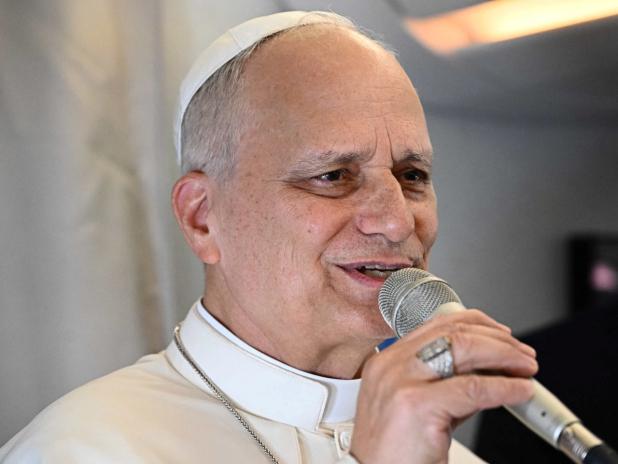
Tensions between Pope Leo XIV and President Trump have sharpened in the United States, with Axios arguing that the pope’s “native-level English” removes a “long-standing Vatican buffer” of translation ambiguity that previously softened or clarified papal critiques of U.S. leaders.
“Print Edition Read pdf version Home {{tree}} {{link”
Axios reports that Trump is “not a fan” of Leo and says, “I have no disagreement with the fact the pope can say what he wants, and I can disagree,” framing the dispute as one where Trump can reject the pope’s message while still allowing him to speak.
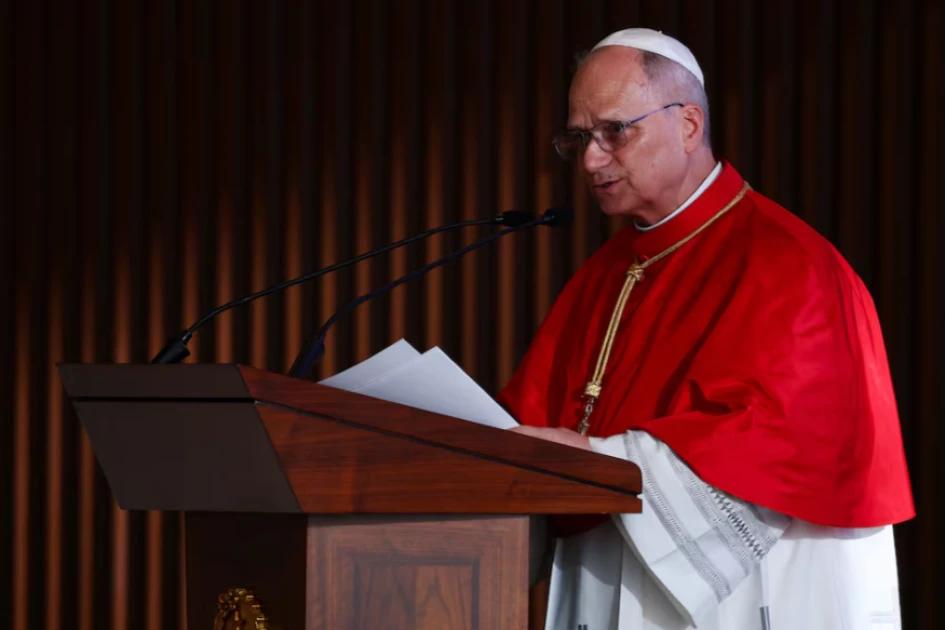
Axios also quotes Vincent J. Miller, the Gudorf Chair in Catholic Theology and Culture at the University of Dayton, saying, “Having grown up in the U.S., Leo has both native competence in U.S. English and insight into U.S. culture.”
Miller adds that Leo understands “the entanglements of religion and politics in the U.S.”
In the same Axios piece, Allen Sánchez says, “I think the American and English speaking things (are) overblown,” and adds, “Previous popes said what they intended. The gift from Leo is that he's very precise.”
The dispute is also described as personal and public in the U.S. media ecosystem, with Axios saying Leo’s remarks have “worked seamlessly into cable news clips, social media, and campaign messaging.”
Mending Fences
As the Trump feud with Pope Leo XIV played out, The Hill reports that Pope Leo and Vice President Vance sought to “mend fences” after the dispute.
The Hill says that on Saturday, Pope Leo told reporters on the Papal plane that “There’s been a certain narrative that has not been accurate in all of its aspects,” adding that “Much of what has been written since then has been more commentary on commentary, trying to interpret what has been said.”

The Hill reports that Leo said the remarks given at the prayer meeting for peace were prepared “two weeks” before Trump made any comments about him, and that the pontiff said it was not in his “interest at all” to debate the president.
The Hill also quotes Vance in a Saturday post on X, writing, “I am grateful to Pope Leo for saying this,” and adding that “the media narrative constantly gins up conflict–and yes, real disagreements have happened and will happen–the reality is often much more complicated.”
Vance’s post continues, “Pope Leo preaches the gospel, as he should, and that will inevitably mean he offers his opinions on the moral issues of the day,” and he adds, “He will be in our prayers, and I hope that we’ll be in his.”
The Hill further notes that Trump previously told reporters he has a right to disagree with the pope and said the only reason Pope Leo was elected as the first American pontiff is because religious leaders wanted to gain favor with him.
Catholics Weigh the Clash
The Guardian describes how the feud is being processed by American Catholics in everyday settings, including a Sunday mass in Duluth, Georgia, at the Catholic Church of Saint Monica.
“Pope Leo downplays feud with Trump, says 'not in my interest' to debate him Audio By Vocalize Pope Leo sought to downplay his feud with U”
The Guardian quotes Alex Sullivan, a self-described conservative who once staffed a libertarian state representative at the Georgia capitol, saying he rejected the idea that Trump’s criticism of Pope Leo would diminish his opinion of the pontiff.
Sullivan tells the paper, “No, I will not support the pope any less,” and adds, “There have been times in the past when this pope or the prior pope have done things that I struggle with.”
He says, “Usually I have to pray about it, and sometimes I have to be OK with not being OK with what he said and just living in that tension.”
The Guardian ties the dispute to Pope Leo’s advocacy for peace in the Iran conflict, reporting that Leo proclaimed on Palm Sunday: “Brothers and sisters, this is our God: Jesus, King of Peace, who rejects war, whom no one can use to justify war.”
The Guardian reports that on Easter Sunday, Trump threatened to bomb civilian infrastructure in Iran unless the regime opened the strait of Hormuz, and that two days later Trump wrote on Truth Social, “A whole civilization will die tonight.”
Competing Frames in Coverage
Across outlets, the feud is framed with different emphases, even when describing the same core dispute between Pope Leo XIV and President Trump.
The Hill focuses on reconciliation language and timing, reporting that Leo said the prayer meeting remarks were prepared “two weeks” before Trump’s comments and that it was “not in his“interest at all” debate with the president,” while Vance wrote, “Much of what has been written since then has been more commentary on commentary, trying to interpret what has been said.”

In contrast, the New York Post emphasizes Leo’s insistence that he was not targeting Trump, quoting Leo’s claim that it was “not in my interest at all” to continue a feud, and describing the pope as “the first US pope” who said he was spreading a message for global peace rather than specifically the war in Iran.
The New York Post also reports that Leo told reporters aboard the papal plane flying from Cameroon to Angola as part of his “11-day tour of Africa,” and it quotes Leo referring to unusually forceful statements in Cameroon about the world being “being ravaged by a handful of tyrants.”
Meanwhile, Axios frames the feud’s U.S. escalation around communication mechanics, arguing that Leo’s “native-level English” removes “ambiguity in translation” and that the pope’s remarks have been “amplifying political impact and backlash.”
The Guardian, meanwhile, grounds the dispute in a moral and scriptural register, quoting Leo’s Palm Sunday message about “hands full of blood” and reporting Trump’s “WEAK on Crime, and terrible for Foreign Policy” post on Truth Social.
Political Stakes and Fallout
The stakes of the Pope Leo XIV–Trump clash are described in U.S. political terms, with USA Today reporting that the feud “divides Catholics” and that the dispute has escalated beyond president versus pontiff.
“Alex Sullivan tended to his five children on the lawn after a traditional Latin mass at the Catholic Church of Saint Monica in Duluth, Georgia, and contemplated his faith in the light of God and the shadow of Donald Trump”
USA Today says that for many Catholic supporters of President Donald Trump, it’s been “a rocky April,” and it ties the conflict to Trump threatening Iran with annihilation and then dissing Pope Leo XIV as “WEAK on Crime” while posting an AI-generated image depicting himself as Jesus.

USA Today quotes Landon Schnabel, an associate professor of sociology at Cornell University in Ithaca, New York, saying, “Conservative Catholics who have supported Trump may now feel the need to decide between him and the pope.”
The paper also quotes Frank Lacopo, an assistant professor of history at Southeast Missouri State University in Cape Girardeau, saying, “This is unprecedented in American history.”
USA Today reports that “Nearly 60% of Catholics backed Trump in the 2024 election,” and it quotes Mathew Schmalz saying “up to a third of that support may have since withered” as the president and pope clashed over U.S. deportation policies and the Iran war.
The article says the spat threatens to “scuttle a key constituency heading into the 2026 midterms,” and it quotes Schmalz saying, “Obviously Catholics in America are an important political constituency” and that presidents have been careful “not to alienate them.”
More on USA
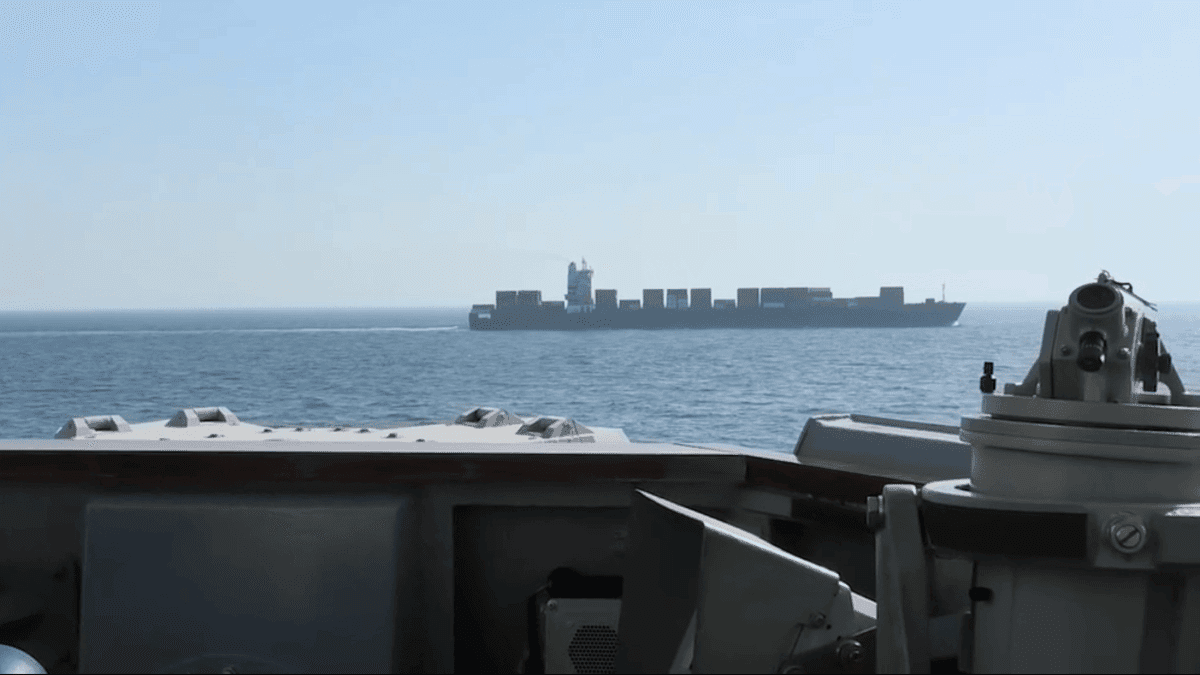
Donald Trump Says US Navy Disabled And Seized Iranian-Flagged Ship Touska In Gulf Of Oman
13 sources compared

Reuters/Ipsos Poll Finds 36% Approve Trump’s Job Performance Amid Iran War And Pope Feud
10 sources compared
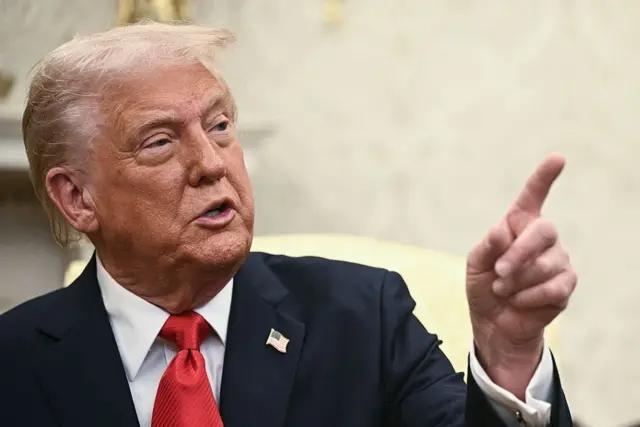
Donald Trump Urges Iran To Release Eight Women Facing Execution Ahead Of Talks In Islamabad, Pakistan
12 sources compared
Virginia Voters Decide Tuesday On Redistricting Referendum That Could Boost Democrats’ House Seats
30 sources compared