Trump Orders U.S. Navy To Shoot And Kill Iranian Mine-Laying Boats In Strait Of Hormuz
Key Takeaways
- Trump ordered U.S. Navy to shoot mine-laying boats in Hormuz.
- The move accompanies intensified efforts to remove mines from the Strait of Hormuz.
- The move could jeopardize the fragile U.S.-Iran ceasefire.
Trump’s mine-kill order
President Donald Trump ordered the U.S. Navy to “shoot and kill” any Iranian boat laying mines in the Strait of Hormuz, a directive he posted on Truth Social that he said would involve “no hesitation.”
In the same message, Trump said “our mine ‘sweepers’ are clearing the Strait right now” and that he was ordering the activity “to continue, but at a tripled up level!”

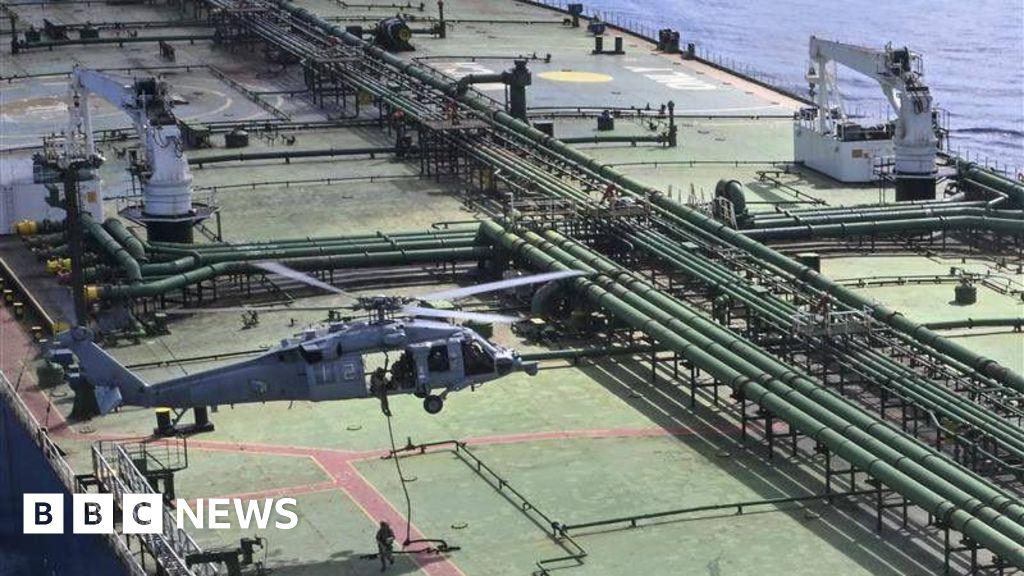
The BBC reported that the order came as the U.S. boarded a sanctioned ship carrying Iranian oil in the Indian Ocean, identifying the vessel as the M/T Majestic X.
The BBC also said the U.S. has intercepted multiple ships after imposing a blockade on maritime traffic entering and leaving Iranian ports on 13 April.
Under that blockade, the BBC reported that US Central Command (Centcom) ordered 33 vessels to return to port, and the Department of Defence said it would continue to stop ships suspected of “providing material support to Iran - anywhere they operate.”
Trump, speaking at a White House event, told reporters the blockade was “100% effective” and that Iran is “getting no business.”
The standoff described across outlets also included Iran’s claim that U.S. actions were “piracy,” and the BBC said it could not independently verify a claim by Hamidreza Haji Bababei that toll revenues had been deposited with Iran’s Central Bank.
Blockade, interdiction, and seized ships
Alongside Trump’s mine-killing order, U.S. naval operations continued to focus on boarding and turning back vessels tied to Iranian oil and maritime activity.
The BBC said the U.S. Department of Defence reported it carried out a “maritime interdiction” on the M/T Majestic X, describing the interception as “the interception or inspection of a vessel by a navy on ships suspected to be hostile or in violation of the law.”

The BBC also said the U.S. has continued to impose its naval blockade despite Trump extending a two-week ceasefire at the request of mediator Pakistan.
In parallel, the BBC reported that Iran described one U.S. ship interception earlier this week as “piracy.”
Time Magazine said Trump’s directive followed his extension of the fragile U.S.-Iran cease-fire earlier this week, which was tested Wednesday when Iranian soldiers targeted three vessels in the Strait before seizing two of them.
Time identified the seized vessels as the Panama-flagged MSC Francesca and Liberia-flagged Epaminondas, and said a third ship, Euphoria, reportedly escaped capture.
The OregonLive report said the Defense Department released video footage of U.S. forces on the deck of the Guinea-flagged oil tanker Majestic X, which was seized in the Indian Ocean.
Iran’s response and legal claims
Iran’s response to the U.S. blockade and mine-clearing posture included both legal framing and direct rebuttals of U.S. claims about control and leadership.
The NBC News report said Tehran attacked three commercial ships and seized two of them, and that Iran described the U.S. naval blockade as a “main obstacle” to new peace talks.
NBC also said Trump extended the ceasefire but that Trump told reporters there is “no time pressure” in talks with Iran and “no time frame” on ending the war after he extended the ceasefire.
In a separate legal statement reported by NBC News, Iran’s foreign ministry spokesperson Esmail Baghaei said Iran has acted “entirely” lawfully regarding the Strait of Hormuz, adding that “From a legal perspective, both under international law and domestic law, the measures taken regarding the Strait of Hormuz are entirely lawful.”
Baghaei said Iran has “the right to take the necessary measures to prevent misuse of this waterway” where national security is threatened, and he said Iran’s decisions were taken because it has “suffered serious damage as a result of misuse of this waterway.”
The BBC reported that Iranian President Masoud Pezeshkian responded to Trump’s claims, saying there are “no radicals or moderates” in the country.
The Scripps News report added that Iran’s parliamentary speaker Mohammad Bagher Ghalibaf said, “They did not achieve their goals through military aggression, nor will they through bullying,” and that “The only way forward is to recognize the rights of the Iranian nation.”
Competing narratives and framing
Different outlets framed the same escalation in sharply different ways, particularly around whether the U.S. had “total control” and how the mine-clearing order fit into the ceasefire timeline.
Al Jazeera described Trump’s post as a move that “could jeopardise the fragile ceasefire between the two countries,” and it quoted Trump’s claim that the U.S. has “total control over the Strait of Hormuz,” adding that the passage is “sealed up tight.”
The BBC, by contrast, emphasized the operational sequence—boarding the M/T Majestic X, the “maritime interdiction,” and the Centcom order that “33 vessels” return to port—while also reporting that the Pentagon dismissed reports suggesting mines could take “six months” to clear.
The Guardian’s “tale of two blockades” framing highlighted that Trump’s “total control” claim seemed “questionable” in light of Iran’s seizure of two container ships and the U.S. warning it could take six months to clear mines, while also noting that global oil prices were “about $100 (£74) a barrel.”
NewsNation’s framing centered on the rhetoric and its moral critique, quoting a White House official’s characterization that the U.S. now appears to be “a promoter of terrorism, murder, and mass violence,” and it also included Trump’s claim that the blockade is “100% effective” and that the U.S. has “total control.”
Scripps News focused on Trump’s nuclear posture, quoting him saying “No, no. We don't need it,” while still repeating that he ordered the U.S. Navy to “shoot and kill” anyone placing mines.
El País described the U.S. order as part of “a familiar ritual” of escalation and said Trump updated his tally of enemy ships destroyed “in the bottom of the sea,” claiming “ALL of them, the 159.”
Ceasefires, talks, and next risks
The mine-laying escalation unfolded alongside ceasefire management and ongoing diplomacy, with multiple outlets describing talks that were extended or still uncertain.
“US boards ship carrying Iran oil as Trump threatens mine-laying vessels The US says its forces have boarded a sanctioned ship carrying Iranian oil in the Indian Ocean in the country's latest naval move against Iran”
The BBC said Trump extended a two-week ceasefire at the request of mediator Pakistan, while the U.S. kept its blockade on Iran-linked ships, and it reported that the U.S. has not set a deadline for the extended truce.

NBC News said Trump extended the ceasefire and that he told reporters there is “no time pressure” in talks with Iran and “no time frame” on ending the war.
For Israel and Lebanon, NBC News reported that the ceasefire between Israel and Lebanon will be extended by three weeks, and it said Hezbollah announced rockets at northern Israel that the Israel Defense Forces said they had intercepted shortly before Trump’s post.
NewsNation added that “a new round of talks between Israel and Lebanon is set to start Thursday in Washington, D.C.” and that a White House official said ambassador-level talks would take place at the White House with Trump joining the meeting.
Sky News reported that the three-week extension to the ceasefire in Lebanon was made at a meeting between Israeli and Lebanese government representatives at the White House, with Trump also in attendance, and it said the truce originally came into effect on 16 April.
Meanwhile, OregonLive said it was still unclear when, or if, the U.S. and Iran would meet again in Islamabad, where mediators are trying to bring the countries together, and it said Iran insists it will not attend until the U.S. ends its blockade while America insists it will not take part until Tehran opens the strait to international traffic.
More on USA

Trump Reposts Michael Savage Video Calling India a Hellhole, Sparks India Backlash
12 sources compared

Kathy Hochul Bans New York State Employees From Prediction-Market Betting
15 sources compared

DOJ Inspector General Probes Justice Department Compliance With Epstein Files Transparency Act
14 sources compared
Gannon Ken Van Dyke Arrested Over Classified Bets on Operation Absolute Resolve Capture of Nicolás Maduro
31 sources compared