
Trump rejects Putin's offer to move Iran's enriched uranium to Russia
Key Takeaways
- Trump rejected Putin's plan to move Iran's enriched uranium to Russia.
- The rejection followed a phone call between Trump and Putin this week.
- Part of a broader deal to end the Iran-U.S.-Israel conflict.
Diplomatic Rejection
US President Donald Trump rejected a proposal from Russian President Vladimir Putin to transfer Iran's enriched uranium to Russia during a phone call earlier this week, according to multiple sources reporting the diplomatic exchange.
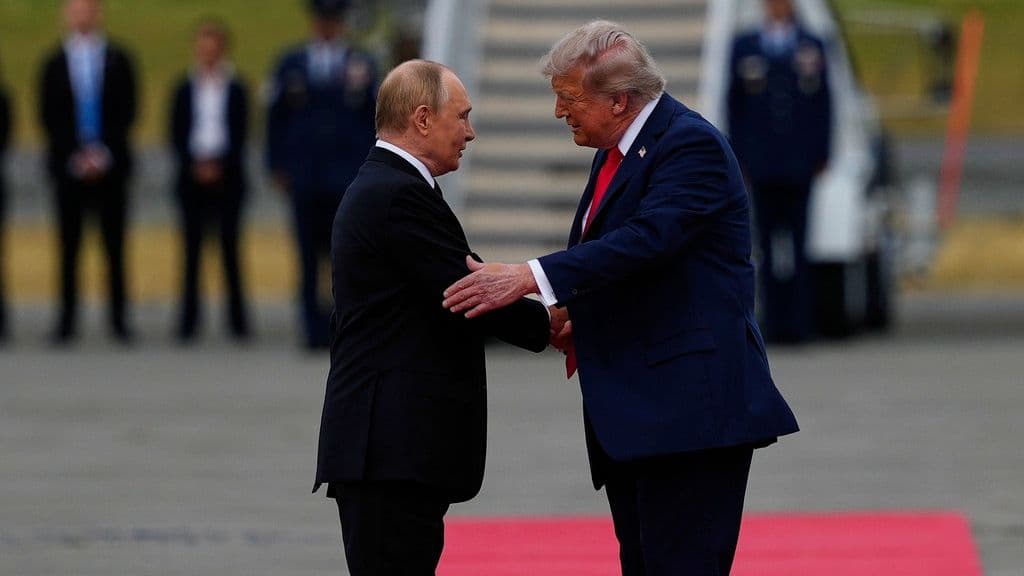
“US President Donald Trump (R) and Russian President Vladimir Putin attend a meeting at Joint Base Elmendorf-Richardson in Anchorage, Alaska, USA, August 15, 2025”
The rejection came amid ongoing tensions between the United States, Israel, and Iran, with Putin offering the uranium transfer as part of several schemes aimed at ending the conflict between the parties.

The Iranian nuclear program remains a central concern for US and Israeli security objectives, particularly given Iran's stockpile of highly enriched uranium material that could be converted to weapons-grade use.
Nuclear Material Details
The rejected proposal involved Iran's approximately 450 kilograms of uranium enriched to 60% purity, which according to technical assessments could be converted to weapons-grade material within weeks.
This material would be sufficient for producing more than ten nuclear bombs, representing a significant security concern.
Russia, already a nuclear power and one of the few countries with the technical capacity to receive such material, had previously stored Iran's low-enriched uranium under the 2015 nuclear agreement.
The proposed transfer was designed to remove Iran's nuclear stockpile without requiring US or Israeli forces to enter Iranian territory, representing a potential diplomatic solution to a sensitive security issue.
Previous Diplomatic Context
The uranium transfer proposal was not a new diplomatic initiative, as Russia had previously raised similar offers during US-Iran nuclear negotiations in May.
“- i24NEWS - International - Report: Putin's offer to ship Iranian uranium to Russia rejected by Trump Report: Putin's offer to ship Iranian uranium to Russia rejected by Trump Putin has floated several schemes for ending the war between Iran and the U”
These previous offers came before the United States and Israel carried out strikes on Iran's nuclear facilities in June.
During the last round of talks before the current war escalated, Iranian officials rejected the proposal to transfer the uranium material.
Instead, Iran suggested diluting the material inside their own facilities under the supervision of the International Atomic Energy Agency.
It remains unclear whether Iran would accept such a proposal under the current circumstances of heightened military conflict and diplomatic tensions.
US Security Position
The United States maintains that securing Iran's enriched uranium stockpile remains a critical objective, with US officials emphasizing that any agreement must meet Washington's conditions for verification and control.
A US official told Axios that the proposal has been repeatedly rejected previously, stating "This is not the first time it was offered. It hasn't been accepted. The US position is we need to see the uranium secured."

The Trump administration has also discussed the potential use of military options, including sending special forces into Iran at a later stage of the war to secure the nuclear stockpile.
Defense Secretary Pete Hegseth declined to specify the exact nature of these options during recent public statements, though he confirmed the US has "multiple options."
Trump's Diplomatic Approach
Despite rejecting the uranium transfer proposal, President Trump has indicated he remains open to diplomatic engagement with various international partners on the Iranian nuclear issue.
“Donald Trump has reportedly rejected an offer from Russian President Vladimir Putin to move Iran's enriched uranium to Russia”
According to sources close to the administration, Trump maintains a pragmatic approach to diplomacy.
Trump stated that "The president talks to everyone — Xi, Putin, the Europeans — and he's always willing to make a deal. But it has to be a good deal. The president doesn't make bad deals."
However, the president also suggested that securing Iran's uranium stockpile is not currently the administration's top priority.
This indicates that while diplomatic channels remain open, the focus may be shifting to other aspects of the ongoing conflict.
More on Iran

Epstein network plots 9/11-style attack to blame Iran, Ali Larijani says
11 sources compared

Iran Drone Attack Hits UAE Fujairah Port, Halting Oil Loading
11 sources compared

FCC chair Brendan Carr Threatens Broadcasters' Licenses Over Iran War Coverage
18 sources compared

US-Israeli strike pounds Iranian city of Hamadan
11 sources compared