
Trump says a global coalition will send warships to keep the Strait of Hormuz open
Key Takeaways
- Trump said coalition of countries affected by Iran's closure will send warships to secure Hormuz.
- The plan envisions Western allies escorting shipping through Hormuz amid the blockade.
- Trump named China, France, Japan, South Korea, and the UK as potential contributors.
Trump's Naval Coalition Announcement
US President Donald Trump has announced that a global coalition of nations will deploy naval forces to secure the Strait of Hormuz amid escalating tensions with Iran.
“United States President Donald Trump has said “many countries” will dispatch warships to keep the Strait of Hormuz open, without offering details about which states are on board”
In a series of posts on Truth Social, Trump stated that 'many countries, especially those who are affected by Iran's attempted closure of the Hormuz Strait, will be sending warships, in conjunction with the United States of America, to keep the Strait open and safe.'

The president specifically named China, France, Japan, South Korea, and the United Kingdom as nations expected to participate in the naval operation.
Trump claimed that despite US military success, Iran retains the capability to threaten shipping lanes through drones, sea mines, or short-range missiles.
He vowed an aggressive response, declaring that 'the United States will be bombing the hell out of the shoreline, and continually shooting Iranian Boats and Ships out of the water,' while promising to make the waterway 'OPEN, SAFE, and FREE!' very soon.
Strategic Importance of Hormuz Strait
The strategic importance of the Strait of Hormuz underscores the urgency of Trump's naval coalition proposal.
The narrow waterway serves as a critical maritime chokepoint through which approximately 20 percent of global oil and liquefied natural gas shipments pass daily, making it essential to international energy markets and global trade.

Trump characterized Iran's actions as creating an 'artificial constraint' on global energy supplies, with disruptions already causing significant price increases for various commodities including fertilizer, oil, and gas.
The strait's strategic location between Iran and the Arabian Peninsula, spanning only about 54 kilometers at its narrowest point, makes it both vulnerable to disruption and vital to maintain open.
News sources report that maritime traffic through the strait has sharply declined following Iranian strikes, raising widespread concerns about potential global energy shortages and economic instability if the situation persists.
Iran's Response and Strait Status
Iran has responded to Trump's naval coalition announcement with defiance and counterclaims about the actual status of the strait.
Alireza Tangsiri, the navy chief of Iran's Islamic Revolutionary Guard Corps (IRGC), stated that 'The Strait of Hormuz has not yet been militarily closed and is merely under control.'
In a post on social media, Tangsiri criticized Trump's assertions, saying 'Americans falsely claimed the destruction of Iran's navy. Then they falsely claimed the escorting of oil tankers. Now they're even asking others for backup forces.'
Iranian officials have clarified that the strait is only closed to 'tankers and ships of enemies and their allies,' not all international shipping.
Tehran has granted rare exemptions to some vessels, such as two Indian-flagged tankers carrying liquefied petroleum gas that crossed the strait safely on Saturday morning.
Iran's Foreign Minister Abbas Araghchi emphasized that the closure is a deliberate tactic to pressure the United States and Israel to end their attacks on the country, with Supreme Leader Mojtaba Khamenei ordering the strait remain closed 'as long as the conflict continues.'
International Reaction and Military Preparation
International reaction to Trump's proposed naval coalition has been mixed, with skepticism about the feasibility and willingness of other nations to participate.
While Trump has expressed optimism about international cooperation, reports indicate that some of the countries he named are reluctant to join a US-led military coalition in the escalating conflict.

Japan has already indicated reluctance to participate in such a mission, responding with an almost immediate 'no.'
China, another major importer of Gulf oil, is widely expected to remain outside any US-led military coalition in the region.
The reluctance stems from concerns about aligning militarily with Washington in a conflict that is rapidly escalating, something many nations are eager to avoid.
Trump has framed the initiative as a 'team effort' that will 'bring the world together toward harmony, security, and everlasting peace,' but the reality appears far less cooperative than his public statements suggest.
The US Navy has begun preparing for the escort operation, with the USS Tripoli, an amphibious assault ship operating in the Philippine Sea, headed to the Middle East with 2,500 Marines of the 31st Marine Expeditionary Group and 2,500 sailors.
Operational Challenges and Expert Analysis
The proposed naval coalition faces significant historical and operational challenges that cast doubt on its effectiveness.
“After US President Donald Trump said Saturday that “hopefully, China, France, Japan, South Korea, the UK, and others” will send naval assets to free up shipping lanes in the Strait of Hormuz, both China and the UK have responded to CNN’s requests for comment”
Military experts caution that Iran retains substantial capabilities despite Trump's claim that the US has 'destroyed 100% of Iran's military capability.'

Analysts note that Iran's remaining missile and drone forces could be hidden deep in tunnels, allowing them to still target ships.
Iran's arsenal includes naval mines, anti-ship cruise missiles, drones, fast-attack boats operated by the Revolutionary Guards, and remote-controlled explosive boats.
The 1987 US naval escort operation during the Iran-Iraq War involved dozens of vessels and set a precedent that highlights the scale of such operations.
One security expert noted that 'all you need is half a dozen drones to hit ships, and then tanker owners are going to say 'forget it, thanks guys, nice try.''
The Trump administration has acknowledged that while the strait doesn't appear to be mined currently, Iran could still pose a serious risk to shipping through various asymmetric tactics, making the naval coalition proposal a complex and potentially high-risk endeavor.
More on USA
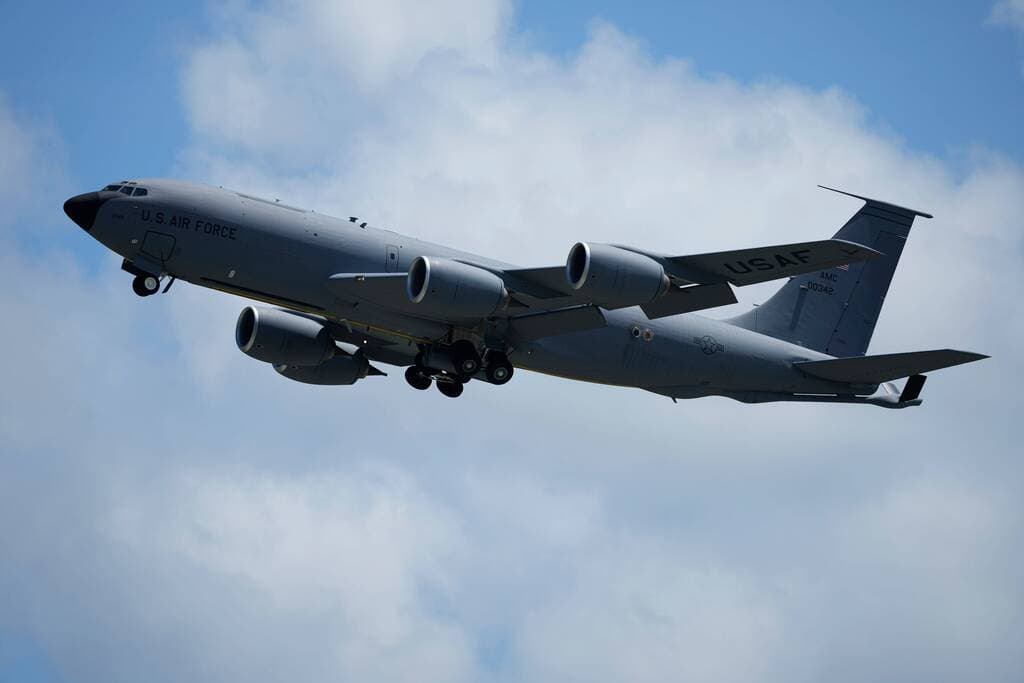
Six U.S. Air Force Airmen Killed as KC-135 Crashes in Western Iraq
13 sources compared

FCC chair Brendan Carr Threatens Broadcasters' Licenses Over Iran War Coverage
18 sources compared

Cuba's Díaz-Canel Acknowledges Talks with U.S. as Energy Crisis Worsens
25 sources compared
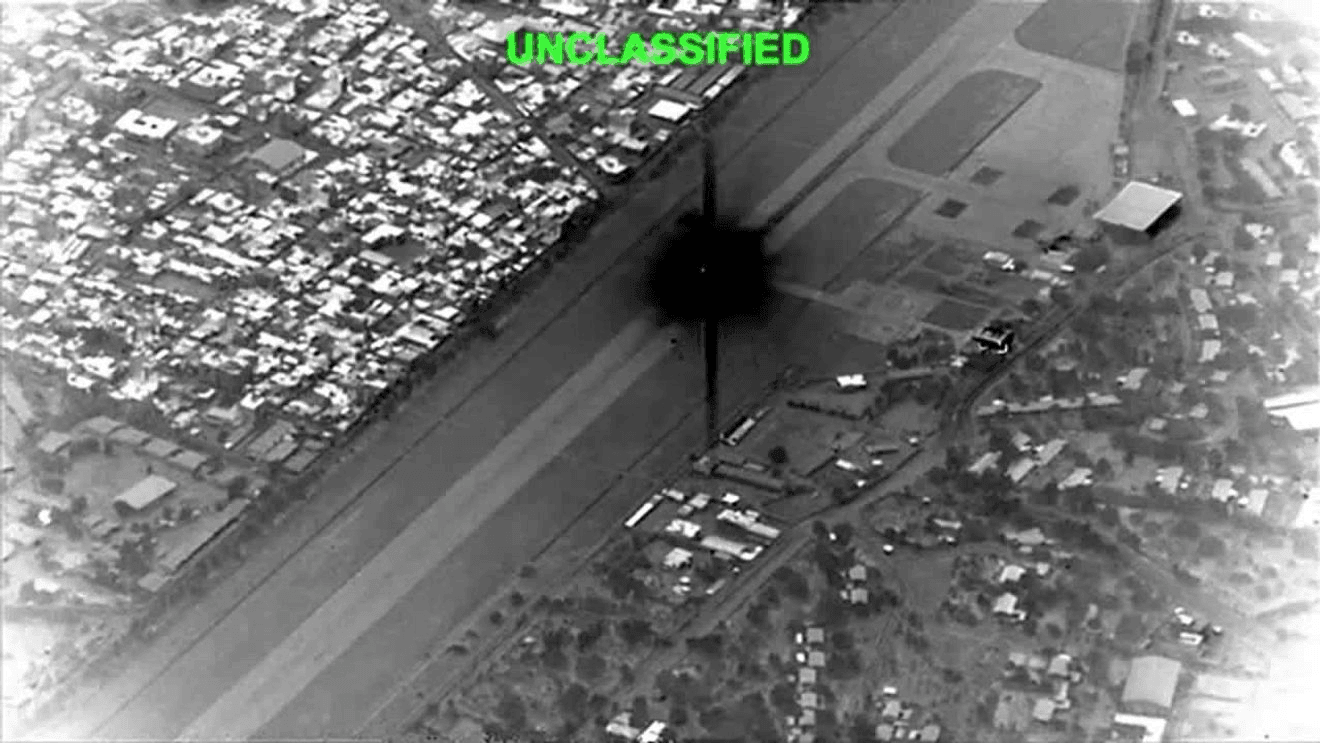
United States launches large-scale strike on Iran's Kharg Island, CENTCOM confirms.
14 sources compared