Trump Says U.S. Navy Seized Iranian-Flagged Ship, Talks Continue Monday in Pakistan
Key Takeaways
- Trump says US delegation will travel to Islamabad to resume Iran talks on Monday.
- The U.S. Navy intercepted and seized an Iranian cargo ship near the Strait of Hormuz.
- Iran declines to participate in a new round of peace talks in Pakistan.
Ceasefire, talks, and force
Pakistan is again at the center of U.S.-Iran diplomacy as President Donald Trump said the United States will continue peace talks with Iranian representatives in Pakistan on Monday, even after the U.S. seized an Iranian-flagged cargo ship near the Strait of Hormuz.
“President Donald Trump has announced that United States negotiators will travel to the Pakistani capital, Islamabad, on Monday for possible talks aimed at ending the US-Israel war on Iran”
Trump said in a social media post that the U.S. Navy guided missile destroyer USS SPRUANCE intercepted the TOUSKA in the Gulf of Oman, warned the Iranian crew to stop, and then “stopped them right in their tracks by blowing a hole in the engineroom,” adding that U.S. Marines had custody of the vessel.

The U.S. Central Command confirmed the action in a post on X and said the destroyer issued “repeated warnings over a six-hour period,” while Iran’s joint military command, Khatam al-Anbiya, accused the U.S. of violating a ceasefire by firing at one of Iran’s commercial ships in the Gulf of Oman and vowed to retaliate.
In parallel, Trump’s announcement came as the two-week ceasefire set to expire on Wednesday remained under strain, with the U.S. and Iran trading accusations about violations.
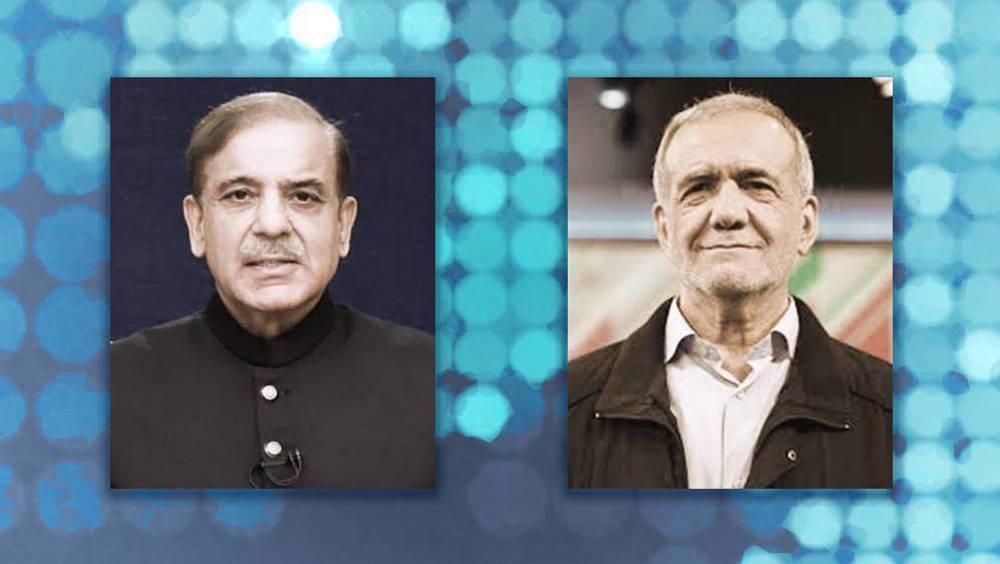
Pakistan’s Prime Minister Shehbaz Sharif, described as the primary mediator, spoke by phone with Iran’s President Masoud Pezeshkian on Sunday, and Sharif’s office said Pezeshkian thanked Pakistan for its mediation efforts.
The diplomatic readouts and the military moves collided: Iran’s state media reported that Iran is not currently planning to attend a second round of talks, while the U.S. said negotiators would travel to Islamabad.
As the talks were framed as “possible talks aimed at ending the US-Israel war on Iran,” the seizure and the threats raised immediate questions about whether the negotiations could proceed on schedule.
How the standoff tightened
The push toward another round of talks in Pakistan sits on top of a rapidly shifting ceasefire and a widening dispute over the Strait of Hormuz and the U.S. naval blockade of Iranian ports.
PressTV reported that Iran’s Supreme National Security Council (SNSC) announced an agreement to a Pakistan-brokered temporary ceasefire after the U.S. accepted Iran’s 10-point proposal, and it said senior Iranian and American negotiators held approximately 21 hours of talks in Islamabad on April 11 without an agreement.
CBC reported that the first direct negotiations between the United States and Iran in decades ended with no agreement last week, and it described preparations for a resumption in Islamabad even as the ceasefire was expected to end on Wednesday.
France 24 said Iran is not planning to participate in the next round, citing what it called Washington’s “excessive demands, unrealistic expectations, constant shifts in stance, repeated contradictions, and the ongoing naval blockade,” which it considers a breach of the ceasefire.
Al Jazeera reported that Trump accused Iran of violating a two-week ceasefire due to opening fire on Saturday in the Strait of Hormuz, while Iran’s Foreign Ministry said the U.S. naval blockade is “not only a violation of Pakistani-mediated ceasefire but also both unlawful and criminal.”
In the middle of the diplomatic friction, the Strait itself swung between reopening and closure: CBC said shipping through the Strait of Hormuz was at a standstill on Sunday after Iran reasserted control, and it described Iran reversing course after earlier announcing it would allow shipping to pass.
CNBC added that Iran blocked the strait to ships other than its own since the U.S. and Israel attacked on Feb. 28, and it said Iran announced on Friday it would reopen the waterway but reversed that decision on Saturday after Trump declined to lift a U.S. blockade of Iranian ports.
Voices behind the threats
The competing messages from Washington, Tehran, and Pakistan’s leadership sharpened as the U.S. seizure of the TOUSKA and the prospect of talks in Islamabad unfolded.
“Peace talks with Iran to resume Monday in Pakistan: Trump Iran's top joint military command, Khatam al-Anbiya, accused the U”
Trump framed the U.S. position with direct threats, writing, “We’re offering a very fair and reasonable DEAL, and I hope they take it because, if they don’t, the United States is going to knock out every single power plant, and every single bridge, in Iran,” and he also said the U.S. would “attack Iranian power plants and bridges” if no agreement is reached.
Iran’s Khatam al-Anbiya responded by accusing the U.S. of “violating a ceasefire” and warning, “We warn that the armed forces of the Islamic Republic of Iran will soon respond and retaliate against this armed piracy by the U.S. military,” according to state media quoted by CBC.
Pakistan’s mediation voice came through Shehbaz Sharif’s phone call with Masoud Pezeshkian, where PressTV said Sharif “hailing Iranian officials’ constructive positions in talks with Pakistani Army Chief General Asim Munir in Tehran,” and it reported that Sharif thanked Ayatollah Seyyed Mojtaba Khamenei and the Iranian president for sending a high-ranking delegation led by Parliament Speaker Mohammad Baqer Qalibaf and Foreign Minister Abbas Araghchi to Islamabad for talks with American negotiators on April 11-12.
In the diplomatic channel, Al Jazeera quoted Iran’s Foreign Ministry spokesman Esmaeil Baghaei saying the U.S. blockade is “unlawful and criminal,” and it added that Baghaei said it amounts to “war crime and crime against humanity.”
On the Iranian negotiating side, Al Jazeera reported that Iranian Deputy Foreign Minister Saeed Khatibzadeh said there was “significant progress made” but that “a framework of understanding has to be agreed before they continue,” while Mohammad Bagher Ghalibaf said, “There are many gaps and some fundamental points remain,” and “We are still far from the final discussion.”
Even as the U.S. said talks would resume, the tone of the messages suggested a widening gap: CBC said parliament speaker Mohammed Bagher Qalibaf told state television that “there will be no retreat in the field of diplomacy,” while he acknowledged “a wide gap remained between the sides.”
Different outlets, different emphasis
Across the reporting, the same sequence of events—Trump’s announcement of talks in Pakistan, the U.S. seizure of the TOUSKA, and Iran’s response—was framed with different emphasis on whether diplomacy was moving forward or collapsing.
Politico described Trump’s decision to continue talks in Pakistan while he “continued to threaten striking civilian infrastructure in the region,” and it quoted him saying, “NO MORE MR. NICE GUY!” while also citing International law scholars’ view that the president was seeking “maximum leverage, maximum negotiation, maximum leverage.”

In contrast, France 24 foregrounded Iran’s refusal, saying “Iran is not currently planning to attend the next round of talks with the United States,” and it attributed the decision to Washington’s “excessive demands” and the “ongoing naval blockade.”
CBC and PBS both treated the seizure as a destabilizing development that “threw into question” the talks, with CBC noting that the news “threw into question Trump's earlier announcement that U.S. negotiators would head to Pakistan on Monday for another round of talks,” and PBS saying it was “not clear where President Donald Trump 's earlier announcement on new talks with Iran now stood.”
Al Jazeera, while also reporting Iran’s rejection, emphasized the continuing diplomatic channel by describing Trump’s announcement as “possible talks aimed at ending the US-Israel war on Iran,” and it included Iran’s Foreign Ministry statement that the blockade is “a violation of Pakistani-mediated ceasefire.”
CNBC similarly focused on the diplomatic setback, stating “Iran on Sunday denied it would participate in new peace talks with the United States,” and it quoted IRNA saying, “Under these conditions, the outlook for constructive talks remains bleak.”
MS NOW highlighted the uncertainty around who would lead the delegation, reporting that Trump said Vice President JD Vance would not join for security reasons, while “two senior U.S. officials told MS NOW that Vance would, in fact, lead the delegation to Islamabad on Monday evening.”
What’s at stake next
The immediate stakes for Pakistan’s mediation role are tied to the ceasefire’s expiration timeline and the continued closure of the Strait of Hormuz to shipping beyond Iran’s own traffic.
“Trump says US delegation will travel to Islamabad on Monday, Iran declines talks Iran is not currently planning to attend the next round of talks with the US, which has announced that it would send a team of negotiators to Pakistan on Monday, Iranian state television reported on Sunday”
Multiple outlets tied the next diplomatic window to Wednesday, with CBC saying preparations were underway “ahead of the expected end to the ceasefire on Wednesday,” and PressTV describing a “two-week ceasefire set to expire on April 22.”
Al Jazeera reported that Trump threatened to destroy civilian infrastructure in Iran if it doesn’t accept U.S. terms, quoting him saying, “the United States is going to knock out every single power plant, and every single bridge, in Iran,” while MS NOW and Politico both described the same threat in the context of the talks.
The operational risk was reinforced by the U.S. blockade and Iran’s countermeasures: Al Jazeera said Iran’s IRGC navy said the Strait of Hormuz had been closed again less than 24 hours after it was reopened, and it said Iran would remain closed until the U.S. lifts its naval blockade on Iranian vessels and ports.
CNBC added that Iran’s parliament speaker Mohammad Bagher Ghalibaf said, “It is impossible for others to pass through the Strait of Hormuz but not us,” and he warned that if the U.S. does not abandon the blockade, “traffic in the Strait of Hormuz will certainly be restricted.”
In the background of the diplomacy, the U.S. military said it forced 23 ships to turn around near the strait since its blockade began, and Al Jazeera reported the U.S. military said it has forced 23 ships to turn around near the strait.
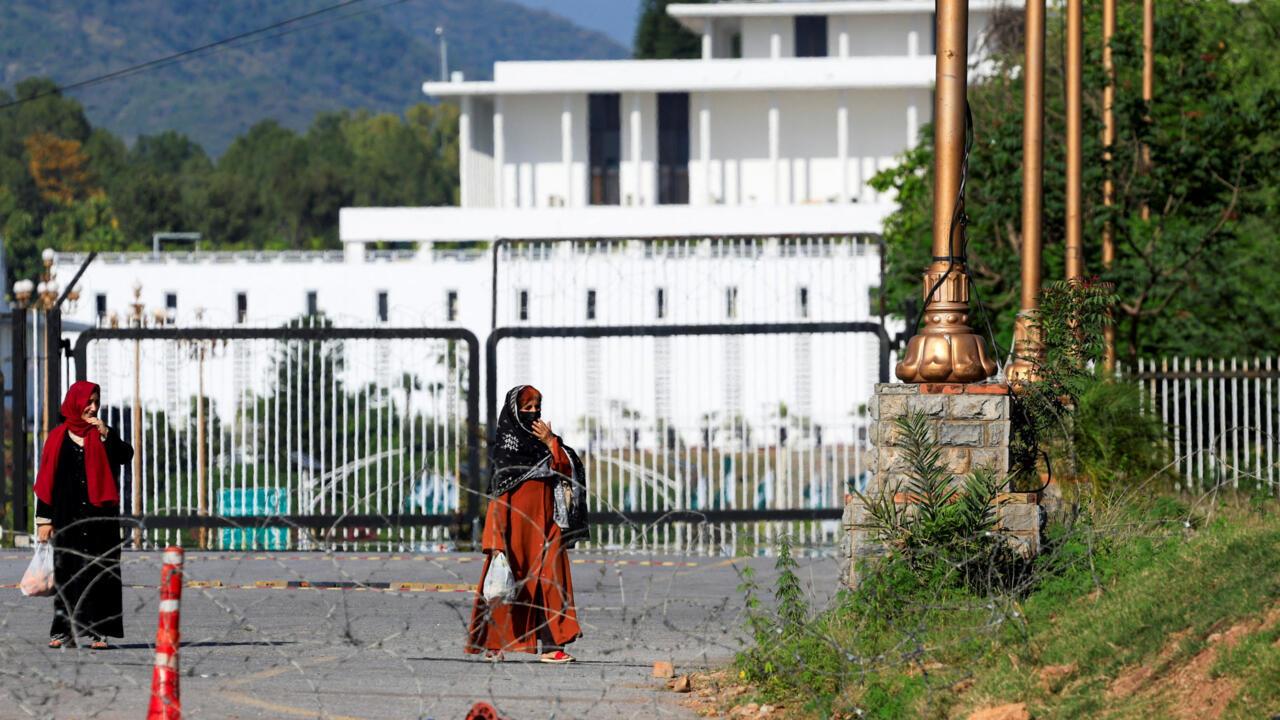
For Pakistan, the consequence is that its capital, Islamabad, is where the next attempt at negotiation is staged even as Iran signals it may not attend, with France 24 saying Iran is not planning to participate and with CBC reporting that host Pakistan also did not confirm a second round while tightening security in Islamabad.
More on Pakistan

Ben Stokes Recovers After Major Facial Injury From Cricket Ball Impact
10 sources compared

Pakistan Deploys Fighter Jets to Saudi Arabia While Mediating US-Iran Talks
17 sources compared

Pakistan Defence Minister Khawaja Asif Calls Israel Evil, Deletes Post After Netanyahu Rebuke
21 sources compared
ICC Assembly Votes to Proceed with Disciplinary Action Against Prosecutor Khan
10 sources compared