Iran17 April, 20266 min read
Trump Tells Las Vegas Supporters Iran War Should End Pretty Soon
Trump said the Iran war is a 'little diversion' and should end soon. He hinted US-Iran peace talks could resume around the weekend.
Trump’s “swimmingly” claim
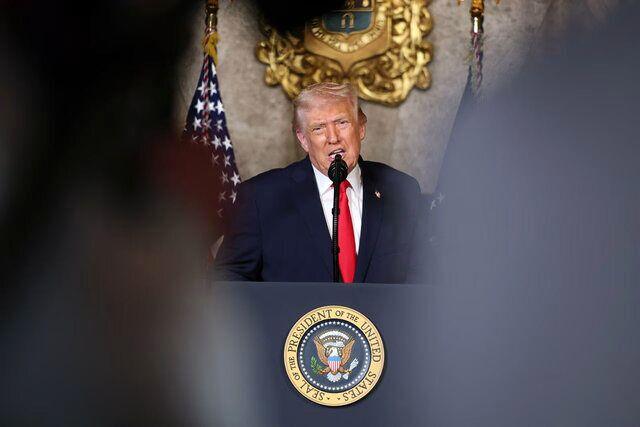
President Donald Trump told supporters in Las Vegas that “the war in Iran is going along swimmingly” and said it “should be ending pretty soon,” framing the conflict as a short-lived episode during his second term.
In the same remarks, Trump described the campaign as “a little diversion” and said, “We had the best economy in the history of our country in my first term. And we're blowing it out now...And despite our little diversion to the lovely country of Iran, lovely place.”

Trump also said the conflict was necessary to prevent “really bad things,” referencing Iran’s “apparent nuclear potential.”
Reuters reported that Trump hinted at new U.S.-Iran peace talks as a Lebanon ceasefire began, while the New York Times said Trump told reporters that the next in-person U.S.-Iran talks could take place “this weekend.”
The New York Times also reported that Trump said, “If the deal is signed in Islamabad, I might go,” when asked whether he would visit Pakistan to “seal the deal yourself.”
Trump’s optimism came as the Strait of Hormuz remained central to the war’s economic pressure, with the New York Times describing a scheduled virtual meeting of around 40 countries aimed at reopening the Strait of Hormuz.
In parallel, CNBC and TRT World both carried Trump’s “swimmingly” and “pretty soon” language, while TRT World added that Trump said, “We can do whatever we want. And it should be ending pretty soon. It was perfect.”
Blockade and the economic gamble
A central thread in the reporting is Trump’s shift from what CNN described as “kinetic” to “economic warfare” through a blockade of Iran’s ships and ports.
CNN said the blockade is meant to end the conflict without a “new US-Israeli onslaught,” arguing that if Iran cannot export its oil and import “vital commodities,” it will face “ruinous financial and humanitarian consequences.”

CNN’s analysis also described the blockade as a “realistic military venture” and said “The US Navy has sufficient assets in the region,” while noting it has “long experience in enforcing US and international blockades.”
CNN cited a Foundation for Defense of Democracies analysis, with FDD Senior Fellow Miad Maleki arguing the blockade could “rapidly damage Iran’s economy” and cut off “most of its trade,” including halting oil exports and triggering “inflation and currency pressure within days.”
CNN further stated that “more than 90% of its $109.7 billion annual trade passes through the strait,” and warned that Iran might have to shut down oil production “within weeks” if it cannot store product.
CNN also quoted retired Adm. James Stavridis telling CNN’s Kasie Hunt that “They’ve been effectively pounded in the face with a two-by-four in a military sense, but we haven’t really choked off their economy.”
The New York Times tied the blockade to the broader effort to reopen the Strait of Hormuz, reporting that France and Britain were scheduled to co-host a virtual meeting of around 40 countries aimed at reopening the waterway.
Pakistan’s mediation and talks
Multiple outlets placed Pakistan at the center of the diplomatic effort to manage the U.S.-Iran conflict and preserve a ceasefire.
“‘We are making the necessary efforts to reduce tensions, extend the ceasefire, and continue the negotiations,’ Erdogan told a party conference of his ruling conservative AKP.”
The New York Times reported that “Senior Pakistani mediators were in Tehran this week” and said that “Field Marshal Asim Munir” arrived in Tehran on Wednesday, becoming “the first regional player to visit Iran since the United States and Israel began attacking it on Feb. 28.”
The New York Times quoted White House press secretary Karoline Leavitt saying, “Pakistanis have been incredible mediators,” and added that “The president feels it’s important to continue to streamline this communication through the Pakistanis.”
It also said Pakistan helped negotiate “a two-week cease-fire last week,” and that it was “set to expire on April 21.”
The New York Times reported that Tahir Andrabi, a spokesman for Pakistan’s foreign ministry, said a “second round of talks between the United States and Iran was expected to take place in Islamabad,” while declining to provide a date.
Reuters also described the broader diplomatic context, saying Trump hinted at new U.S.-Iran peace talks as the Lebanon ceasefire began, while DW’s roundup said Turkey would host talks on the Iran war with Egypt, Saudi Arabia and Pakistan on the sidelines of the Antalya Diplomacy Forum.
DW said Turkey’s President Recep Tayyip Erdogan would address the three-day forum and quoted Erdogan calling for diplomacy during the ceasefire period: “We are making the necessary efforts to reduce tensions, extend the ceasefire, and continue the negotiations,” and “Negotiations cannot take place with clenched fists.”
What a deal might require
While Trump publicly projected that the war would end “pretty soon,” Politico and the New York Times portrayed a more complicated negotiating picture involving nuclear limits and the terms of any ceasefire. Politico said Trump’s offer to host Israeli Prime Minister Benjamin Netanyahu and Lebanese President Joseph Aoun at the White House was an example of how the “American goal posts have moved,” and it described backchannel talks continuing even after negotiations in Pakistan yielded “no breakthrough.” Politico quoted Trump saying, “Iran wants to make a deal, and we are dealing very nicely with them,” and said he reiterated a red line that Iran does not have nuclear weapons.
Politico also discussed uranium enrichment, saying Trump “seemed to dismiss” a deal that could include a “20-year moratorium” on Iran’s ability to enrich uranium, while noting he “only explicitly ruled out Tehran getting a weapon.” Politico quoted Trump: “We have a very powerful statement that they will not have beyond 20 years, that they will not have nuclear weapons,” and also said, “There is no 20-year limit.”
It further reported that “the 20-year moratorium is actually the administration’s proposal,” while Iran had offered “only a five-year stoppage,” and it said Trump was demanding Iran “agree to give up its supply of partially enriched uranium.” The New York Times added that Trump warned fighting would resume if no deal emerged and said he told reporters that the next in-person negotiations might occur “over the weekend.”
Ceasefire, Hormuz, and stakes
The reporting ties the war’s trajectory to ceasefire timelines and the economic pressure exerted through the Strait of Hormuz. DW’s roundup said a 10-day ceasefire deal between Lebanon and Israel took effect and reported that Israeli military said it was going to stay in southern Lebanon, while also noting that Trump referred to the war in Iran as a “little diversion.” DW also described a separate diplomatic push: France and the United Kingdom were set to host a conference in Paris on devising an international plan to secure shipping in the Strait of Hormuz, with German Chancellor Friedrich Merz and Italian Prime Minister Giorgia Meloni scheduled to take part.
DW quoted French President Emmanuel Macron saying the mission would be “strictly defensive” and only deployed once “security conditions allow,” while British Prime Minister Keir Starmer called for an “unconditional and immediate reopening” of the Strait of Hormuz. DW said Iran effectively blocked the strait after the United States and Israel launched their war on the West Asian country on February 28, and it described the strait as “a crucial artery for global energy deliveries.”

The New York Times described the same Strait of Hormuz issue as a factor in economic costs, saying Trump criticized advisers who warned that fuel would go to “$300 a barrel” and called the resulting cost projections “fake inflation.” CNN’s analysis warned that the blockade’s outcome could depend on timing—whether pressure changes Iran’s behavior before the blockade worsens global economic damage.