Trump waives Jones Act for 60 days to ease gas prices amid Iran war
Key Takeaways
- Waives 60-day Jones Act shipping rule.
- Allows foreign-flagged vessels to move oil, natural gas, fertilizer, coal between U.S. ports.
- Analysts expect a small price impact on gas prices.
Jones Act Waiver Announced
President Donald Trump has issued a 60-day waiver of the Jones Act, a century-old maritime law, to address rising fuel prices exacerbated by the ongoing conflict between the U.S., Israel, and Iran.
“Those industry groups questioned whether Wednesday’s waiver would be effective in lowering fuel costs”
The Jones Act, formally known as the Merchant Marine Act of 1920, normally requires that cargo shipped between U.S. ports travel only on vessels that are American-built, American-owned, American-flagged, and crewed primarily by U.S. citizens.

The temporary waiver announced by White House press secretary Karoline Leavitt will suspend these restrictions, allowing foreign-flagged ships to carry essential commodities including oil, natural gas, fertilizer, and coal between domestic ports.
The administration framed this action as a necessary step to mitigate supply chain disruptions during 'Operation Epic Fury' while maintaining 'critical supply chains' for vital resources.
Iran War Energy Impact
The waiver comes amid severe energy market disruptions caused by the war in Iran, which has effectively shut down tanker traffic through the critical Strait of Hormuz.
This vital waterway handles approximately one-fifth of global oil shipments and 20% of global LNG trade, with roughly 20 million barrels of oil per day normally passing through it.

Iran's closure of this crucial waterway since the U.S.-Israeli war began February 28 has all but stopped the transit of oil, natural gas, and helium important for semiconductor manufacturing.
The resulting supply constraints have sent crude prices soaring, with Brent crude nearing $110 per barrel moments after Trump's announcement, up from $69 just one month prior.
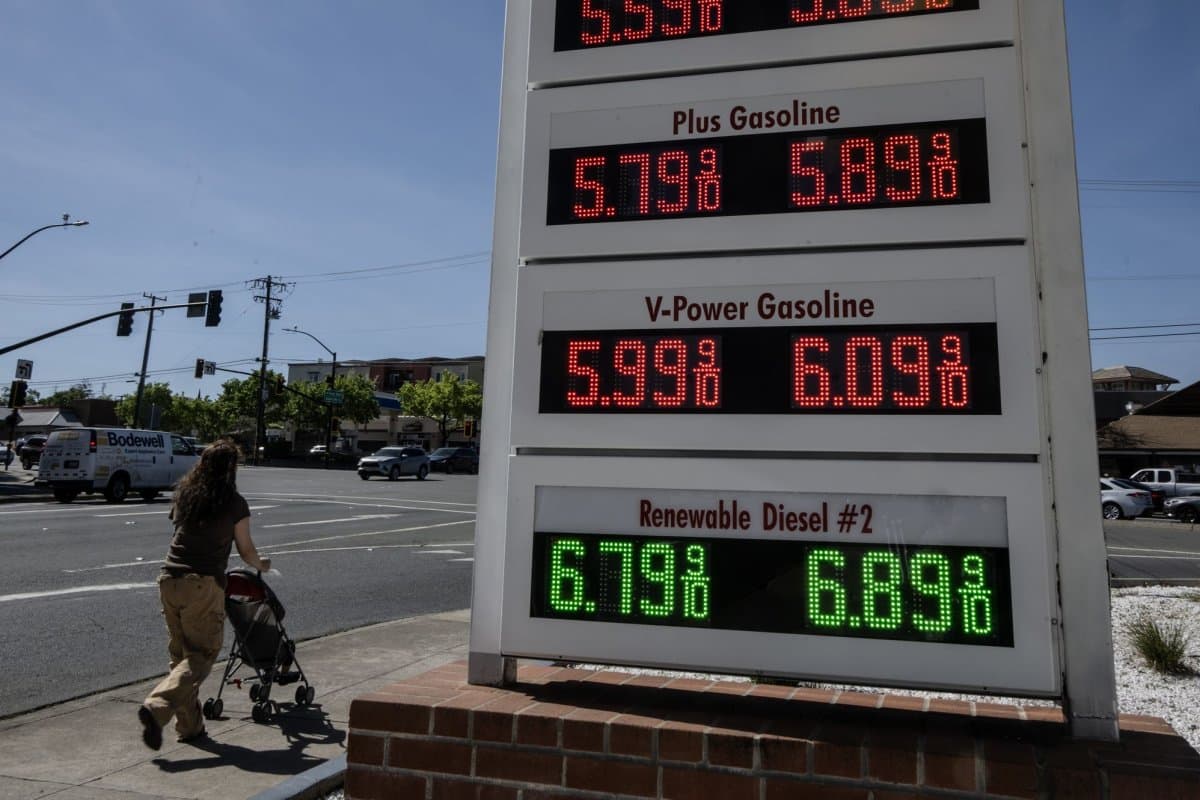
American consumers are feeling the impact directly, with the national average gasoline price climbing to $3.84 per gallon, a significant jump from $2.92 a month earlier according to AAA data.
Limited Price Impact Expected
Despite the administration's claims that the waiver will ease supply disruptions, energy analysts predict a limited impact on consumer gas prices.
““This action will allow vital resources like oil, natural gas, fertilizer, and coal to flow freely to U”
Patrick De Haan, head of petroleum analysis at GasBuddy, estimated the waiver might offset just 3 to 10 cents per gallon of price increases, while David St Amand, president of maritime consulting firm Navigistics Consulting, stated that any claims of material consumer benefits are not possible.
Historical analyses support this skepticism, with a 2022 study finding a Jones Act waiver would only save East Coast drivers about 10 cents per gallon.
The Center for American Progress projected a modest 3-cent decrease on the East Coast but warned it could potentially raise costs on the Gulf Coast.
These modest expectations reflect the complex factors influencing gasoline prices, including global crude markets, refinery capacity, and geopolitical risks that extend beyond domestic shipping logistics.
Broader Energy Strategy
The Jones Act waiver represents just one component of a broader Trump administration strategy to address the Iran war-induced energy crisis.
The administration has simultaneously announced the release of 172 million barrels from the U.S. Strategic Petroleum Reserve over 120 days, as part of a coordinated effort with the International Energy Agency.

The IEA pledged to unlock 400 million barrels from member nations' stockpiles – the largest emergency oil release in the organization's history.
Additionally, the Treasury Department has eased sanctions to allow U.S. companies to resume business with Venezuela's state-owned oil company PDVSA and temporarily waived sanctions on Russian oil imports.
These coordinated measures reflect the administration's recognition that multiple approaches are needed to stabilize energy markets during the ongoing conflict, though analysts caution that all these interventions offer only short-term relief.
Industry Reactions
The Jones Act waiver has drawn mixed reactions from industry stakeholders, with maritime industry groups expressing concerns about potential negative impacts on American workers and companies.
“Trump on Wednesday appeared to call out these allies in a post on his Truth Social platform”
The American Maritime Partnership, a coalition representing vessel owners, operators, unions, and equipment vendors, issued a statement expressing being 'deeply concerned' about the 60-day waiver being 'abused and unnecessarily displacing American workers and American companies.'

The group, a longtime supporter of the Jones Act, reiterated that the action would do little to reduce gas prices for consumers.
Meanwhile, shipping companies have seen their stocks surge amid the news, with Maersk shares rising 2.5% and Hapag-Lloyd AG up 2.6% after both companies had previously suspended shipments through the Strait of Hormuz following attacks.
This market reaction suggests that while consumer price relief may be minimal, the waiver could benefit certain industry players and commodity traders, as experts have suggested.
More on USA

Mullin Defends Remarks Calling Rand Paul a 'Freaking Snake' at DHS Confirmation Hearing
89 sources compared

Dolores Huerta Breaks Silence Over César Chávez Scandal
30 sources compared

Sexual abuse allegations against Cesar Chavez, farm labor leader, prompt cancellations of Chavez Day events
69 sources compared

Lt. Gov. Juliana Stratton Wins Illinois Democratic Senate Primary
154 sources compared