
Trump Warns Iran It 'Will Be Hit Very Hard' as War Enters Second Week
Key Takeaways
- Trump warned Iran it 'will be hit very hard' and warned against further action
- U.S. and Israeli forces carried out coordinated attacks on Iran starting last Saturday
- Campaign has spawned attacks and counterattacks, hitting or threatening several Gulf nations
Trump, Iran conflict update
As the war entered its second week, President Trump warned that Iran could face severe consequences while framing recent U.S. and Israeli actions as decisive.
“President Donald Trump said that the war with Iran could be nearing an end, telling CBS News that U”
Newsweek reports Trump told CBS News the war with Iran may be "very complete, pretty much,".

He said U.S. and Israeli forces have effectively dismantled Iran's military capabilities, claiming Iran now has "no navy, no communications" and "no Air Force."
NPR describes how "violence has spread across the region after Iranian strikes and retaliatory actions," and notes that "the conflict is deepening broader diplomatic rifts," underlining how the fighting has already widened beyond the original flashpoints.
Trump's statements on Iran
Trump publicly asserted that key Iranian military capacities had been neutralized and signalled an aggressive posture toward maritime chokepoints and leadership in Tehran.
Newsweek records him saying 'ships are moving through the Strait of Hormuz' and that he is 'thinking about taking it over'.
Newsweek also reports he declined to send any message to Iran's new Supreme Leader, Mojtaba Khamenei, while saying he has someone in mind to replace him.
NPR reports that 'a U.S. submarine sank an Iranian warship near Sri Lanka,' illustrating kinetic encounters beyond the immediate theater.
Regional violence and casualties
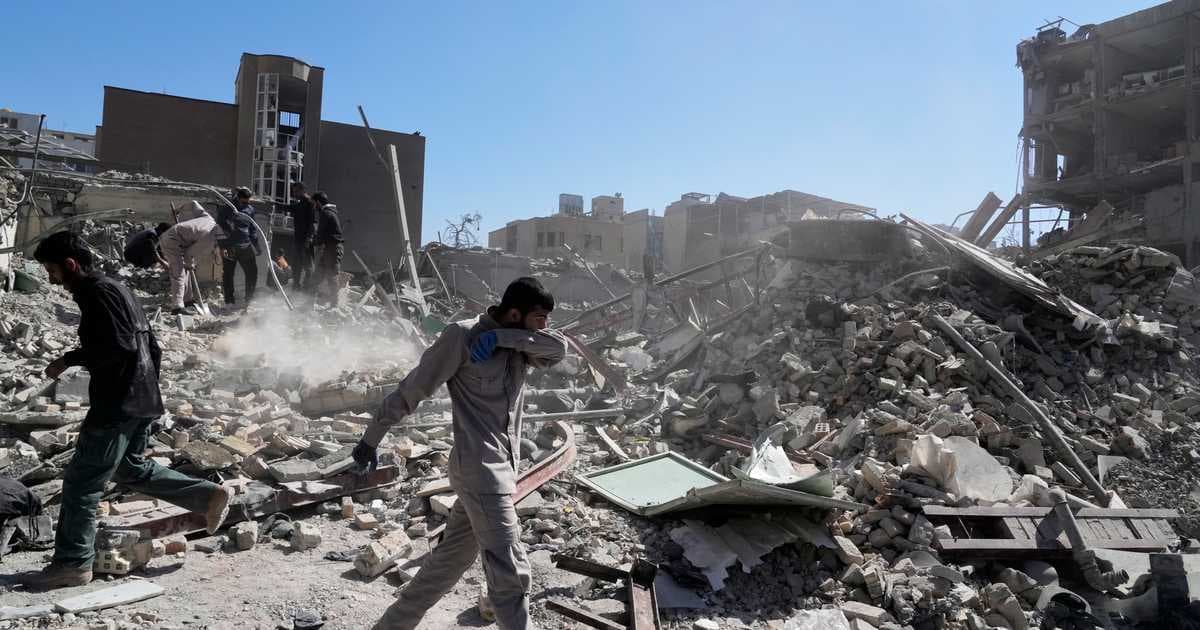
The violence has spread across multiple borders and produced mounting casualties and displacement.
“President Donald Trump said that the war with Iran could be nearing an end, telling CBS News that U”
NPR reports six U.S. soldiers were killed when Iran struck a command center in Kuwait, and at least 10 people have died in Israel from the clashes.
NPR says fighting has expanded to Lebanon after Hezbollah launched attacks on Israel, initially framed as revenge for Iran’s leader’s assassination and later tied to ongoing Israeli strikes in Lebanon.
Newsweek places the current phase in a broader timeline, saying the U.S.-Israeli campaign began Feb. 28 and resulted in the death of Iranian Supreme Leader Ayatollah Ali Khamenei, a development that has reshaped the conflict’s trajectory.
Regional security and energy
The crisis is reshaping regional posture and international cooperation.
NPR reports that France, Italy and the U.K. have increased regional military presence to protect citizens and limit escalation, and that Britain initially refused then later permitted limited U.S. use of bases for defensive actions against Iranian missile facilities, which strained U.S.–U.K. ties.
Newsweek links those security shifts to economic fallout, reporting that Brent crude briefly rose to nearly $120 per barrel (about 65% above pre-war levels) before falling below $100 as attacks and disruptions affected energy routes.
War duration and politics
Uncertainty about the war’s duration and its political consequences is prominent in the coverage.
“President Donald Trump said that the war with Iran could be nearing an end, telling CBS News that U”
Newsweek reports Trump saying the conflict has "progressed faster than his earlier estimate."
Other officials have described it as a "short-term excursion" or suggested it could last "about eight weeks."
On domestic politics, Newsweek cites an NBC poll showing Trump's overall job approval at 44% and specific approval for his handling of the conflict at 41% versus 54% disapproval.
Newsweek says this underscores how the president's wartime posture is being weighed at home as the diplomatic and military fallout continues, and NPR frames it as part of a broader test of alliances.
More on Iran-Israel

Escalation in Iran Pushes Oil Near $120, Sparks Gas Price Surge in Los Angeles
10 sources compared
U.S. Intercepts Iran Message Activating Sleeper Cells After U.S.-Israel Strike Kills Khamenei
14 sources compared

Iran Threatens To Confiscate Property Of Iranians Abroad Who Support US And Israel
14 sources compared
Ukraine Sends Drones, Experts to Shield U.S. Bases in Jordan From Iran
16 sources compared