Business03 February, 20261 min read
Turkey and Saudi Arabia Sign $2B Solar Energy Deal, Begin 5GW Projects
This article is an automated aggregation of coverage from news outlets. Our editorials offer in-depth analysis curated by the NewsCord team.
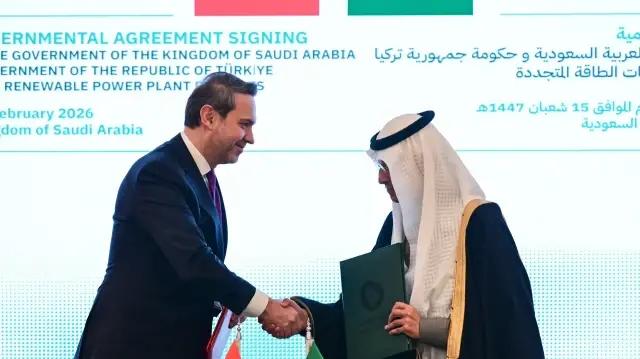
Turkey-Saudi agreement worth $2 billion to develop 5,000 MW of renewables. First phase includes 2,000 MW solar plants in Sivas and Karaman.
Solar Energy Investment
Turkey and Saudi Arabia signed a $2 billion energy investment agreement. The projects have a total capacity of 5,000 megawatts, beginning with 2,000 MW. They will be fully financed through external funding with international support.
Investment Scale and Impact
The solar power plants will meet the electricity needs of 2.1 million households. The projects are a key step toward a 120,000 MW renewable capacity goal by 2035. Both nations emphasized mutual trust and strategic dedication.
Broader Strategic Partnership
Erdoğan told the Crown Prince Turkey is determined to elevate relations to a higher level. Renewable energy and defense emerged as core pillars of cooperation. Both sides set a short-term target of $10 billion in bilateral trade.