Turkey Weighs Diplomacy With the United States as Iran’s Abbas Araghchi Meets Hakan Fidan in Istanbul
Key Takeaways
- Iranian foreign minister meets Turkish counterpart in Istanbul to ease Iran-U.S. tensions.
- Turkey aims to mediate between Tehran and Washington to avert regional escalation.
- Context includes U.S. naval deployment in the Gulf heightening regional risk.
Antalya to Istanbul
Across Turkey, diplomats and officials have been weighing how to manage a U.S. that one analyst described as “indispensable, coercive and unpredictable at the same time.”
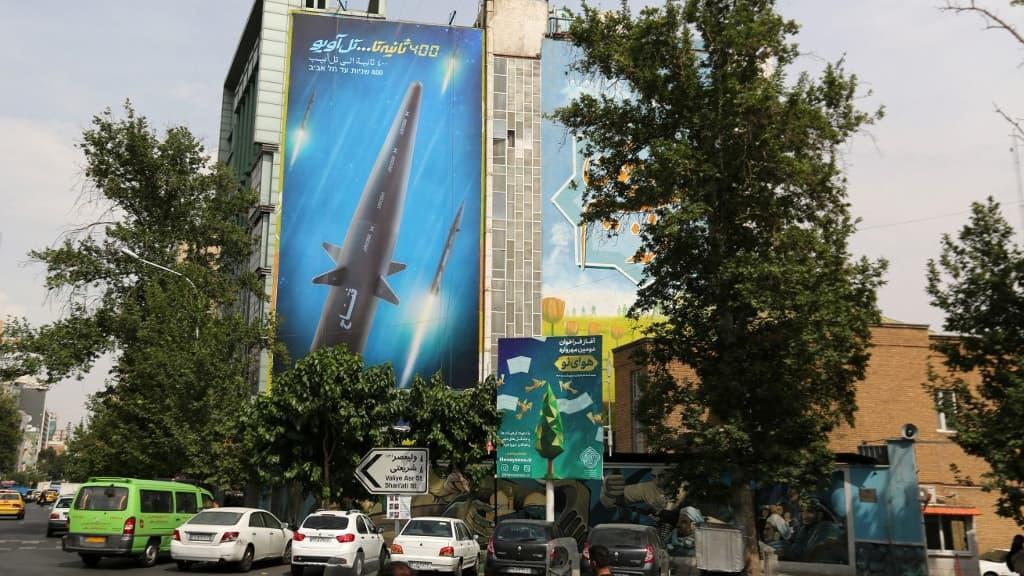
“Iran's defensive capabilities will never be the subject of negotiations, unlike the nuclear program, assured on Friday, January 30, by the country's foreign minister Abbas Araghchi, as Tehran faces strong pressure from the United States”
At Turkey’s annual diplomatic conference in the Mediterranean resort town of Antalya, the United States was “rarely the official topic of conversation,” yet discussions repeatedly returned to questions about how to respond when the United States “disregards its allies and the global order it long professed to represent.”
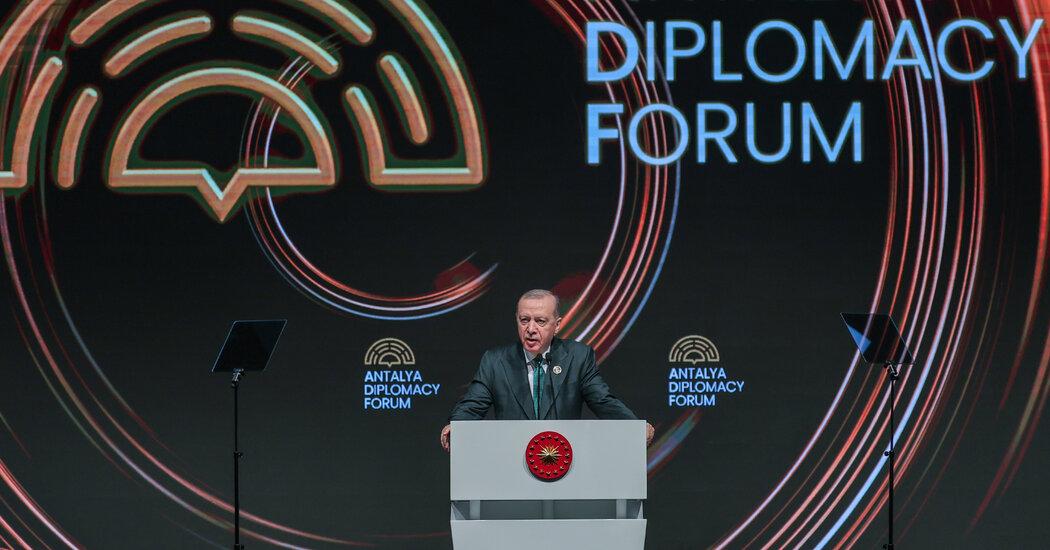
The Antalya Diplomacy Forum concluded on Sunday, and Turkey’s foreign minister Hakan Fidan used the closing news conference to argue that states must come together to “own regional issues.”
Fidan warned, “If this region continues to wait for a savior, in the end it is going to continue facing these problems until eternity,” as the conference’s thousands of participants—including “dozens of heads of state and other senior officials”—debated regional approaches.
The New York Times also tied the urgency to “the foreign policy chaos of President Trump’s second term” and “the vast disruptions caused by the U.S.-Israeli war on Iran.”
In parallel, multiple reports placed the next diplomatic step in Istanbul, where Iran’s foreign minister Abbas Araghchi was set to meet Hakan Fidan as Turkey sought to avoid escalation “at its doors.”
Escalation Pressure and Timing
The diplomatic push in Turkey unfolded against a backdrop of U.S. military posture and European moves that Iran’s officials framed as part of a pressure campaign.
Ici Beyrouth reported that Abbas Araghchi was to meet Hakan Fidan in Istanbul “soucieux d’éviter un embrasement de la région en cas d’attaque américaine,” with President Trump saying he “espérer” avoid striking Iran.
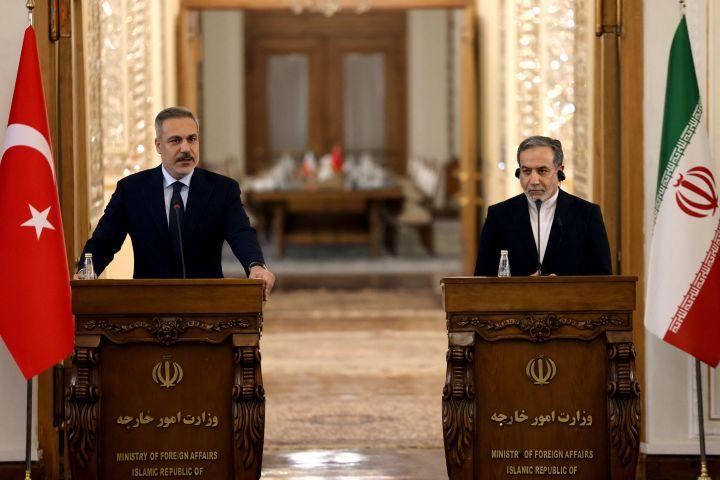
The same report said Iran’s president Massoud Pezeshkian told Recep Tayyip Erdogan that “La réussite de toute initiative diplomatique dépend de la bonne volonté des parties concernées” and that the parties must abandon “mouvements et actions belliqueux et menaçants.”
It also described a tense context for Iran’s regime, including “une armada américaine déployée dans le Golfe” and the European Union’s addition on Thursday of the Islamic Revolutionary Guard Corps to its terrorist list.
PBS, in an Associated Press interview on the margins of a diplomacy forum in Turkey, put the emphasis on the U.S. stance in the nuclear talks, with Iranian Deputy Foreign Minister Saeed Khatibzadeh saying Iran was not ready for face-to-face talks because Washington refused to abandon “maximalist” demands.
Khatibzadeh said, “I can tell you that no enriched material is going to be shipped to United States,” and called that position “non-starter,” while also citing Trump’s Friday remarks about going into Iran to “get all the nuclear dust.”
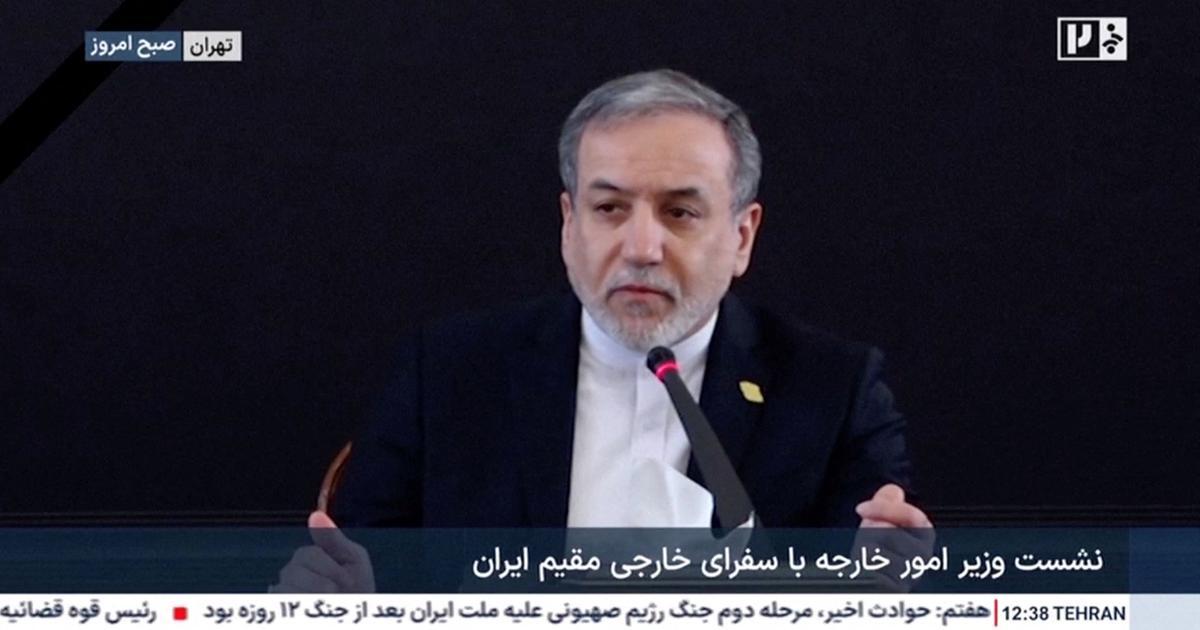
In parallel, BFM reported that Abbas Araghchi told reporters from Istanbul that Iran’s “defensive capabilities and missiles will never be negotiated,” while also saying he was ready to resume nuclear negotiations “on an equal footing.”
Iran, Turkey, and the U.S. Positions
The reports converge on a set of hard lines and conditional openings that each side described in different ways, with Turkey trying to translate between them.
PBS quoted Iranian Deputy Foreign Minister Saeed Khatibzadeh saying, “We are still not there yet to move on to an actual meeting because there are issues that the Americans have not yet abandoned their maximalist position,” and he added that Iran was seeking to finalize a “framework agreement” before an in-person meeting.
Khatibzadeh also framed U.S. sanctions as “illegal unilateral sanctions” and called them “this economic terrorism which has targeted Iranian people to suffocate them and make them to revolt against the political structure inside Iran.”
When asked about renewed attacks by Israel on Lebanon, Khatibzadeh said, “Iran has no option, just to stop aggressors once and forever.”
BFM reported that Abbas Araghchi insisted at a press conference that “La sécurité de la population iranienne n’est la responsabilité de personne d’autre,” and it also said he was ready to resume nuclear negotiations “on an equal footing.”
Turkey’s role as mediator was emphasized in multiple outlets: RFI said Turkey wanted to “servir as a mediator” and described contacts with Iranians and Americans to persuade Washington to negotiate with Tehran, while Le Figaro said a Turkish Foreign Ministry official described Araghchi’s visit as aiming to “act as a mediator to ease the tension.”
RFI further reported that Turkey’s diplomacy followed “three telephone exchanges” between the two diplomats and that the Turkish foreign minister met “three times with the U.S. ambassador to Turkey, Tom Barrack,” to discuss the possibility of a U.S. military intervention.
In the same thread, BFM quoted Turkish Foreign Minister Hakan Fidan saying, “we hope the American administration will show good sense,” and it also said Fidan reiterated Turkey’s opposition to any military intervention against Iran.
Border Security and Refugee Risk
Turkey’s mediation efforts were paired with preparations aimed at preventing spillover from a potential U.S.-Iran confrontation, with multiple reports describing reinforced border security and the scale of the frontier at stake.
Ici Beyrouth said Turkey, “membre de l’Otan,” wants “à tout prix éviter une escalade militaire à ses portes,” which could “jeter des milliers de migrants” beyond the “plus de 550 km de frontière” it shares with Iran and create “un nouveau conflit à ses portes.”
It added that “Par précaution, la Turquie se prépare à «renforcer la sécurité à sa frontière» avec l’Iran,” quoting an AFP high official, and said Turkey has already erected “un mur long de 380 km” along the border but that “ce n’est pas suffisant.”
La Libre.be similarly reported that Turkey has already erected a “380-km-long wall” and that it is “Surmounted by barbed wire and watchtowers,” with trenches where “the army patrols 24 hours a day.”
Le Figaro tied the same border geography to Turkey’s diplomatic stance, saying Fidan would note that Turkey shares “more than 550 kilometers of border with Iran,” and that Turkey is ready to contribute through dialogue.
BFM also described the same concern about escalation driving migrants, stating Turkey wants to avoid “any military escalation” that could drive “thousands of migrants across the more than 550 km of border it shares with Iran.”
RFI expanded on the logic by linking escalation to “an influx of refugees” and “disruption of trade routes,” while also referencing “Kurdish independence movements in Iran” and “Iranian retaliation against Turkish bases used by the U.S. military.”
Across these accounts, Turkey’s border measures and diplomatic outreach were presented as mutually reinforcing responses to the same risk of a wider conflict.
What Happens Next
The next phase of diplomacy and the risk of military action were described as tightly linked, with Turkey trying to keep talks alive while Iran and the U.S. continued to signal boundaries.
“War in theMiddle East Advertisement Supported by The U”
Ici Beyrouth reported that Araghchi’s visit to Turkey was his “première visite officielle à l’étranger” since protests in Iran were “réprimée dans le sang,” and it said he was to speak to the press at “13H45 locales (10H45 GMT)” alongside Hakan Fidan.
PBS described the same Antalya-to-Turkey diplomatic setting by quoting Khatibzadeh’s insistence that Iran would not ship enriched uranium to the United States and that the U.S. had not abandoned maximalist demands, while also saying Iran was ready to address concerns but not “nonstarters.”
BFM added that Abbas Araghchi said Iran’s defense capabilities and missiles “will never be negotiated,” and it also stated that “no meeting was planned at this stage with the United States,” even as he said he was ready to resume nuclear negotiations.
RFI said Turkey’s diplomacy had not yet succeeded in persuading Washington to negotiate, noting that “So far, there has been no success,” and it described Turkey’s attempt to start with “starting with the nuclear issue.”
In parallel, the reports described a broader diplomatic alignment around the U.S. and Iran, with La Libre.be stating that “The European Union (EU) has thus joined the United States, Australia, and Canada.”
The stakes were framed in terms of escalation and regional stability: Le Figaro said Fidan would reiterate Turkey’s opposition to any military intervention and emphasized the risks such an initiative would pose, while PBS quoted Khatibzadeh saying Iran had “no option” but to stop aggressors “once and forever.”
Taken together, the accounts depict a narrow window where Turkey’s mediation depends on whether Washington abandons “maximalist” demands and whether Iran can accept a “framework agreement” before face-to-face talks.
More on USA
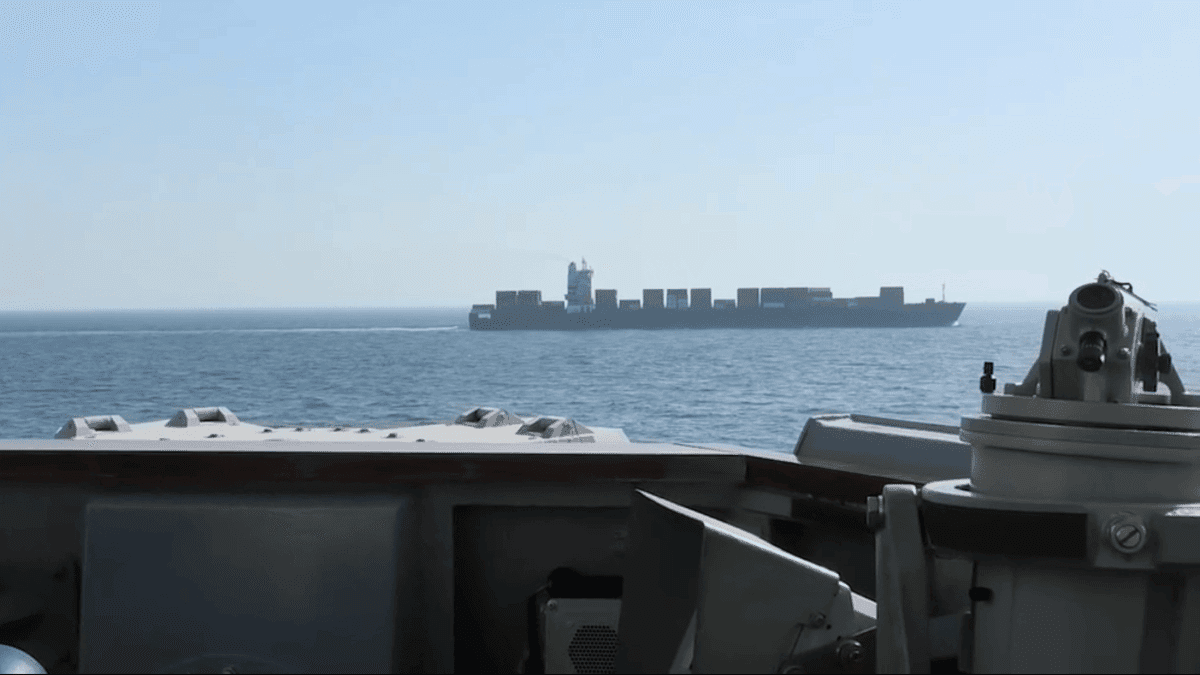
Donald Trump Says US Navy Disabled And Seized Iranian-Flagged Ship Touska In Gulf Of Oman
13 sources compared

Reuters/Ipsos Poll Finds 36% Approve Trump’s Job Performance Amid Iran War And Pope Feud
10 sources compared
Donald Trump Urges Iran To Release Eight Women Facing Execution Ahead Of Talks In Islamabad, Pakistan
12 sources compared
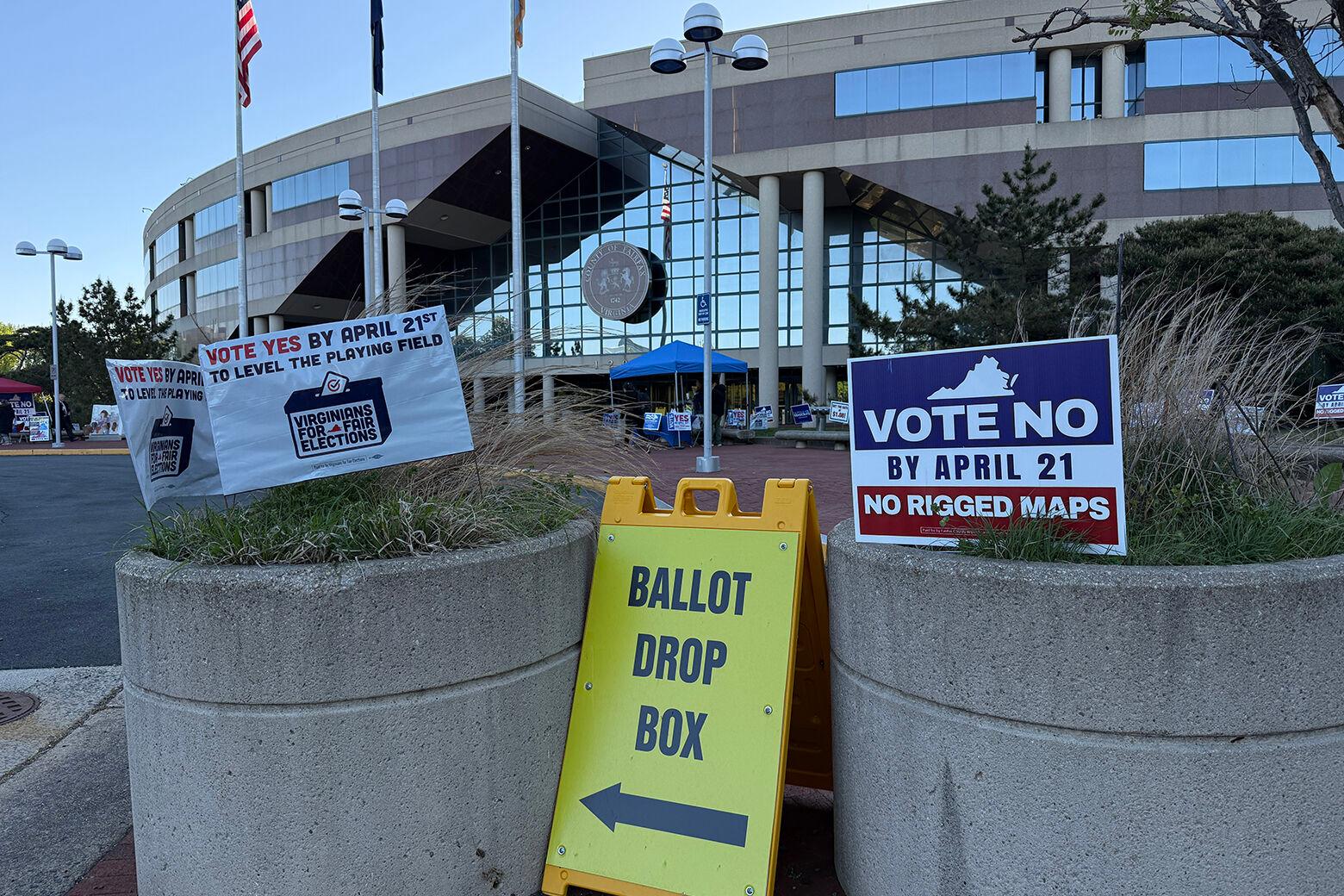
Virginia Voters Decide Tuesday On Redistricting Referendum That Could Boost Democrats’ House Seats
30 sources compared