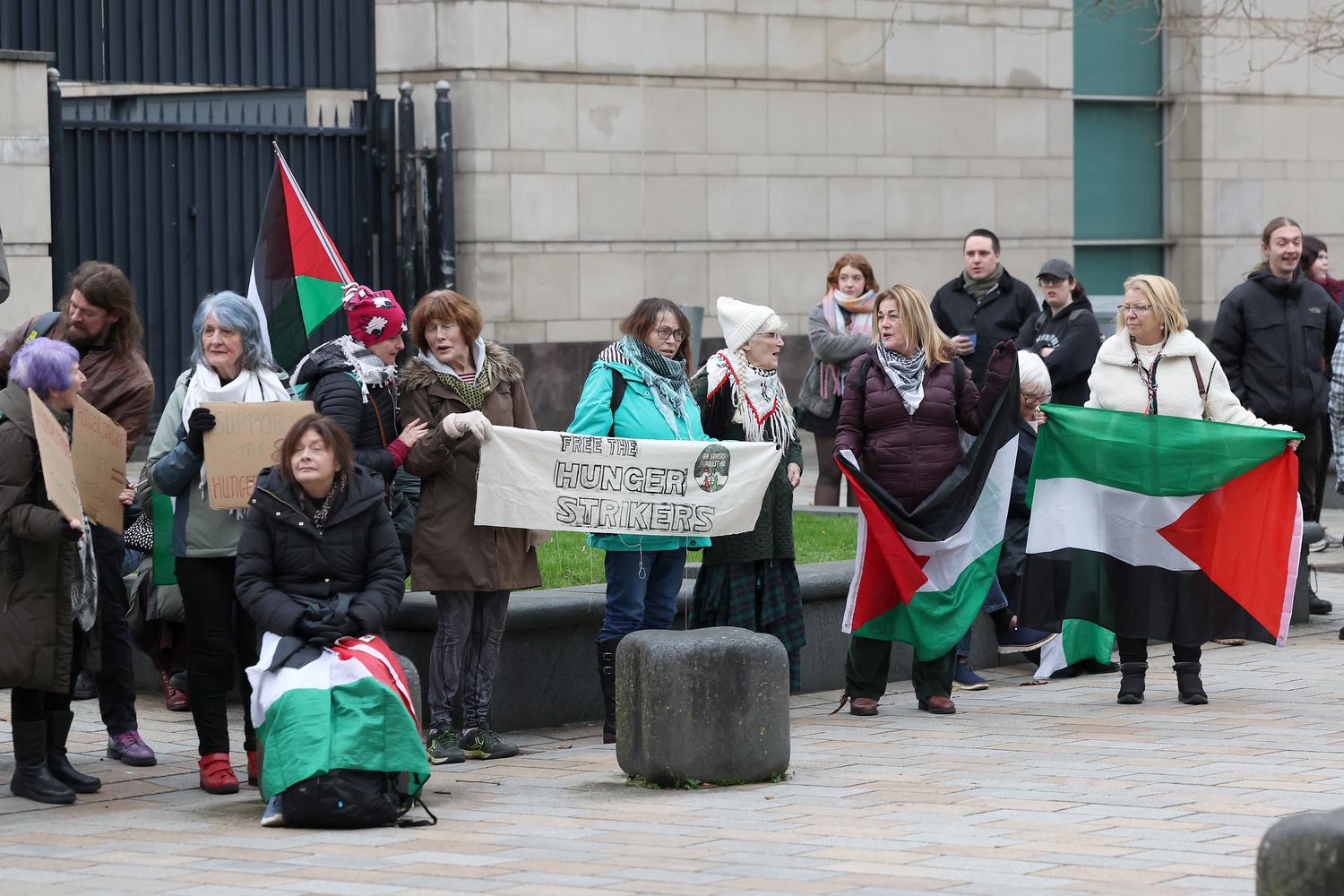
UK Government Appeals High Court Ruling Against Palestine Action Ban at Court of Appeal in London
Key Takeaways
- Court of Appeal in London hears government appeal against ruling on Palestine Action ban.
- High Court ruled the ban unlawful, prompting the appeal.
- Test of UK anti-terror powers and restrictions on activism.
Appeal in London
The United Kingdom is appealing a High Court ruling that granted Palestine Action a victory by finding the government’s ban on the direct-action group illegal, with the hearing beginning on Tuesday at the Court of Appeal in London.
“London, United Kingdom – The United Kingdom is appealing the High Court’s landmark ruling that the government’s ban on Palestine Action was illegal”
Al Jazeera reports that top judges described the proscription of the group as a terrorist organisation as “disproportionate” in February, and that the proscription remained in place amid the appeals process even after the High Court setback.

The same Al Jazeera report says the government’s case suffered a blow at the High Court, but that “it is still illegal to show support for the group,” and it adds that “The fate of those arrested remains uncertain.”
London’s Metropolitan Police announced it was unlikely to arrest supporters after the High Court ruling, but later reversed that policy, according to Al Jazeera.
The Al Jazeera report also describes a coordinated civil disobedience campaign since the UK banned Palestine Action last July, with “more than 2,700 people arrested under terror laws” for holding up signs reading, “I oppose genocide. I support Palestine Action.”
It further states that a seven-word letter reading “We oppose genocide, we support Palestine Action,” signed by more than 1,000 people, including “the novelist Sally Rooney, climate activist Greta Thunberg and Israeli historian Ilan Pappe,” will be delivered to the court on Tuesday by political philosopher and professor Peter Hallward.
At a rally outside the court on Tuesday, Jo Ripley, who had travelled to London from Wiltshire, told Al Jazeera she was protesting out of “anger,” saying the government’s appeal reveals a “chilling effect” on “democracy.”
How the case escalated
The legal fight over Palestine Action’s ban traces back to plans announced under the Terrorism Act, with the Guardian describing how Shabana Mahmood’s predecessor Yvette Cooper announced plans to ban Palestine Action in June of last year.
The Guardian says the announcement came “three days after it claimed responsibility for a break-in at RAF Brize Norton, during which red paint was sprayed into the turbines of two military aircraft,” and it adds that Palestine Action said it targeted RAF Voyager planes because they were being used in refuelling to support Israeli military operations, while “a UK defence source said they were not involved in such activities.”
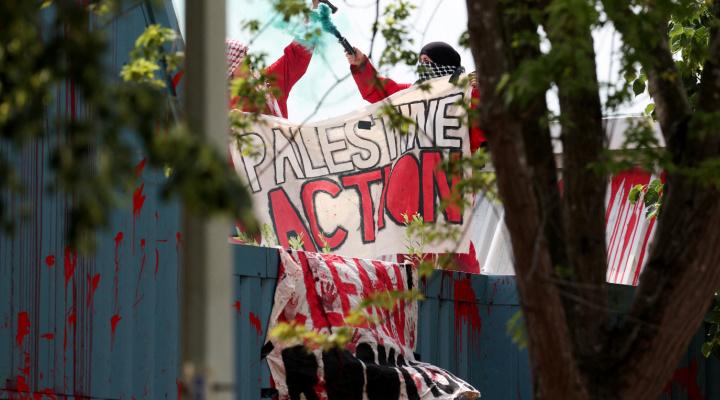
The Guardian reports that Cooper justified the ban as “the first on a direct action group under the Terrorism Act,” placing it alongside “Islamic State and Boko Haram,” and it says Cooper cited “a long history of unacceptable criminal damage” and a threat to national security.
The Guardian also states the ban came into effect on 5 July, despite criticism from UN experts, civil liberty groups, lawyers and MPs, who argued it set a dangerous precedent by conflating protest with terrorism.
After the ban, the Guardian says a record-breaking civil disobedience campaign began, coordinated by Defend Our Juries (DOJ), with demonstrations where protesters held placards saying: “I oppose genocide, I support Palestine Action.”
By the time of the High Court’s judgment, the Guardian says “more than 2,700 people had been arrested for alleged support of a terrorist group under section 13 of the Terrorism Act,” which “carries a maximum sentence of six months in prison.”
The Guardian then describes the High Court’s ruling as finding the ban unlawful on two grounds: it was a “very significant interference” with freedom of speech and assembly, and it breached the home secretary’s own policy on proscription.
The Guardian adds that after allowing the home secretary permission to appeal, the judges said the ban should remain in place pending the appeal, setting up the current Court of Appeal hearing.
Court strength and arguments
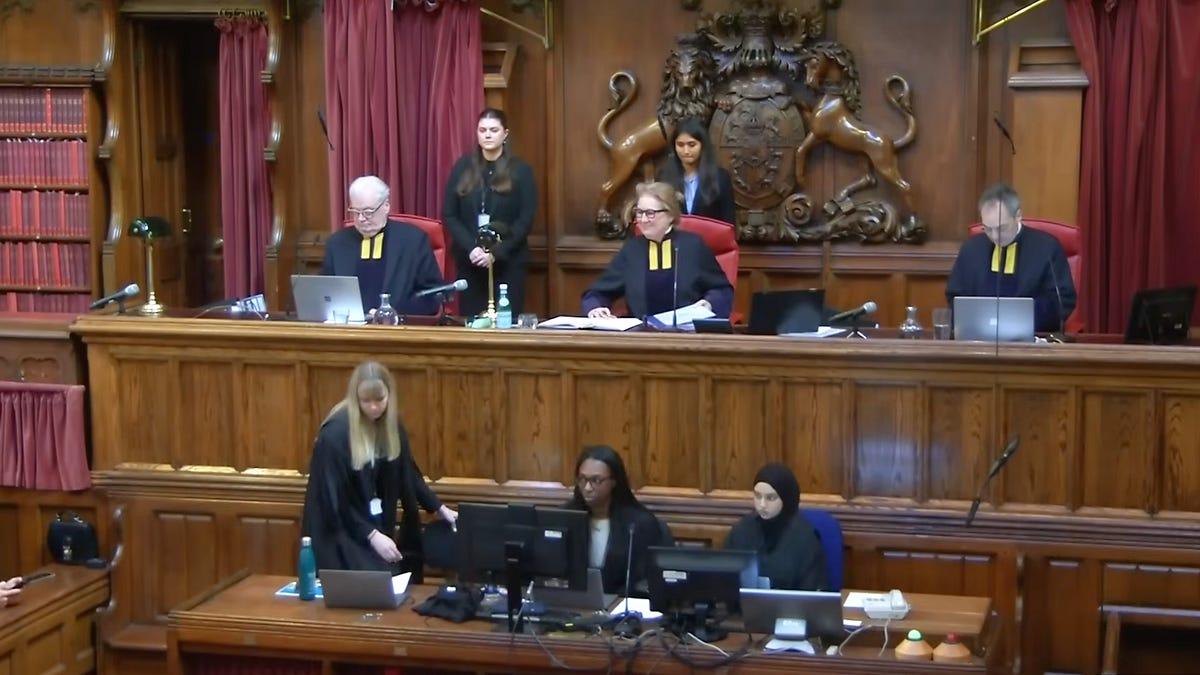
As the appeal moves forward, Joshua Rozenberg’s analysis describes an unusual Court of Appeal panel of five judges hearing the home secretary’s appeal, with the hearing beginning “today” and scheduled to start at 1030.
Rozenberg writes that the earlier High Court ruling was delivered on 13 February by the president of the King’s Bench division, Dame Victoria Sharp, sitting with two High Court judges, Mr Justice Swift and Mrs Justice Steyn, and that it was put on hold to allow time for Shabana Mahmood’s appeal to be heard.
He says the Court of Appeal hearing will be presided over by the lady chief justice, Baroness Carr of Walton-on-the-Hill, and that she will be joined by the master of the rolls Sir Geoffrey Vos, plus Lord Justice Edis, Lord Justice Lewis, and Lady Justice Whipple.
Rozenberg characterises the panel as “strong,” noting that a panel of five appeal judges that includes the two most senior judges in England and Wales would be described by lawyers as “a “strong” court.”
He also reports that Sir James Eadie KC, for the home secretary, argued that the High Court made errors when deciding the two grounds on which it overturned the ban, including that the home secretary breached her own policy and that the ban was an unjustified interference with rights to freedom of expression and assembly.
Rozenberg quotes Eadie’s argument that “Policies are not to be read as statutes, he maintained. They are guides, not rules,” and he adds that Eadie argued the High Court paid no regard to ministerial submissions referring to the proportionality analysis required.
Rozenberg’s account also says the hearing would continue with a response from counsel for Huda Ammori, co-founder of Palestine Action and respondent to the appeal, and it states it is expected to conclude on Thursday.
In parallel, Middle East Eye reports that in its appeal lodged at the Court of Appeal on Tuesday, the Home Office argued the initial judgment was legally flawed and undermined the government’s ability to respond to “escalating” activity, with James Eadie insisting Palestine Action met the legal threshold of being “concerned in terrorism.”
Different outlets, different emphasis
While Al Jazeera frames the appeal as a continuation of a legal battle over a ban that it says remains illegal to show support for Palestine Action, the Guardian focuses on the history of the ban and what it means for protest rights, and Middle East Eye highlights the government’s argument about democratic accountability and an “escalating” activity.
Al Jazeera says the High Court’s description of the proscription as “disproportionate” in February did not remove the ban during the appeals process, and it reports that the Metropolitan Police reversed an earlier stance about arrests after the ruling.
The Guardian, meanwhile, says the ban was the first under the Terrorism Act for a direct action group, placing it alongside “Islamic State and Boko Haram,” and it spells out that the ban came into effect on 5 July despite criticism from UN experts and civil liberty groups.
The Guardian also lays out what is at stake at the Court of Appeal, stating that “it remains an offence to show support for Palestine Action, punishable by a maximum prison sentence of 14 years, for more serious offences under section 12 of the Terrorism Act.”
Middle East Eye describes the government’s appeal as accusing the courts of ignoring “Britain’s democratic structures,” and it quotes James Eadie saying “She is democratically accountable - and as we know, that democratic stamp on her decision-making has included the affirmative resolution in the process.”
The Grayzone, by contrast, portrays the retrial of six Palestine Action activists as a “terror stitch-up” and claims a judge “forbidden them from referring to the principle of jury equity in their closing speeches,” while also asserting restrictions on what defendants can say about “genocide” and the target of their direction action protests.
The Grayzone says the retrial of six Palestine Action (PA) activists began on April 13 and that the defendants were acquitted of aggravated burglary in February, while it claims the presiding judge Jeremy Johnson imposed a “new secret gag order” and that defendants risk prison for contempt if they violate it.
Even within the same broad subject, the outlets diverge on how they describe the legal process: the Guardian and Rozenberg emphasize court structure and legal grounds, while the Grayzone emphasizes courtroom restrictions and defense strategy.
Consequences across the UK
The consequences of the Palestine Action ban and its appeal are described as extending beyond London, with local reporting in Northern Ireland showing how the proscription has fed into counter-terrorism prosecutions and police referrals.
“Terror ban appeal ‘Strong’ court of five judges to sit this week In an unusual move, five senior judges will hear the home secretary’s appeal today against a High Court ruling overturning the banning of Palestine Action as a terrorist organisation”
The Irish News reports that Palestine Action has made up “a third of all files submitted by the PSNI to prosecutors over alleged displays of support for proscribed organisations in Northern Ireland in the past 25 years,” and it says the PSNI referred “32 files involving Palestine Action” to the Public Prosecution Service (PPS) out of “90 files” linked to such offences under the Terrorism Act 2000.
It adds that “The alleged offences fall under Section 13 of the Terrorism Act 2000,” which makes it a crime to wear, carry or display an item in public in a way that arouses “reasonable suspicion” of membership or support for a proscribed organisation.
The Irish News also states that Palestine Action was banned in July 2025 and that, since then, individuals in Northern Ireland and Britain have been arrested or investigated for displaying posters or wearing clothing bearing the slogan “I oppose genocide. I support Palestine Action.”
It reports that Patrick Corrigan of Amnesty Northern Ireland said the figures were “deeply concerning” and “stark” compared with “the police response to thousands of public displays of support for armed paramilitary groups,” and it quotes him saying “Treating peaceful protest as terrorism is not only disproportionate, it is absurd.”
The Irish News further quotes Daniel Holder of CAJ saying it was “striking” that “a third of all files over 25 years relate to a group that was only banned last year,” and it warns that the ban was “an abuse of Terrorist legislation” and “could be a precursor to banning and criminalising other groups engaged in direct action protests, like environmental groups.”
The Detail adds further detail on the Northern Ireland figures, saying the PSNI referred 32 files involving Palestine Action to the PPS out of 90 files since the Terrorism Act was introduced in July 2000, and it states that “over 3,000 individuals have been arrested for displaying posters or wearing clothing bearing the slogan: “I oppose genocide. I support Palestine Action.””
Across the UK, Liberty’s intervention adds another layer to the stakes, with Liberty warning that “The proscription of Palestine Action risks paving the way for current and future governments to use counter terror powers against non-terrorist groups,” and it argues that the case has exposed a “deeper problem” where “the line between what is and is not terrorism has become dangerously blurred.”
More on Britain
Essa Suleiman Stabs Two Jewish Men in Golders Green, UK Terror Threat Escalates
20 sources compared

King Charles III and Camilla Begin U.S. State Visit With Tea at White House
12 sources compared
King Charles III Arrives in Washington, D.C. for Four-Day State Visit With Queen Camilla
28 sources compared

Zohran Mamdani Urges King Charles to Return Koh-i-Noor Diamond to India
15 sources compared