Ukraine Offers To Send Drone Experts To U.S., Middle East To Counter Iranian Drones
Key Takeaways
- Ukraine offered to send drone experts to the U.S. and Middle East
- Ukraine developed extensive, cost-effective countermeasures against Iranian Shahed-style attack drones
- The United States and regional partners are consulting Ukraine to counter Iranian drone threats
Ukraine offers drone defense
Ukraine has offered to send personnel and technology to assist the United States and Middle Eastern partners in countering Iranian Shahed attack drones, a move Kyiv framed as an export of combat-tested experience rather than a purely symbolic gesture.
“As Iran unleashes a wave of retaliatory drones strikes on critical infrastructure around the Persian Gulf, Ukrainian expertise in countering those drones appears to be in demand”
Stars and Stripes reports that Ukraine’s president Volodymyr Zelenskyy said this week that Kyiv is prepared to send military experts to the Middle East to help the U.S. and partner states counter Iranian drones.

FDD’s Long War Journal notes that Ukrainian President Volodymyr Zelenskyy says Ukraine will send technology and personnel to the Middle East to help the United States and its partners counter Iranian long-range one-way attack (OWA) drones.
CNN likewise frames Kyiv as offering to share its experience and is holding talks with Middle Eastern leaders, with President Zelensky suggesting cooperation could involve exchanges related to systems like Patriot and PAC-3 missiles.
Shahed-136 threat summary
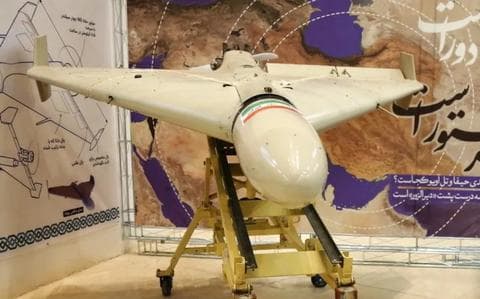
The immediate driver for Kyiv’s offer is the growing prominence of the Shahed‑type one‑way attack UAS, particularly the Shahed‑136, which has emerged as a central threat in recent conflicts and has been mass-produced and proliferated in the region.
CNN explains that "the Shahed-136 attack drone—widely used by Russia in Ukraine—has become a central threat in recent conflicts."
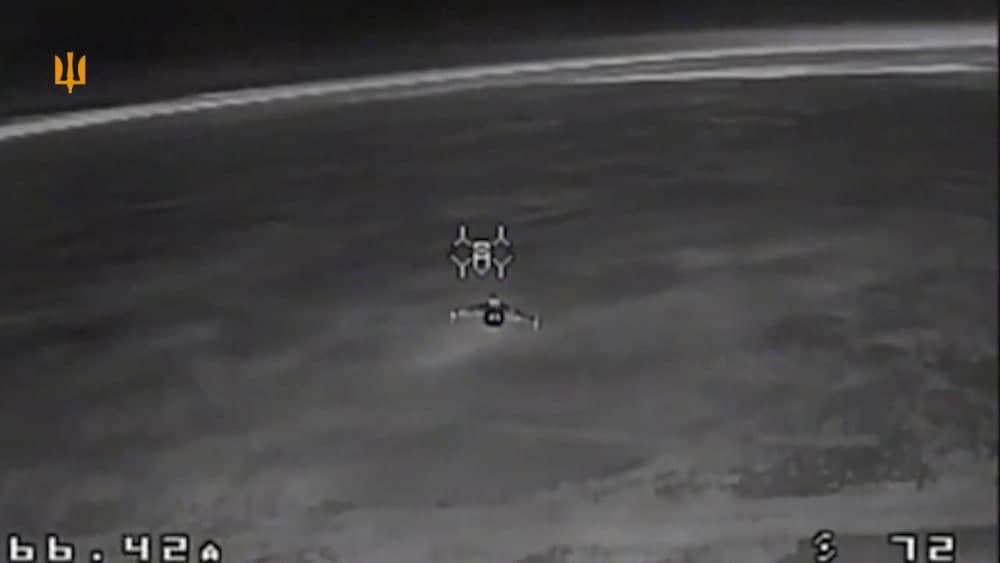
CNN reports that "Russia mass-produces upgraded Shahed variants (reportedly over 5,500 per month from a facility in Alabuga) with improved jamming resistance, warheads, and endurance."
FDD adds historical and technical context, calling the Shahed‑136 "a propeller‑driven, delta‑wing OWA UAS Iran began supplying to Russia in 2022 and which later was produced in large numbers by Moscow."
Stars and Stripes highlights the economics of the weapon class, saying "Shaheds are estimated to cost $20,000–$50,000 each."
Layered low cost defense
Kyiv argues its value lies in practical, low-cost countermeasures honed in heavy fighting: a layered defense approach that mixes electronic warfare, aviation assets and cheaper interceptors instead of relying solely on expensive missile systems.
“Ukraine is prepared to send military experts to the Middle East to help the U”
CNN describes how "Ukraine has developed a layered, largely low-cost defense against Shaheds—using interceptor drones, helicopters and reconfigured cargo planes with miniguns, heavy machine guns, shoulder-fired missiles, fighter jets (including F-16s) and limited Patriot batteries—and claims it intercepts about 90% of incoming Shahed strikes."
FDD similarly notes that "Ukraine developed layered, lower‑cost defenses (including aviation assets, electronic warfare and cheaper interceptor systems and tactics) that have proven effective against massed Shahed attacks."
Stars and Stripes emphasizes Ukraine’s stock of small-drone interceptors, saying "Zelenskyy also proposed weapons and technology exchanges, noting Ukraine lacks Patriot batteries but has plentiful small-drone interceptors that have proven effective against Iran-supplied Shahed drones."
Assistance coordination for Ukraine
Officials in Kyiv and Washington are coordinating on how to provide assistance while preserving Ukraine's own defenses.
Ukrainian teams are already reported to be coordinating on-site support with partners under attack.
Stars and Stripes reports that 'Ukraine has been consulting with Washington and countries under attack and is exploring ways to assist without weakening its own defenses; teams are already coordinating on-site support.'
FDD frames the proposal as an opportunity for partners to gain access to trained operators and tools, saying 'Ukrainian participation could give the US and its allies access to battle-tested tools and operators and help them adapt to the growing threat of OWA UAS in this and future conflicts.'
CNN similarly notes Kyiv's outreach to Middle Eastern leaders and the potential for exchanges involving air-defense systems.
Counter-drone tactics and costs
Analysts and the reporting underscore friction points: regional forces and U.S. units have not widely adopted Ukraine's tactics, and many warn that relying on costly Patriot-class interceptors against large numbers of cheap Shaheds is impractical.
CNN cautions that 'military analysts say Gulf states and U.S. forces in the region have not broadly adopted Ukraine's counter-drone approaches.'
Stars and Stripes records Zelenskyy's argument that 'relying on costly Patriot systems to stop thousands of inexpensive Shaheds is impractical.'
FDD also highlights the economics driving Ukraine's methods, noting 'Facing an unsustainable cost per kill using only expensive interceptor missiles, Ukraine developed layered, lower-cost defenses....'
CNN additionally reports that 'The U.S. has reverse-engineered a captured Shahed to build its own one-way attack drones and has used them against Iranian targets in the new Middle East fighting,' which frames both the threat and the rapid adaptation by partners.
More on Iran
US Bombs Military Sites on Iran's Kharg Island
10 sources compared
Iran Closes Strait of Hormuz, Chokes Global Shipping and Pushes U.S. Retail Prices Higher
41 sources compared

President Donald Trump Orders US Bombing of Iran's Kharg Island, Says Targets 'Totally Obliterated'
18 sources compared
US obliterates military targets on Iran’s Kharg Island, Trump warns
13 sources compared