
Ukraine Summons Israel Ambassador Michael Brodsky Over Panormitis Stolen Grain Ship
Key Takeaways
- Ukraine summoned Israeli ambassador over Panormitis, a ship carrying Ukrainian grain allegedly stolen by Russia.
- Zelensky threatens sanctions against those involved in shipments.
- EU ready to sanction those involved in Ukrainian grain shipments smuggled by Russia.
Haifa dispute erupts
Ukraine’s government escalated a diplomatic dispute with Israel over a ship it says is carrying stolen Ukrainian grain, as Kyiv summoned Israel’s Ambassador Michael Brodsky and urged action over a vessel seeking to unload at Haifa Port.
Foreign Minister Andrii Sybiha said on April 27 that “Friendly Ukrainian-Israeli relations have the potential to benefit both countries, and Russia's illegal trade with stolen Ukrainian grain should not undermine them,” adding that Kyiv was pressing for steps that would not harm bilateral ties.

Sybiha said the ship Panormitis “entered the Haifa Bay earlier this week,” and marine traffic monitoring services showed the vessel idling near the Israeli coast.
Israeli Foreign Minister Gideon Sa’ar responded publicly later on April 27, rejecting Kyiv’s accusations and saying “Allegations are not evidence,” while adding that “Evidence substantiating the allegations have yet to be provided.”
Sa’ar also said the matter would be examined and that Israeli authorities would act “in accordance with the law.”
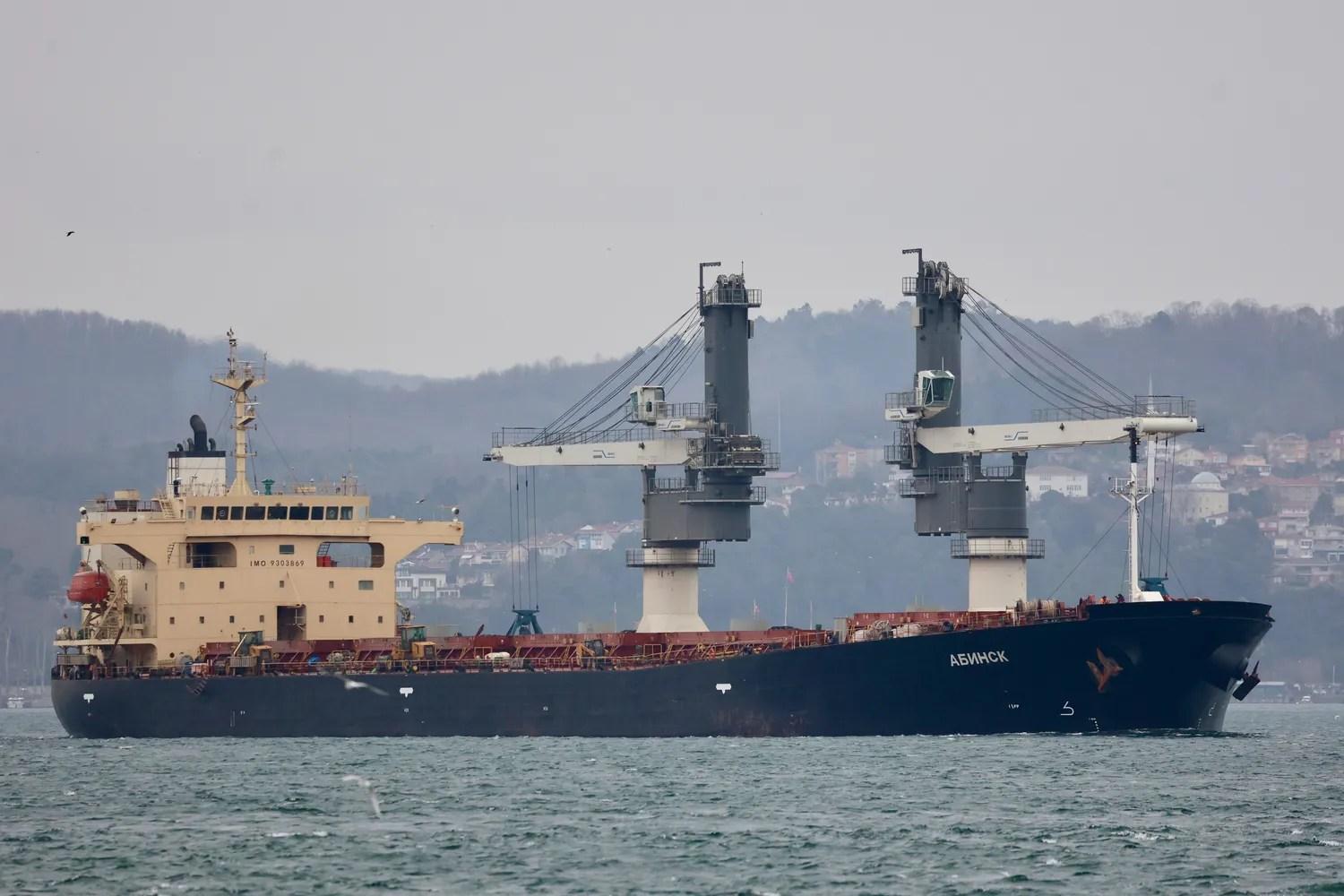
The dispute is tied to a broader pattern described by multiple outlets, including a prior Haifa docking by the Russian bulk carrier Abinsk, which Kyiv said involved stolen Ukrainian wheat.
Ukraine’s plan, Sybiha said, was to hand over a protest note and “request appropriate action” during the April 28 meeting with the Israeli ambassador.
What Kyiv says happened
Kyiv’s case centers on the Panama-flagged bulk carrier Panormitis and on what Ukraine says is the origin of its cargo from Russian-occupied Ukrainian territories.
The Kyiv Independent reported that Panormitis “initially departed from the Port of Kavkaz in Russia's Krasnodar Krai,” carrying “over 6,200 tons of wheat and 19,000 tons of barley,” and that journalist Kateryna Yaresko said the vessel was loaded with grain from occupied Ukrainian territories via transfers from other ships.

The dispute also references an earlier Haifa case involving the Russian bulk carrier Abinsk, which the Kyiv Independent said docked in Haifa earlier in April with “nearly 44,000 tons of stolen Ukrainian wheat.”
Haaretz described Abinsk as a ship that “was sailing under a Russian flag” and said the Ukrainian government stated it brought “millions of dollars’ worth of wheat, stolen from territories under Russian occupation.”
Haaretz further asserted that “by 2023, about a year after the Russian military's massive invasion of Ukraine, at least two ships carrying stolen grain arrived in Israel,” and that “at least one of them unloaded here.”
It also said that “four shipments of stolen Ukrainian grain have already been unloaded in Israel this year,” and that internal logs kept by Russian authorities in occupied Ukrainian ports list “over 30 shipments of stolen goods with Israel as their destination.”
Ukraine’s position, as described by multiple outlets, is that the grain trade finances Russia’s war effort, with Zelensky warning that “purchasing stolen goods is an act that entails legal liability” and that it “applies, in particular, to grain stolen by Russia.”
Israel rejects evidence demands
Israel’s response, as presented across outlets, is that Kyiv has not provided evidence through the appropriate legal channels and that the latest vessel has not yet entered Haifa.
“Ukraine accuses Israel of receiving shipments of grain 'stolen' by Russia A diplomatic row has broken out over allegations that Israel is receiving shipments of grain from Russian-occupied Ukraine”
Sa’ar told reporters that “The vessel has not entered the port and has not yet submitted its documents,” and he said it was “impossible to verify the truthfulness of the Ukrainian claims.”
In Jerusalem, The Times of Israel reported Sa’ar reiterated an accusation that Kyiv was conducting “Twitter diplomacy,” and said, “Up until this point, the Ukrainian government has not submitted a request for legal assistance. They submitted tweets.”
Sa’ar also said he had spoken with the Israel Tax Authority and stressed that “the vessel has not entered the port and has yet to submit its documents,” adding that it was impossible to verify claims that shipping records were forged.
CNN reported that an Israeli official, speaking on condition of anonymity, said Israel cannot seize shipments without due process and pointed to an “established mutual legal assistance protocol” requiring Ukraine’s attorney general to submit a legal aid request, supply evidence, and coordinate with Israeli police.
A Ukrainian Foreign Ministry spokesman rejected that framing, telling CNN that Ukraine had “exhausted all closed channels and official diplomatic requests.”
The BBC reported that Kremlin spokesman Dmitry Peskov said he “would rather not comment on this in any way or get involved in this matter,” while the EU’s Anouar El Anouni told the BBC that Brussels had “taken note of the reports that a Russian shadow fleet vessel carrying stolen Ukrainian grain has been allowed to unload at Haifa port in Israel.”
EU and sanctions loom
The dispute has drawn in the European Union and has moved toward sanctions threats, with Brussels saying it is ready to target those it views as helping fund Russia’s illegal war effort.
Euronews reported that the European Union warned it was “ready to impose sanctions on those aiding and abetting the trade of Ukrainian grain stolen by Russia,” and quoted an EU Commission spokesperson saying, “We have approached the Israeli Ministry of Foreign Affairs on the issue.”

The BBC also quoted EU foreign affairs spokesman Anouar El Anouni saying the bloc had “taken note of the reports that a Russian shadow fleet vessel carrying stolen Ukrainian grain has been allowed to unload at Haifa port in Israel,” and that the EU “remain[s] ready to target such actions by listing individuals and entities in third countries if necessary.”
The Kyiv Independent described the EU approach as well, saying an EU foreign affairs spokesperson told UNN that the EU “condemn[s] all actions that help finance Russia's illegal war effort and circumvent EU sanctions,” and that it “remain[s] ready to combat such actions by listing individuals and entities in third countries if necessary.”
On the Ukrainian side, Zelensky threatened sanctions on Tuesday, writing that “Another vessel carrying such grain has arrived at a port in Israel and is preparing to unload,” and saying Ukraine is preparing a sanctions package targeting “the individuals and legal entities attempting to profit from this criminal scheme.”
The Times of Israel reported that Zelensky said Ukraine was preparing a “relevant sanctions package” with European countries to cover those transporting the grain and profiting from its sale, while CNN described Kyiv’s push for sanctions as “threatening to impose sanctions on anyone involved in the shipments.”
United24 Media reported that Ukraine urged Israel to seize Panormitis, citing a Ukrainian court ruling ordering the vessel’s arrest and quoting Sybiha: “This is not Twitter diplomacy, but a very concrete legal and diplomatic request for international legal assistance that necessitates a response.”
A pattern, not a one-off
Beyond the immediate Panormitis confrontation, Haaretz and other reporting describe a longer-running pattern of shipments and concealment methods that Kyiv says help Russia monetize seized grain.
“Ukrainian President Volodymyr Zelensky has accused Israel of knowingly allowing grain stolen by Russia to be unloaded at Israeli ports, threatening to impose sanctions on anyone involved in the shipments, which Kyiv says have continued despite multiple appeals to Israeli officials”
Haaretz said that “by 2023, about a year after the Russian military's massive invasion of Ukraine, at least two ships carrying stolen grain arrived in Israel,” and that “the behavior of seven additional ships that have unloaded in Israel that year raise suspicion that they also acted to conceal the source of the grain they were carrying.”
It also reported that “internal logs kept by Russian authorities in occupied Ukrainian ports, obtained by Haaretz, list over 30 shipments of stolen goods with Israel as their destination,” and that “Sources who spoke to Haaretz say this is an ongoing pattern.”
The Kyiv Independent added that “An investigation by the Israeli newspaper Haaretz found that at least four shipments of stolen Ukrainian grain have already been unloaded in Israel this year,” and it quoted Sybiha saying, “It is difficult to understand Israel's lack of appropriate response to Ukraine's legitimate request regarding the previous vessel that delivered stolen goods to Haifa.”
CNN similarly described the dispute as part of a broader accusation that “Kyiv has consistently accused Moscow of the systematic looting of its agricultural resources,” with the “true origin” hidden when stolen grain is sold on world markets.
NBC News reported that it tracked the Russian-flagged Abinsk from Kerch on March 17 to Haifa on April 12 using MarineTraffic data, and that the ship left Haifa on April 15 and arrived at the port of Kavkaz in southern Russia on April 22.
In the middle of these competing narratives, Israel’s position remains that it cannot act without due process and that it is still verifying claims, with Sa’ar saying “Evidence substantiating the allegations have yet to be provided” and that “the vessel has not entered the port and has yet to submit its documents.”
More on Ukraine War

Ukrainian Drones Strike Voronezh Maintenance Site, Damaging Mi-28 and Mi-17 Helicopters
12 sources compared

Kremlin Holds May 9 Red Square Victory Day Parade Without Military Equipment, Citing Ukrainian Terrorist Activity
11 sources compared

Kim Jong Un Praises North Korean Soldiers Who Detonated Grenades To Avoid Ukraine Capture
17 sources compared

Ukrainian Drones Strike Rosneft Tuapse Oil Refinery, Triggering Massive Fire And Evacuations
12 sources compared