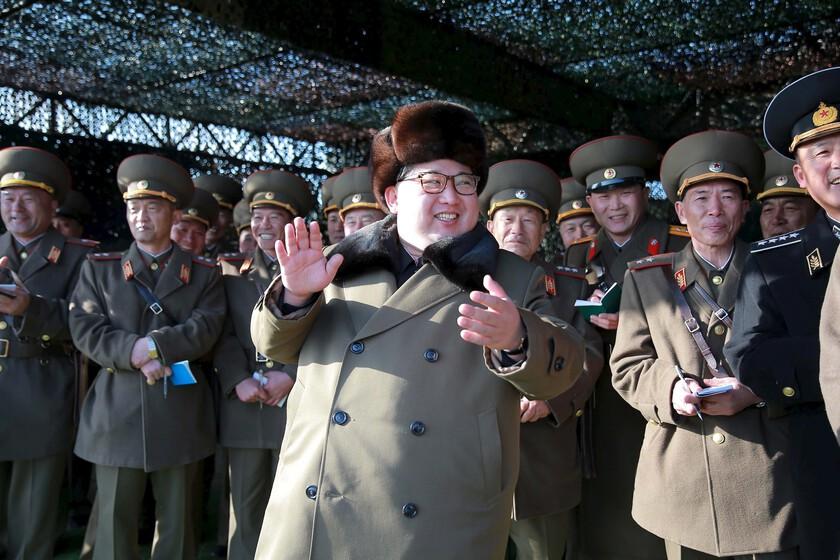
Kim Jong Un Praises North Korean Soldiers Who Detonated Grenades To Avoid Ukraine Capture
Key Takeaways
- Kim Jong Un praised NK soldiers who self-detonated to avoid capture in Ukraine.
- The remarks confirm a battlefield policy guiding NK soldiers to die rather than be captured.
- South Korea estimates about 300 soldiers killed among roughly 10,000 deployed.
Kim’s “self-blasting” pledge
North Korean leader Kim Jong Un publicly praised North Korean soldiers who killed themselves by detonating grenades to avoid capture while fighting for Russia against Ukraine, confirming what South Korea has long suspected was a battlefield policy.
“Kim Jong Un publicly praised North Korean soldiers who reportedly committed suicide on the battlefield rather than be captured by Ukrainian forces”
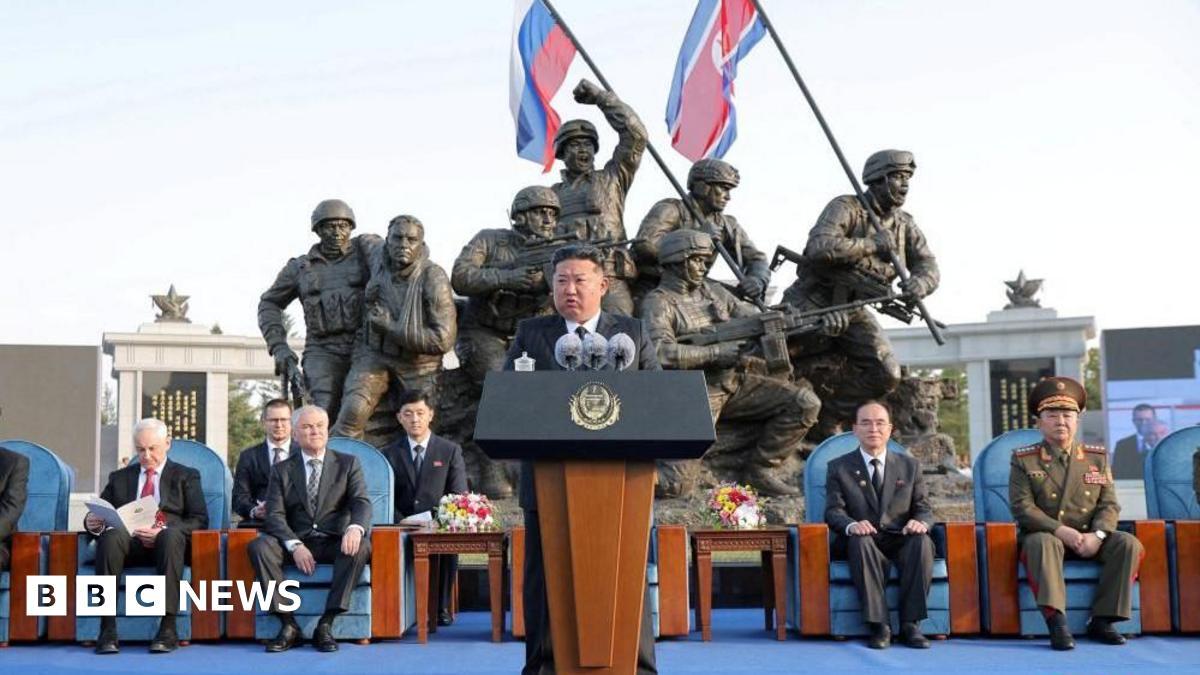
In a speech this week, Kim said those who "unhesitatingly opted for self-blasting, suicide attack, in order to defend the great honour" were "heroes," according to KCNA reporting carried by the BBC.

The BBC said Kim made the remarks in Pyongyang on Monday as he unveiled a memorial for fallen troops, with Russian Defence Minister Andrey Belousov and Vyacheslav Volodin among those who attended.
The BBC also reported that South Korea estimates at least 15,000 North Koreans have been sent to help Russia recapture parts of western Kursk, while "Neither Pyongyang nor Moscow have confirmed the numbers."
In parallel, Reuters reporting cited by the BBC described intelligence and defectors saying soldiers were under Pyongyang’s orders to kill themselves rather than be taken prisoner by Ukraine.
The BBC further noted that in North Korea, soldiers are taught that being captured is an act of treason, and it referenced an earlier MBC programme featuring two North Korean prisoners of war in Ukraine.
Kim’s praise was not limited to those who died; the BBC quoted him praising those who died in combat and those who "writhed in frustration" at failing their duties rather than suffering bullets and shells.
Kursk battlefield accounts
Accounts from the battlefield and from defectors describe how the “self-blasting” policy plays out during engagements in Russia’s western Kursk region.
Voz de América reported that after a battle in the snowy western Russian region of Kursk, Ukrainian special forces tracked the bodies of more than a dozen North Korean soldiers and found one still alive, but when they approached he detonated a grenade and "se inmoló"—a description of the combat published on Monday by Ukraine’s Fuerzas de Operaciones Especiales.
The Voz de América piece said Reuters could not verify the incident, but it said it fits “los crecientes indicios” from intelligence reports and testimonies of desertores that some North Korean soldiers are resorting to extreme measures in the war.
It also quoted a North Korean defector, Kim, who Reuters presented as a 32-year-old former North Korean soldier who deserted to the South in 2022, saying: “Autodetonación y suicidios: esa es la realidad sobre Corea del Norte”.
Voz de América further reported that Ukrainian President Volodímir Zelenski said this week that Ukraine had published videos of what it said were two North Korean soldiers captured, including one who expressed a desire to remain in Ukraine and another who wanted to return to North Korea.
The Guardian described similar evidence, saying mounting reports from intelligence and defectors indicated North Korean soldiers are explicitly told to resort to self-detonation or other forms of suicide to avoid falling into enemy hands.
The Guardian also said two North Koreans were captured and held as prisoners of war in Kyiv, and that both had tried to blow themselves up but were unable to do so because of severe injuries.
Memorials, numbers, and denials
The “self-blasting” policy was publicly acknowledged in the context of a memorial in Pyongyang for North Koreans killed while fighting alongside Russia, and multiple outlets tied the ceremony to the Kursk campaign’s timeline.
“War in Ukraine: Seoul says 300 North Korean soldiers have been killed Two days after Ukraine announced the capture of two North Korean soldiers in Russia's Kursk region, a South Korean lawmaker citing his country's intelligence service said Monday that about 300 North Korean soldiers deployed alongside the Russians had been killed”
The BBC said Kim unveiled a memorial for fallen troops in Pyongyang on Monday and that Russian Defence Minister Andrey Belousov and Vyacheslav Volodin attended.
Sky News reported that the ceremony marked the one-year anniversary of the recapture of Russia’s Kursk region, which Ukrainian forces had seized in 2024, and it described white balloons floating overhead as soldiers stood beside graves.
Sky News also said KCNA reported that Kim threw dirt over the remains of one dead soldier, laid flowers, and wrote in a guest book with Volodin.
Radio Free Europe/Radio Liberty described an April 26 ceremony opening a memorial museum in Pyongyang, saying “countless white balloons of remembrance” floated into the sky from grave sites to approximately 280 soldiers, and it contrasted that with South Korean intelligence’s estimate that about 2,000 soldiers fell during the campaign.
RFE/RL said North Korea had earlier commemorated just 101 soldiers in the western Russia campaign and that neither Pyongyang nor Moscow released casualty figures from the Kursk campaign.
Across the same set of reporting, the Guardian said North Korea sent about 14,000 elite troops in 2024 and that more than 6,000 North Koreans were killed in intense fighting, while the BBC said South Korea estimates at least 15,000 were sent and more than 6,000 have been killed so far.
Competing frames and language
Different outlets frame the same core claim—North Korean troops killing themselves to avoid capture—in distinct ways, ranging from confirmation of a “policy” to emphasis on battlefield evidence and to analysis of what the memorials are meant to signal.
The BBC presents Kim’s remarks as confirmation of a long-suspected battlefield policy, stating that intelligence and defectors said soldiers were under Pyongyang’s orders to kill themselves rather than be taken prisoner by Ukraine, and it quotes Kim’s language about “heroes.”

The Guardian similarly says Kim praised soldiers who blew themselves up to evade Ukraine capture and describes “mounting evidence” from intelligence reports and testimonies of defectors, while also adding that Russia’s armed forces recaptured the Ukrainian pocket around Sudzha in spring 2025.
Voz de América, by contrast, foregrounds a specific battlefield incident described by Ukraine’s special operations forces and quotes a defector’s blunt assessment: “Autodetonación y suicidios: esa es la realidad sobre Corea del Norte”.
TVP World and the Independent both emphasize Kim’s first public acknowledgment and quote the speech language about “self-blasting, suicide attack,” but the Independent also adds that the memorial unveiling marked the first anniversary of Russia’s recapture of the Kursk region.
Radio Free Europe/Radio Liberty shifts the focus to North Korea’s internal politics and propaganda, quoting Naoko Aoki of RAND about songbun and explaining that the relatively small number of soldiers publicly memorialized likely reflects a “social classification system” that determines access to food, education, and work.
Meanwhile, RFI frames the issue through Ukraine’s communication strategy, saying Ukrainian authorities continue to release videos and information about the North Korean soldiers captured in the Kursk region and describing this as a strategy that “violates the Geneva Convention, which protects prisoners of war.”
What comes next for Kyiv
The stakes described across the reporting extend beyond the battlefield, touching on prisoner handling, propaganda, and the risk that the “self-blasting” policy could shape future engagements in the Kursk region.
RFI says Ukrainian authorities continue to release videos and information about the North Korean soldiers captured in the Kursk region and quotes Chris Monday warning that broadcasting faces “puts them in danger,” while also saying “Kim Jong-un expects these soldiers to commit suicide.”

RFI adds that the professor argues Kyiv’s selection of images is designed to serve its narrative that “Ukraine is a front line against dictators,” and it notes that the “filter of South Korean intelligence” helps Ukrainians interrogate prisoners.
Voz de América reports that Ukraine published videos of two captured North Korean soldiers and quotes Zelenski saying one wanted to remain in Ukraine and the other wanted to return to North Korea.
The BBC and Guardian both describe that two North Koreans were captured and held as prisoners of war in Kyiv, and the Guardian says both tried to blow themselves up but failed due to severe injuries.
Sky News describes the memorial ceremony’s messaging, quoting KCNA about Kim saying the spirits of dead North Korean soldiers will remain as “a symbol of the Korean people's heroism” and support “a victorious march by the Korean and Russian people.”
The Independent says Kim and Belousov discussed plans to sign a military cooperation agreement later this year covering the period from 2027 to 2031, aimed at placing bilateral defence ties on a more sustained, long-term footing.
More on Ukraine War

Kremlin Holds May 9 Red Square Victory Day Parade Without Military Equipment, Citing Ukrainian Terrorist Activity
11 sources compared

Ukrainian Drones Strike Rosneft Tuapse Oil Refinery, Triggering Massive Fire And Evacuations
12 sources compared
Zelensky Warns Israel Over Grain Shipments Ukraine Says Russia Stole
10 sources compared

King Charles Urges NATO Unity and Ukraine Support in US Congress Speech
78 sources compared