
UN Pauses Evacuation of 11,000 Strait of Hormuz Sailors After Cargo Ship Attack
Key Takeaways
- The IMO paused evacuation of over 11,000 seafarers after a cargo ship was attacked.
- A projectile attacked a cargo vessel in the Strait of Hormuz, prompting the pause.
- Iran warned transit without Tehran's permission is unacceptable and dangerous.
Attack halts evacuation
The UN International Maritime Organization (IMO) paused its planned evacuation of more than 11,000 sailors stranded in the Strait of Hormuz after a cargo ship passing through the waterway was attacked, with IMO chief Arsenio Dominguez saying the vessel that was attacked "did not transit under IMO's evacuation framework."
UKMTO reported that a ship was struck 7.5 nautical miles southeast of Oman's port of Dahit by "an unknown projectile," and no casualties were reported, while the maritime risk management firm Vanguard said the Singapore-flagged Ever Lovely continued through the strait despite the attack.
The IMO had announced the evacuation effort on Tuesday following the reopening of the strait, and Dominguez said the "large-scale operation" had the cooperation of Iran, Oman, the US, other coastal states in the region and the maritime industry.
The Hill reported that dozens of tankers passed through the Strait of Hormuz on Thursday via a route along the coast of Oman promoted by a United Nations maritime agency, with confirmed strait crossings rising to 70 on Thursday, up 105 percent from a day prior.
In response to the attack and the pause, the body set up by Iran to manage the strait said vessels passing outside designated routes would not be guaranteed safe passage, adding that "Any consequences arising from the use of unauthorised routes shall be the responsibility of the vessel's owner, operator and master".
Routes, permits, and warnings
As the IMO evacuation plan moved forward, the UN News account said it would see the number of ships transiting through the Strait return to pre-war levels of around 130 per day, and it described two temporary new sea lanes: the "Northern route" close to the Iranian coastline and the "Southern route" through the waters of Oman and the United Arab Emirates (UAE).
UN News also quoted IMO guidance to shipmasters that "do not move. Wait to be contacted. Strictly follow instructions issued by relevant coastal States" and said each vessel would be assigned a transit group and allocated a specific departure day.
The Hill reported that the Persian Gulf Strait Authority said vessels must have a valid permit from the agency to transit the strait, while the Islamic Revolutionary Guard Corps (IRGC) navy said Iranian-designated channels are the only "safe routes" through the waterway.
The Guardian reported that on Thursday the IRGC rejected the coordinates of two new temporary shipping evacuation lanes announced by the UN’s International Maritime Organization (IMO) in conjunction with Oman, describing alternative transit routes as "unacceptable and completely dangerous."
DW reported that the UK Maritime Trade Operations (UKMTO) said it received a report that a cargo vessel was hit on the starboard side by an unknown projectile, and it quoted the IMO’s Arsenio Dominguez on X that "the IMO evacuation plan will be paused until further clarity is obtained".
Stakes for navigation and oil
The UN News report tied the evacuation plan to ongoing talks between Iran and the United States on ending their conflict, saying it was in line with a Memorandum of Understanding signed by both countries last week and that transits were expected to start rising as the plan was implemented.
NBC News said ships began sailing through the Strait of Hormuz under the UN scheme, with an IMO spokesperson telling Reuters that "Ships have already begun to pass under the plan," while LSEG ship tracking data showed at least two dry bulk ships and one cargo ship had sailed through in the past 12 hours.
NBC News also reported that three stranded tankers carrying 5 million barrels of crude oil were exiting the Strait of Hormuz, with two heading to Asia, and it said 500 to 600 ships were stranded in the Gulf, including as many as 100 tankers, according to IMO and market estimates.
The BBC reported that hundreds of ships and thousands of sailors have been stranded in the Gulf since February because of the US-Israel war against Iran, and it said the strait’s effective closure had caused a spike in global oil prices and choked off shipments of other crucial commodities such as fertiliser.
In parallel, The Guardian said Iran’s rejection of UN-backed plans created a new threat to the free passage of commercial ships through the strait, and it quoted Iran’s parliament speaker and chief negotiator Mohammad Ghalibaf saying the chokepoint would not return to the status it had prior to 28 February, adding that "Everyone should know that the administration of the strait of Hormuz will never go back to the way it was before the war".
More on Iran
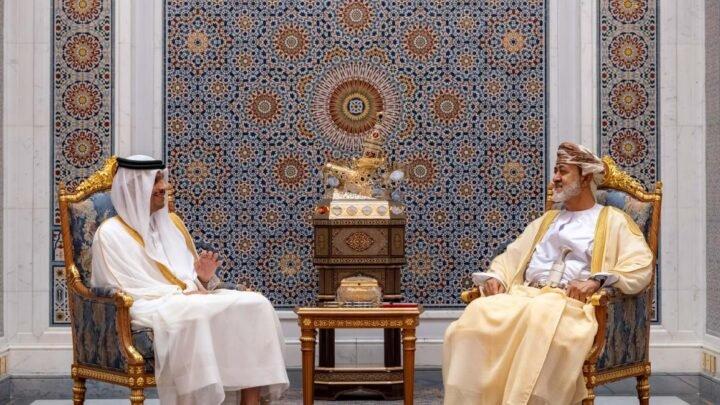
Iran and Oman Coordinate 60-Day Strait of Hormuz Maritime Traffic After US Memorandum
11 sources compared
Iran Accuses NATO Of Complicity After Mark Rutte Says US Planes Took Off From Italy
10 sources compared

Iran Slams NATO Chief Mark Rutte Over Claims U.S. Aircraft Flew From Italy Bases
11 sources compared
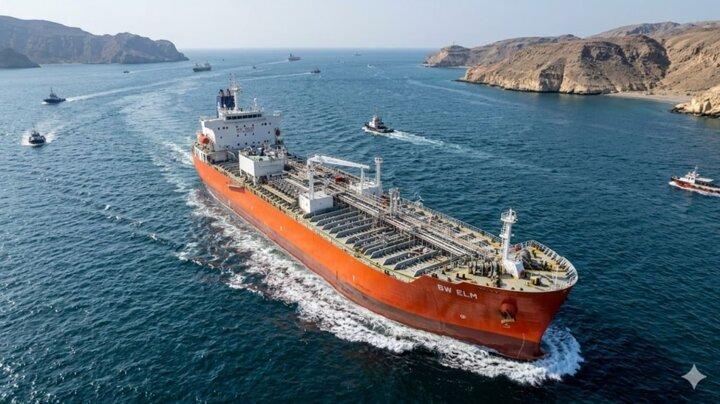
UN IMO Pauses Evacuation After Unknown Projectile Strikes Ever Lovely Near Oman
42 sources compared