United States And Iran Halt Counter-Strike Attacks, Resume Talks Tuesday In Doha
Key Takeaways
- U.S. and Iran agree to halt reciprocal attacks.
- Tuesday Doha meeting planned to resolve the Strait of Hormuz dispute.
- Negotiations follow days of cross-border strikes and heightened Hormuz tensions.
Halt and Doha talks
The United States and Iran agreed to halt counter-strikes and resume talks on Tuesday in Qatar’s capital, Doha, after days of military escalation threatened to derail a fragile ceasefire over the Strait of Hormuz.
A senior U.S. official told Axios, "We decided to stop all the kinetic activity," and a second U.S. official said both sides would stand down 'for now' and that 'vessels can move freely' while technical discussions continue.

The renewed fighting stemmed from differing interpretations of the memorandum of understanding, particularly Article 5 dealing with navigation through the Strait of Hormuz, under which Iran committed to making its best efforts to ensure the safe passage of commercial vessels and the United States agreed to lift its blockade of Iranian ports.
During negotiations in Switzerland last week, the U.S. delegation led by Vice President JD Vance also agreed to establish a direct "hotline" between the U.S. military and Iran's Islamic Revolutionary Guard Corps (IRGC) to coordinate shipping traffic through the Strait of Hormuz, but U.S. officials said the channel was still not operational.
Iran’s suspension of technical talks was linked to access to unfrozen funds, with Mehdi Fazaeili telling Iranian state television, "if we have access to the unfrozen funds, if there is no access then this condition has not been fulfilled."
Warnings as talks shift
As the U.S. and Iran prepared for a Tuesday meeting in Doha, the crisis continued to unfold through reciprocal attacks and maritime incidents in the Strait of Hormuz.
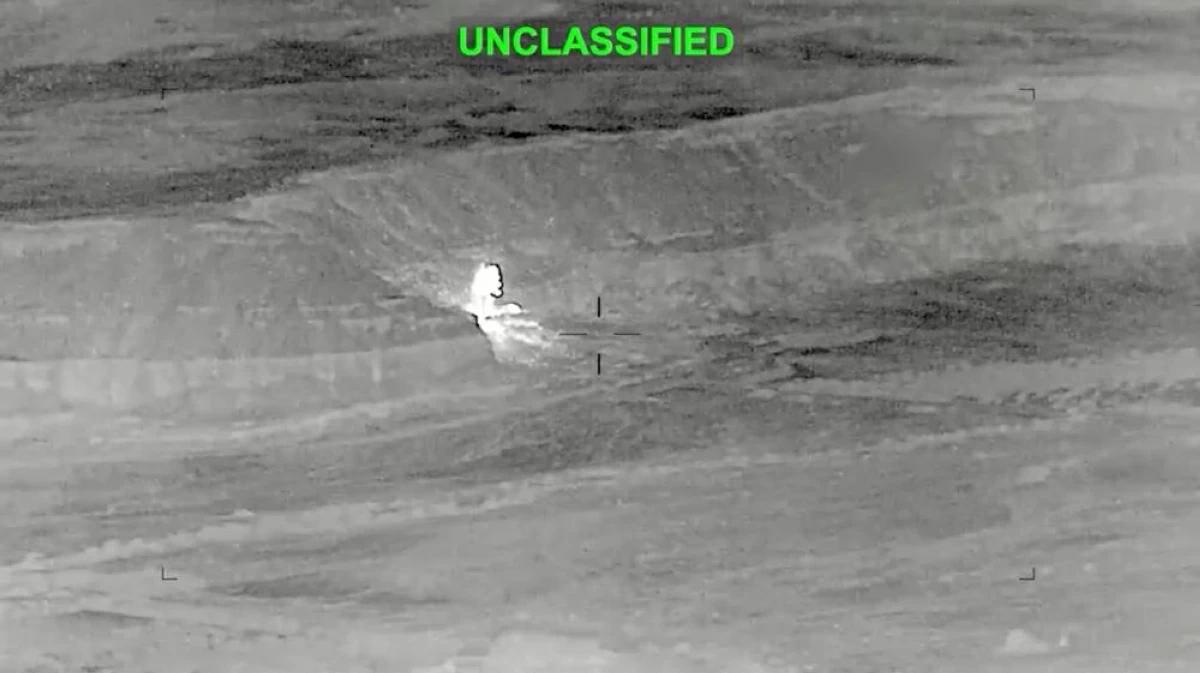
CENTCOM said its strikes were “in direct response to the ongoing aggression” against ships and targeted surveillance infrastructures, communications systems, air defenses, drone facilities, and Iran’s minelaying capability, while the Iranian regime said it targeted “targets related to American forces in the region.”

Bahrain described a drone attack as a “threat to its national security,” and the maritime arena included reports of a drone strike on the tanker Mt. Kiku and another tanker struck by a “mysterious projectile” in the Strait of Hormuz.
In parallel, the U.S. representative to the United Nations, Mike Waltz, warned that if shipping is threatened the United States would continue to strike Iran’s military infrastructure, saying, “If the regime in Iran threatens international shipping in this strait, the United States will continue to strike Iran’s military infrastructure.”
The same reporting said “technical talks between Washington and Tehran continue,” and Waltz added, “Trump still gives diplomacy a chance” while warning, “The patience of the President will not be eternal.”
Ceasefire fragility and stakes
The sources tied the halt in attacks to the fragile status of the ceasefire and to disputes over how to implement the memorandum of understanding, especially the navigation mechanism for the Strait of Hormuz.
Euronews described “contradictory reports” about the stoppage of expert-level talks in Switzerland, while Axios said the Tuesday meeting in Doha would focus on resolving disagreements over the Strait of Hormuz.
Mehdi Fazeli, a member of the Office for the Preservation and Publication of the Leader's works, said, "Today the technical talks were supposed to begin, and Iran canceled; they did not participate," and he linked the cancellation to waiting on “executable and operational conditions” including whether blocked funds could be used.
In the same period, the BBC reported Trump threatened to take control of Kharg Island “in the not-too-distant future,” and Iran’s Foreign Ministry said the ceasefire had become “practically futile” in practice.
The BBC also reported the U.S. Central Command said Marines, Air Force, and Navy launched precision-guided munitions to strike Iranian targets that posed a threat to U.S. forces and to international commercial ships transiting territorial waters, while Iran announced it targeted the U.S. Fifth Fleet in Bahrain with drones and the IRGC announced it attacked 18 American military sites at Ali Salem and Ahmed Al-Jaber air bases in Kuwait and the Sheikh Isa Air Base in Bahrain.
More on USA

Trump Administration Blocked From SAVE Database Overhaul Ahead of 2026 Midterms
10 sources compared

Joe Biden Calls Donald Trump a Loser at Maryland Gala, Citing Corruption and Vanity Projects
14 sources compared

Trump-Backed Julia Letlow Defeats John Fleming in Louisiana GOP Senate Runoff
12 sources compared

CNN Says Trump’s Claim Everyone Stayed Is False at Great American State Fair in Washington, DC
10 sources compared