Iran09 March, 20263 min read
US and Israel Launch Joint Airstrikes on Iran’s Military, Nuclear and Oil Facilities
This article is an automated aggregation of coverage from news outlets. Our editorials offer in-depth analysis curated by the NewsCord team.
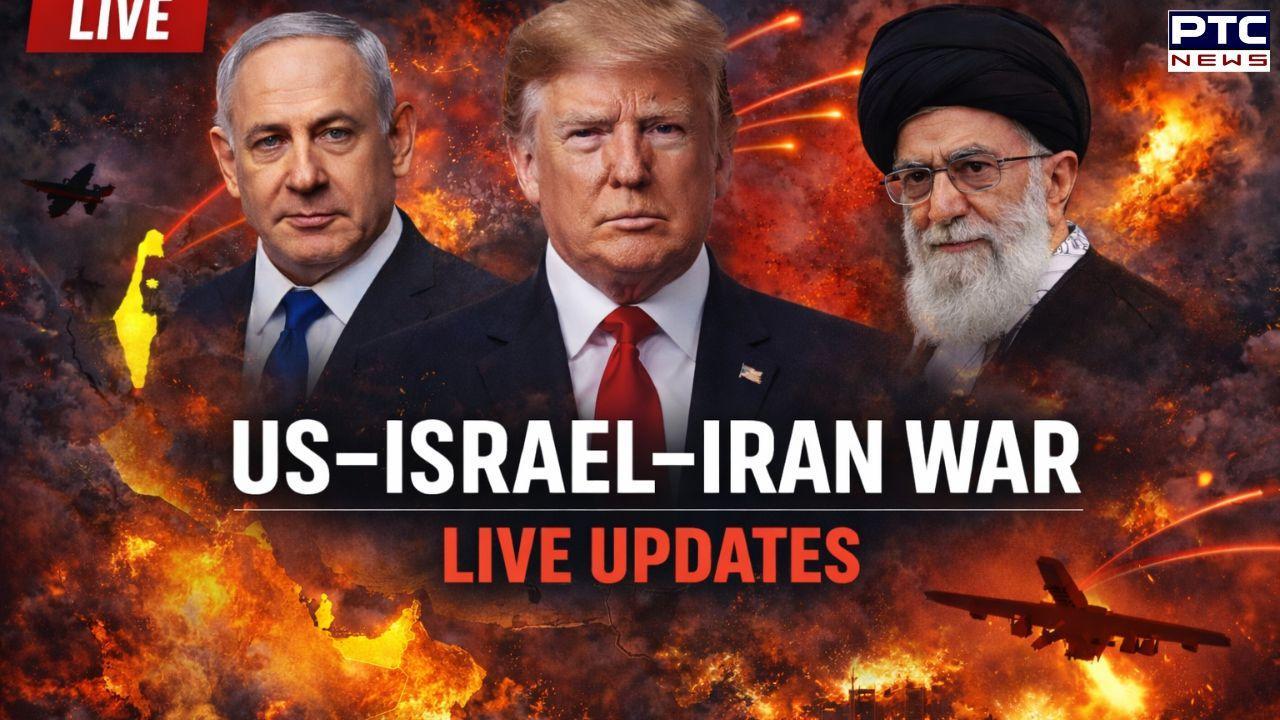
US and Israeli warplanes struck Iranian military, nuclear, and oil infrastructure Joint airstrikes began 28 February and continued into the second week

Strikes on oil facilities
Multiple news snippets report airstrikes that struck oil storage and related industrial facilities in and around Tehran, sparking large fires and casualties among workers. PTC News said “The strikes carried out on Saturday hit four oil storage facilities and an oil production transfer centre located in Tehran and Alborz Province.”
“The strikes carried out on Saturday hit four oil storage facilities and an oil production transfer centre located in Tehran and Alborz Province.”
The Financial Express likewise noted ongoing strikes in the Iranian capital, reporting that “The Iranian Red Crescent reported an airstrike on a residential area in Tehran early Wednesday.” Analysts and technical coverage emphasize the vulnerability of energy infrastructure in such strikes, with Discoveryalert highlighting that “Critical Energy Infrastructure Protection” requires multi-domain defensive measures and that “The integration of advanced defence systems requires unprecedented levels of interoperability and intelligence sharing.”
&w=1920&q=75)
Who carried out strikes?
Attribution of the strikes is presented differently across sources, producing ambiguity about whether actions were Israeli, American, or jointly executed. PTC News explicitly described the incidents as “Israeli strikes” in its reporting on damage and casualties, while also noting protests over “US strikes on iran” in New York.
The Financial Express framed the broader campaign as a US‑linked operation by using the label “Operation Epic Fury” in quoting the White House — “Once the national security objectives of Operation Epic Fury are fully achieved, Americans will see oil and gas prices drop rapidly...” — and ran a live feed titled “US, Israel War on Iran LIVE.” Discoveryalert underscores why such attribution matters legally and operationally, pointing out that “The UN Charter's self-defence provisions under Article 51 require demonstrable threat assessment and proportionality calculations,” which complicates assessments of responsibility and legality when multiple states are implicated.
Regional missile and drone activity
The strikes and associated counter‑measures have had wider regional military consequences, including mass missile and drone launches and extensive interception efforts.
“Since the beginning of what authorities in the United Arab Emirates described as Iranian aggression, a total of 238 ballistic missiles have been detected, according to official figures. Out of these, 221 missiles were intercepted and destroyed, while 15 fell into the sea.”
PTC News reported large numbers of projectiles detected and intercepted, saying “a total of 238 ballistic missiles have been detected, according to official figures. Out of these, 221 missiles were intercepted and destroyed, while 15 fell into the sea,” and also citing “1,422 drones launched from Iran” with many intercepted.
The Financial Express documented related aerial activity elsewhere in the region, noting “Drones fall over Erbil” and describing an intercepted drone that fell in the city’s airspace.
Discoveryalert provides technical context for these dynamics, explaining that “Contemporary missile defence architectures combine multiple technological layers” and that “Recent technological advancement has improved interception rates to approximately 85-90% for certain threat categories.”
Politics, law, reactions
Political rhetoric, international reactions and legal questions are prominent alongside the military activity. PTC News highlighted high-level statements and regional condemnations — for example, it quoted President Trump saying “Today Iran will be hit very hard! … Under serious consideration for complete destruction and certain death...” and recorded Saudi and Jordanian condemnations of Iranian attacks.
The Financial Express recorded diplomatic and domestic political signals, including a line on congressional scrutiny: “If the president asked Congress for authorization, the American people would demand a no vote.” Discoveryalert framed these developments within diplomatic and legal constraints, noting that NATO and allied logistics and base arrangements complicate collective responses and that “Diplomatic Framework and International Law” provide “important constraints and legitimacy considerations for military operations.”
Humanitarian toll and gaps
Human impact and reporting gaps remain significant: sources report deaths and displacement in neighbouring theatres while some areas have been spared casualties. PTC News reported that “The report said four tanker drivers working at the centre were killed in the attack,” and that “Israeli strikes have killed more than 200 people across Lebanon, and orders to evacuate have displaced around 3,00,000 people.” The Financial Express recorded that, by contrast, an intercepted drone over Erbil produced no casualties: “No casualties were reported.”
“The report said four tanker drivers working at the centre were killed in the attack.”
Discoveryalert draws attention to humanitarian and logistical needs tied to energy and civilian protection, stressing “Humanitarian operations staging capabilities” and the need for “Supply chain redundancy through alternative routing options.” Taken together, the available snippets show severe damage to civilian infrastructure and loss of life in some locations, ongoing displacement in neighbouring countries, and gaps and contradictions in how incidents and responsibility are reported.