
US Captures Nicolás Maduro, Launches Large-Scale Strike on Venezuela
Key Takeaways
- U.S. forces conducted a large-scale strike, captured Maduro, and removed him from Venezuela.
- World leaders' responses were mixed, with condemnations and endorsements of the U.S. action.
- Legality concerns and calls for calm accompanied international reactions.
US Military Operation
The United States conducted a large-scale military operation against Venezuela in the early morning hours of January 3, 2026.
“CARACAS, Venezuela (AP) — The United States hit Venezuela with a “large-scale strike” early Saturday and said its president, Nicolás Maduro, had been captured and flown out of the country after months of stepped-up pressure by Washington”
The strikes targeted military infrastructure including air bases and naval bases.
Venezuela's authorities confirmed that civilians remained safe during the attacks.
Maduro and his wife were subsequently flown out of the country and indicted on drug charges in New York.
This marked a dramatic escalation in US-Venezuela relations.
The operation unfolded with precision timing, occurring just before 2 a.m. local time according to Croatian officials.
This suggests a carefully planned military intervention.
Global Reactions
The international community reacted with sharp divisions to the US capture of Maduro.
Major world powers condemned the US action while others expressed support.
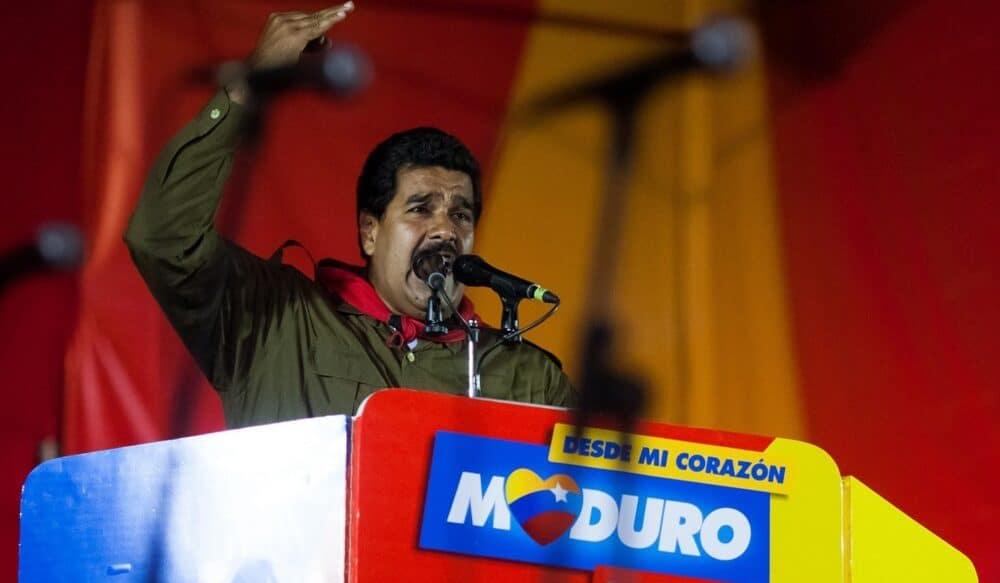
China issued a strongly worded statement expressing being "deeply shocked and strongly condemns" the use of force against a sovereign country and its president.
Russia accused the United States of committing "an act of armed aggression."
In contrast, Greece's Prime Minister Kyriakos Mitsotakis publicly supported the operation.
Mitsotakis stated that "Nicolas Maduro presided over a brutal and repressive dictatorship that brought about unimaginable suffering on the Venezuelan people."
He offered his view that "the end of his regime offers new hope for the country."
China's reaction particularly emphasized the violation of sovereignty principles that underpin international relations.
Global Protests
Protests erupted across multiple continents as citizens expressed their outrage or support for the US action.
“'Deeply shocked': World leaders react to US attack on Venezuela Leaders around the world have responded with a mix of condemnation and support to the US capture of Venezuela's President Nicolás Maduro”
In Caracas, Venezuela, government supporters demonstrated passionately.
Some participants ripped American flags in half during Saturday's protests.
Supporters wore distinctive Maduro-themed merchandise, including hats featuring dolls from the TV program Super Bigote.
These dolls were based on Maduro and his wife Cilia Flores.
In Seoul, South Korea, protesters gathered near the U.S. Embassy holding posters and shouting slogans.
They displayed pictures of President Donald Trump while denouncing the U.S. government and Trump.
Similar protests occurred in Manila, Philippines.
Demonstrators also gathered near the U.S. Embassy to voice their opposition to the capture of the Venezuelan president.
European Responses
European nations responded with varied approaches to the Venezuela situation.
Some offered assistance to their citizens while others took clear political stances.

Greece's Foreign Ministry announced it was "closely monitoring the situation in Venezuela."
The Greek embassy in Caracas "is in contact with the Greek community in the country and ready to provide assistance."
The Greek community in Venezuela numbers up to 3,000 people, highlighting potential humanitarian concerns.
Prime Minister Mitsotakis' support for the US operation represented the official Greek position.
This contrasted with domestic opposition within Greece.
Bulgaria similarly opened a hotline for Bulgarians living in Venezuela.
Bulgaria indicated it was "in contact with all diplomatic and consulate representatives of Bulgaria" who were in the country.
Within Greece itself, the Greek Communist Party called a rally for Saturday evening.
The party expressed solidarity with the Venezuelan people and opposition to "the US's imperialist intervention."
This demonstrated clear political divisions even within European nations.
More on South America

Rubio Testifies as Key Witness in Rivera Foreign-Agent Trial
54 sources compared

President Nicolás Maduro arrives in New York to face U.S. charges after operation.
12 sources compared

Colombia's Air Force Hercules C-130 crashes after takeoff; death toll 34–66.
336 sources compared
US Captures Nicolás Maduro, Flies Venezuelan President to New York
21 sources compared