
U.S. Citizens Tell Kurdistan24 They Are Divided Over War Involving Iran, U.S., Israel
Key Takeaways
- U.S. citizens expressed mixed views about the Iran war
- Kurdistan24 conducted interviews with multiple U.S. citizens for the report
- Interviewees said the conflict affects regional security and international politics
U.S. views in Erbil
Kurdistan24’s interviews with U.S. citizens in Erbil capture a clearly divided American response to the widening war involving Iran, the United States and Israel.
Some interviewees criticised U.S. military involvement and urged focus on domestic priorities.
Others defended intervention on security grounds.
The interviews "expressed mixed views about the ongoing war involving Iran, the United States and Israel," with "respondents [offering] a range of perspectives on the conflict’s causes and likely outcomes."
This split is reflected in on-the-ground quotes such as "one American woman criticized U.S. military involvement and said domestic issues should take priority," alongside interviewees who argued that "security threats warranted action."
U.S. views on regional engagement
Critics among the interviewees emphasized domestic priorities and skepticism toward military action, arguing that U.S. resources and attention should be focused at home rather than on regional operations.
Kurdistan24 reports that at least one interviewee criticized U.S. military involvement and said domestic issues should take priority.
The broader set of interviews included voices who questioned the consistency of U.S. political rhetoric on intervention.
The U.S. citizen interviews in Erbil therefore capture both policy disagreement and a broader public unease about further American engagement in the region.
Regional spillover risk
Other interviewees framed the unfolding conflict as an urgent regional security threat, warning of spillover that could justify military measures.
As Kurdistan24 records, one interviewee said Iran poses a real regional threat that could spread, and several respondents echoed the view that perceived threats from Iran and its proxies make strong responses necessary.
Those perspectives align with broader concerns noted in the interviews about regional stability and the potential for escalation between Iran, the U.S. and Israel.
Regional escalation context
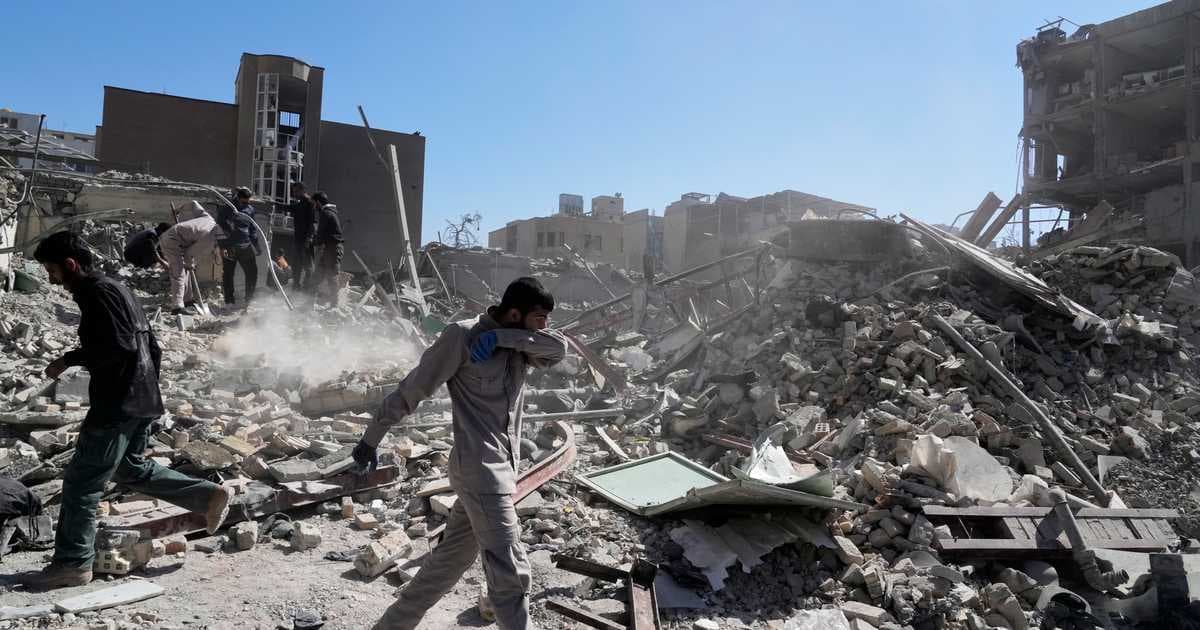
The interviews were given against a backdrop of sharp regional escalation reported by Kurdistan24.
Kurdistan24 said the conflict "has expanded across the region," and attributed to the Associated Press reports that "an Israeli strike killed Iran’s supreme leader and that his son, Mojtaba Khamenei, has been named successor—giving him influence over the Revolutionary Guard and war strategy."
Kurdistan24 also lists multiple cross-border attacks and interceptions, saying "Missile and drone attacks have been reported in several Gulf states," and citing deadly strikes in Saudi Arabia’s Al-Kharj and on Bahrain’s Sitra Island, an attempted strike in Qatar, intercepted drones aimed at Saudi Arabia’s Shaybah oil field, and a drone downed near a U.S. compound in Baghdad.
It also notes economic effects such as oil rising "above $100 per barrel" and steep Asian market losses.
These developments provide the immediate context for the nerves and divisions captured in the Erbil interviews.
Divided American public opinion
Taken together, the Kurdistan24 interviews illustrate a U.S. public divided between calls to prioritise domestic concerns and voices warning that the regional threat environment requires action.
Both positions are informed by rapidly changing on-the-ground events.
The Erbil interviews "reflect divided American public opinion" as "the fighting continues to affect regional security and international politics."
Individual respondents' comments, from scepticism about intervention to warnings about Iran's regional reach, map onto the broader pattern of escalation and economic impact documented in the reporting.
More on Iran-Israel

Escalation in Iran Pushes Oil Near $120, Sparks Gas Price Surge in Los Angeles
10 sources compared
U.S. Intercepts Iran Message Activating Sleeper Cells After U.S.-Israel Strike Kills Khamenei
14 sources compared

Iran Threatens To Confiscate Property Of Iranians Abroad Who Support US And Israel
14 sources compared

Ukraine Sends Drones, Experts to Shield U.S. Bases in Jordan From Iran
16 sources compared