
U.S. Delegation Meets Cuban Officials in Havana as Trump Threatens Intervention
Key Takeaways
- U.S. delegation met Cuban officials in Havana, signaling a renewed diplomatic push.
- Raúl Guillermo Rodríguez Castro, Raúl Castro's grandson, participated in meetings.
- Trump threatens intervention; Díaz-Canel asserts Cuba would resist if needed.
Historic Havana talks
A U.S. delegation visited Havana and met Cuban government officials in a renewed diplomatic push, even as U.S. President Donald Trump threatened to intervene and Cuban President Miguel Díaz-Canel said his country was prepared to fight if that happened.
“US and Cuban officials met recently in Havana amid new diplomatic push An American delegation has met recently with Cuban government officials in the island nation WASHINGTON -- An American delegation recently met with Cuban government officials in the island nation, marking a renewed diplomatic push even as U”
Multiple outlets tied the trip to a senior State Department official meeting last week with Raúl Guillermo Rodríguez Castro, the grandson of Raúl Castro, while also saying the identity of the American official who met him was not publicly revealed.

The Associated Press report described the meeting as part of a “new diplomatic move,” and said the U.S. delegation urged Cuba to implement major changes in its economic system and governing approach.
ABC News similarly reported that a senior State Department official met with Raúl Guillermo Rodríguez Castro during the trip and that a second U.S. official said Secretary of State Marco Rubio was not part of the delegation.
Axios described the talks as “historic U.S.-Cuba negotiations in Havana,” saying the U.S. delegation urged “democratic and economic freedoms” and warned of the risks of not heeding their advice.
CBS News added that the delegation traveled “via a U.S. government plane” and that it marked “the first time a U.S. government plane has landed in Cuba since former President Barack Obama in 2016.”
Across the coverage, the talks were framed as a diplomatic breakthrough because a U.S. government aircraft touched down in Cuba after a long gap, with Axios saying it was the first time a U.S. government plane had touched down since Obama’s visit a decade ago.
Demands and deadlines
The U.S. delegation’s message to Cuba combined warnings about the island’s economic trajectory with a set of specific demands, according to the accounts published by Axios, ABC News, and CBS News.
Axios quoted a senior State Department official saying the U.S. impressed on the Castro regime that “the Cuban economy is in free fall and that the island's ruling elites have a small window to make key U.S. backed reforms before circumstances irreversibly worsen.”

ABC News reported that during the extraordinary diplomatic push the U.S. urged Cuba to make “major changes to its economy and way of governing” because it would not let the island nation become “a national security threat in the region.”
CBS News said the delegation discussed “political and economic reforms” and the U.S.’s demands for “the release of political prisoners,” while also reiterating that the Cuban economy is in “free fall.”
Axios laid out the U.S. policy demands as compensating “U.S. residents and corporations whose assets and properties were confiscated after the 1959 Revolution,” releasing political prisoners, and ensuring “greater political freedoms” that would eventually include “free and fair elections.”
Al-Jazeera Net and CubaHeadlines both described the U.S. warning as a “stark warning” that Cuba’s economy is in “free fall,” and CubaHeadlines added that the warning was conveyed during meetings in Havana on April 11.
The talks also included a proposal to restore internet access through Starlink satellite services, with Axios describing “an offer of Starlink access” and ABC News saying the sides discussed “a U.S. proposal to provide free and reliable internet to the island through a Starlink satellite connection.”
Trump pressure and Díaz-Canel response
The diplomatic outreach unfolded alongside direct pressure from Washington and a public readiness posture from Havana, as described in the reporting from ABC News, CBS News, and Al-Jazeera Net.
“Skip to main content 11 hours ago - Politics & Policy Scoop: Inside the historic U”
ABC News said the meeting occurred “even as U.S. President Donald Trump has threatened to intervene,” and it quoted Trump describing Cuba as a “failing nation” and asserting it has “been a terribly run country for a long time.”
ABC News also reported that Trump said, “We may stop by Cuba after we finish with this,” and it described the U.S. framing of the island as a place that could become a threat.
In response, ABC News quoted Cuban President Miguel Díaz-Canel saying, “The moment is extremely challenging and calls upon us once again, as on April 16, 1961, to be ready to confront serious threats, including military aggression.”
CBS News similarly reported that Díaz-Canel “vowed that the country will "be ready" for a possible U.S. military offensive,” and it included the same quoted line: “We do not want it, but it is our duty to prepare to avoid it and, if it becomes inevitable, to defeat it.”
Al-Jazeera Net described Díaz-Canel’s confirmation that Cuba was ready to fight if the U.S. intervened, stating that Cuban President Miguel Díaz-Canel confirmed this week his country's readiness to fight if that happened.
The accounts also connected the U.S. approach to the broader context of U.S. pressure, with ABC News saying Cuba’s crises have deepened following a “U.S. energy blockade,” and CBS News adding that Cuba is in the throes of a “months-long energy crisis” after Trump’s threat to on any country that exports oil to Cuba.
Who met whom, and who didn’t
Across the accounts, the identities of participants were partly confirmed and partly withheld, with multiple outlets emphasizing that Rubio was not part of the delegation and that the American official who met Raúl Guillermo Rodríguez Castro was not named.
Al-Jazeera Net said an Associated Press report revealed that a senior department official met last week with Raúl Guillermo Rodríguez Castro, and it stated that “The source did not reveal the identity of the American official who met Castro's grandson.”
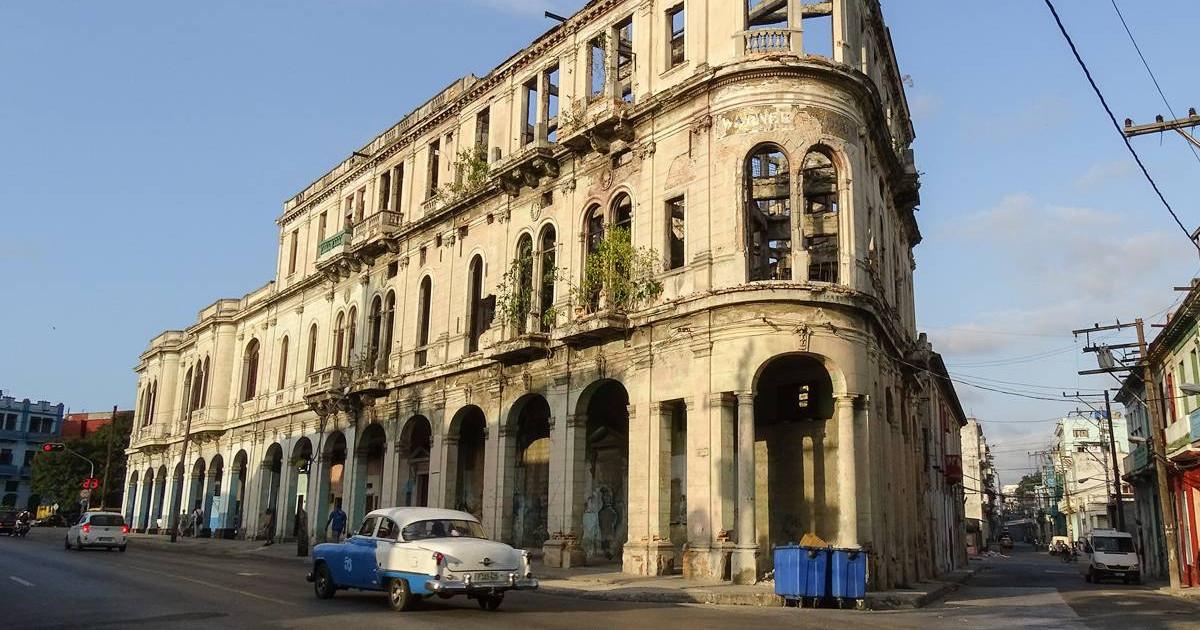
The same outlet added that “Rubio was not part of the delegation,” and it said another American official confirmed that Secretary of State Marco Rubio was not among the delegation that visited Havana.
ABC News likewise reported that a second U.S. official said “Secretary of State Marco Rubio was not part of the delegation that visited Havana,” and it said the senior State Department official met with the grandson of Raúl Castro.
Axios described the U.S. delegation as meeting with Cuban apparatchiks “including the grandson of aging strongman Raul Castro,” and it said a senior State Department official told Axios that multiple meetings took place but would not name the participants, “except for one —Raul Guillermo Rodriguez Castro.”
CBS News said it was “unclear who else participated in the talks on the U.S. or Cuban side,” while also stating that “one U.S. diplomat met with Raúl Guillermo Rodríguez Castro.”
CubaHeadlines added that Raúl Guillermo Rodríguez Castro, at 41, is a lieutenant colonel in the Ministry of the Interior and has led the General Directorate of Personal Security since 2016.
Consequences and next steps
The reporting framed the Havana talks as a high-stakes effort tied to Cuba’s economic crisis and to U.S. concerns about national security, with multiple outlets describing what could follow depending on whether Cuba acts.
“On April 11, during a series of meetings held in Havana, U”
Axios said the U.S. delegation made clear that “President Trump is committed to pursuing a diplomatic solution, if possible,” but it also quoted a senior State Department official saying the U.S. “will not let the island collapse into a major national security threat if Cuba's leaders are unwilling or unable to act.”
CubaHeadlines expanded on the urgency by describing projections that “the Cuban economy will contract by 7.2% in 2026,” and it said that would amount to “a nearly 23% decline since 2019,” while also describing “power outages that exceed 20 hours daily in several areas.”
The same account said the Cuban government responded with an official statement from Díaz-Canel issued on the same Friday and coinciding with the 65th anniversary of the Bay of Pigs Invasion, quoting him: “Cuba will never be a trophy, nor a star” in the American constellation.
CubaHeadlines also reported that the Cuban government approved a decree law creating a special immigration category for Cubans abroad wishing to invest in the island, and it said Secretary of State Marco Rubio stressed that “their system of government must change.”
ABC News described the talks as occurring amid a deepening crisis after a “U.S. energy blockade,” and it said the Cuban Foreign Ministry “didn't immediately respond to messages seeking comment about the talks last week.”
CBS News added that both Cuba and the U.S. acknowledged talks were underway but that it was “unclear how close the two sides are to a resolution.”
More on USA
Donald Trump Sends U.S. Delegation to Pakistan for Iran Talks, Threatens Power Plants and Bridges
47 sources compared

Shooting Near University of Iowa Campus Leaves Five Injured, Including Three Students
22 sources compared

United Flight 2092 Diverted to Pittsburgh After Crew Reported Possible Security Issue
12 sources compared

Pope Leo XIV Defuses Tensions With Donald Trump During Africa Tour
20 sources compared