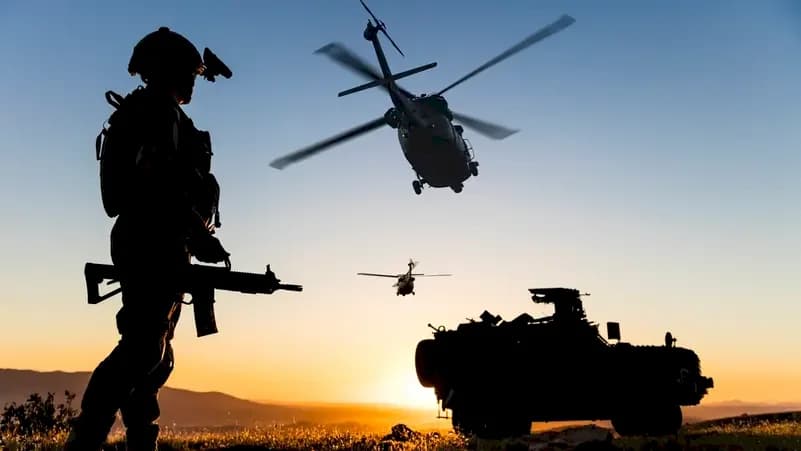
U.S. Deploys 2,500 Marines to Strait of Hormuz as Iran War Enters New Phase
Key Takeaways
- About 2,500 Marines aboard up to three warships dispatched to the Middle East.
- USS Tripoli and 31st MEU head to the Middle East.
- Brent crude tops $100 as oil prices spike amid Strait of Hormuz disruptions.
Military Deployment Overview
The United States is deploying approximately 2,500 Marines and the amphibious assault ship USS Tripoli to the Middle East as the conflict with Iran enters a critical phase centered on the strategic Strait of Hormuz.
“Summary Around 2,500 US Marines aboard three warships are being sent to the region to reinforce the roughly 50,000 American troops WASHINGTON (Web Desk) - The United States is deploying additional Marines and warships to the Middle East as tensions with Iran continue to escalate following ongoing retaliatory strikes linked to the widening conflict involving Israel”
According to U.S. defense officials, elements from the 31st Marine Expeditionary Unit (MEU) and the USS Tripoli are being ordered to the region to join the 50,000 American troops already stationed there.
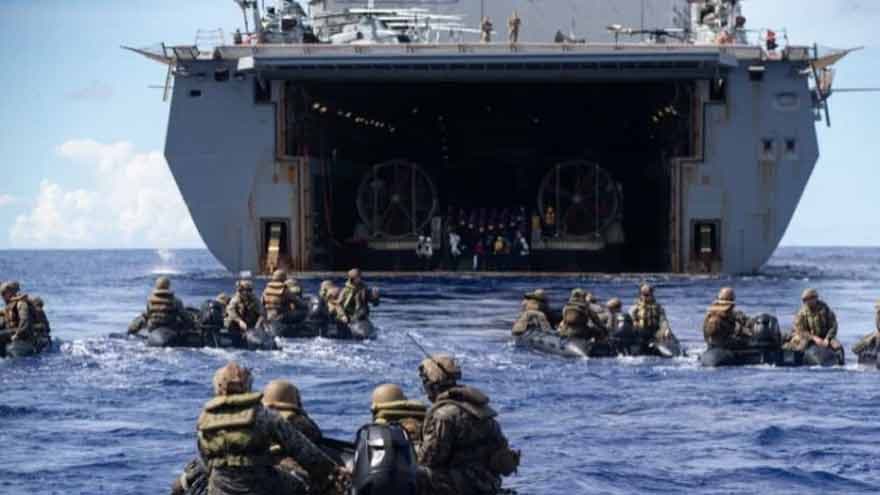
The deployment represents a significant military buildup as the war approaches its third week, with the Marines coming from their normal base in Okinawa, Japan.
The USS Tripoli, an aviation-focused amphibious assault ship, was recently spotted sailing alone near Taiwan and is more than a week's journey from Iranian waters.
This move comes amid escalating tensions as Iran continues its retaliatory strikes against U.S. and Israeli targets following the initial Operation Epic Fury attacks launched on February 28, 2026.
Strategic Waterway Importance
The strategic importance of the Strait of Hormuz cannot be overstated, as it remains one of the world's most critical maritime chokepoints through which approximately 20% of global oil supplies pass.
Iran's closure and threats to attack ships passing through without permission from the Islamic Revolutionary Guard Corps (IRGC) have effectively paralyzed global maritime commerce, causing oil prices to surge worldwide and creating significant economic uncertainty.

The waterway connects the Persian Gulf to the northern Arabian Sea and is essential for international energy markets.
The U.S. military has indicated it is considering escorting merchant ships through the strait as an option to reopen this vital supply route, a strategy reminiscent of operations conducted during the late 1980s when similar tensions arose with Iran.
The disruption has not only affected oil markets but also impacted global supply chains and fueled inflation concerns across multiple economies.
Iranian Resilience
Iran's military response to the U.S.-Israeli strikes has proven significantly more resilient than Trump administration officials had anticipated, catching Western military planners off guard.
“The blockage of the strait, through which about one-fifth of global oil shipments pass each year, has sent the global market into chaos”
Despite Pentagon claims that Iran's military capabilities have been 'significantly weakened' by the prolonged strike campaign, Iranian forces have continued daily missile and drone attacks on Israel and neighboring Gulf states while effectively maintaining control over the Strait of Hormuz.
Iranian Supreme Leader Mojtaba Khamenei, who succeeded his father who was killed in the opening day of the war, has vowed to continue the attacks and keep the strait closed.
However, Khamenei has not been seen in public since taking over leadership, and U.S. Defense Secretary Pete Hegseth claimed without providing evidence that the new Iranian leader is 'wounded and likely disfigured.'
The Pentagon has acknowledged striking over 15,000 Iranian targets since the war began, averaging more than 1,000 strikes per day, but Iran's apparent determination to escalate rather than surrender has surprised military analysts.
Military Capabilities Deployed
The U.S. military is deploying sophisticated capabilities alongside the Marine Expeditionary Unit to counter Iranian threats and protect commercial shipping through the Strait of Hormuz.
The 31st MEU, permanently stationed in Japan and usually operating within the Indo-Pacific Command's area of responsibility, brings specialized equipment including F-35 fighter jets, MV-22 Osprey tiltrotor aircraft, and AH-1Z/UH-1Y helicopters for various mission profiles.

The USS Tripoli, specifically designed as an aviation-focused 'Lightning Carrier,' can be configured with up to 19 F-35B aircraft and lacks a well deck, making it ideal for enhanced air combat operations.
The deployment does not necessarily indicate imminent ground operations in Iran, but rather provides multiple capabilities including embassy security, civilian evacuation, disaster relief, and countering Iranian small boat threats.
Marine Expeditionary Units serve as the Marine Corps' primary crisis response force, typically comprising an infantry battalion, aviation elements with helicopters and tiltrotor aircraft, and logistics components capable of sustaining operations ashore.
Humanitarian Crisis
The escalating conflict has created severe humanitarian crises across the region, with civilian casualties mounting and displacement reaching alarming levels.
“Israel had warned that it would target the area in central Tehran”
In Lebanon, Israeli strikes against Iran-backed Hezbollah militants have killed at least 773 people, including more than 100 children, while displacing 850,000 people, according to the Lebanese Health Ministry.
Iran has reported over 1,300 people killed, while Israel has reported 12 deaths.
The U.S. military has suffered at least 13 casualties in Operation Epic Fury, including all six crew members of a KC-135 refueling aircraft that crashed in western Iraq.
In Tehran, residents are in a state of shock after two weeks of intense bombardment, with bombs shaking the city day and night and no warning systems to alert the public.
Internet shutdowns have left families relying on each other for information about the war's impact.
Meanwhile, protests across the Muslim world have intensified, with demonstrators from Pakistan to Nigeria voicing support for Palestinians during Jerusalem Day rallies, particularly in countries with large Shiite Muslim populations where chants of 'Death to America' and 'Death to Israel' have been heard.
International Response
International responses to the escalating crisis have been mixed, with some nations offering assistance while others remain wary of direct involvement.
Ukrainian President Volodymyr Zelensky has offered to assist the U.S. and its Arab partners in shooting down Iranian drones that have been attacking military positions and civilians, but Trump dismissed this offer, stating 'No, we don't need their help on drone defense.'
Meanwhile, the U.S. has deployed 10,000 AI-enabled Merops drones to counter Iranian strikes, according to Army Secretary Dan Driscoll, who noted these drones cost $14,000-$15,000 each, making them more cost-effective than Iran's Shahed drones which cost at least $20,000 per unit.
The Trump administration has also considered waiving the Jones Act temporarily to allow foreign vessels to transport fuel at U.S. ports, reflecting the broader economic impacts of the conflict.
Saudi Arabia has reported downing nearly 50 Iranian drones, while Oman has confirmed two deaths from drone crashes in Sohar.
The international community remains divided on how to address the crisis, with diplomatic efforts showing little progress toward a ceasefire as the conflict enters its third week with no immediate signs of de-escalation.
More on Iran

Epstein network plots 9/11-style attack to blame Iran, Ali Larijani says
11 sources compared

Iran Drone Attack Hits UAE Fujairah Port, Halting Oil Loading
11 sources compared

FCC chair Brendan Carr Threatens Broadcasters' Licenses Over Iran War Coverage
18 sources compared

US-Israeli strike pounds Iranian city of Hamadan
11 sources compared