
U.S. DOJ Freezes $701M In Crypto Linked To Investment Scams, Unseals Warrants For Huang Xingshan And Jiang Wen Jie
Key Takeaways
- More than $701 million in cryptocurrency frozen linked to investment scams.
- Dismantled recruitment channel and over 500 fake investment websites.
- Criminal complaints and arrest warrants unsealed for Huang Xingshan and Jiang Wen Jie.
DOJ freezes $701M
The U.S. Department of Justice announced on Thursday that it has frozen more than $701 million in cryptocurrency tied to investment scams targeting Americans, as part of an ongoing operation led by its Scam Center Strike Force.
“The seized Telegram channel”
Cointelegraph reported that the seized Telegram channel was part of the crackdown, and that “At least 503 fake investment websites that coaxed victims into depositing crypto were also taken down and replaced with a splash page informing visitors that the domain has been seized by law enforcement.”

The crypto.news and Cryptonews.net accounts similarly described the DOJ action as a restraint of funds through coordination with crypto exchanges and legal processes, with crypto.news stating that “U.S. authorities have frozen over $701 million in cryptocurrency tied to investment scams targeting American victims.”
Cryptonews.net added that the cryptocurrency was “restrained” through “voluntary actions by crypto exchanges and legal processes,” citing the U.S. Attorney’s Office for the District of Columbia.
The DOJ also unsealed “criminal complaints and arrest warrants against two Chinese nationals, Huang Xingshan and Jiang Wen Jie,” according to Cointelegraph, and crypto.news echoed that the unsealed filings named the same two individuals.
In the same reporting, the seized assets were framed as funds that could be returned to victims “whenever possible,” with the Scam Center Strike Force saying it continues “to identify, seize, and forfeit funds involved in money laundering related to scams, so that funds can be returned to victims whenever possible,” as quoted by crypto.news and Cryptonews.net.
Telegram, websites, and arrests
The U.S. crackdown described in the reports centered on both recruitment and conversion infrastructure, starting with a Telegram channel used to recruit individuals into a scam center and extending to fake investment websites designed to coax deposits.
Cointelegraph said the seized Telegram channel was part of the operation and that “At least 503 fake investment websites that coaxed victims into depositing crypto were also taken down and replaced with a splash page informing visitors that the domain has been seized by law enforcement.”
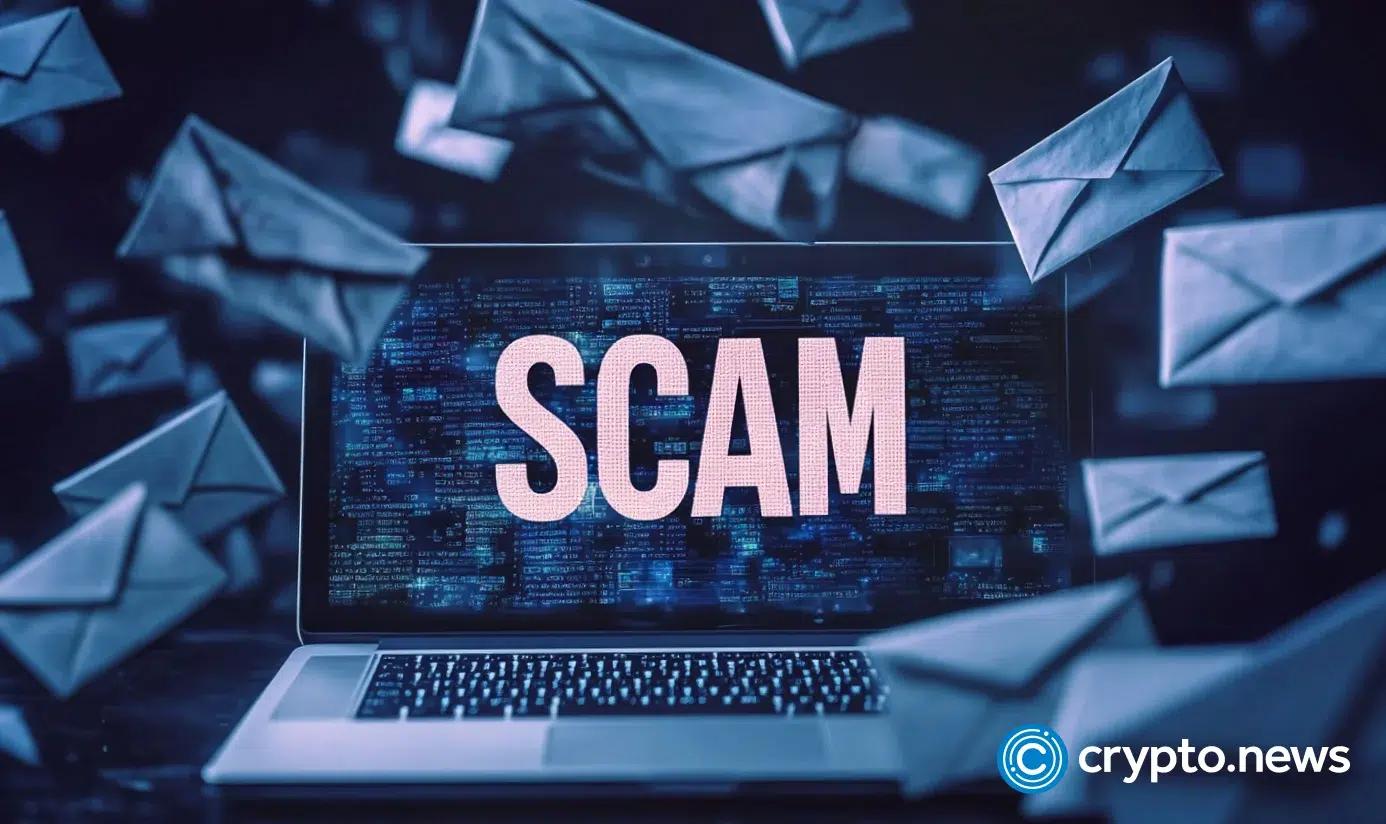
crypto.news likewise described “a Telegram channel used to recruit individuals into a scam center based in Cambodia” and said investigators “also took down at least 503 fake investment websites.”
Cryptonews.net described the same sequence, stating that “At least 503 fake investment websites that coaxed victims into depositing crypto were also taken down and replaced with a splash page informing visitors that the domain has been seized by law enforcement.”
The unsealed court filings named two Chinese nationals, Huang Xingshan and Jiang Wen Jie, who were accused of managing a crypto investment fraud operation at the Shunda compound in Burma.
Cointelegraph reported that the pair was accused of managing the operation at the Shunda compound in Burma, which “was seized by the Karen National Liberation Army in November 2025,” and crypto.news and Cryptonews.net repeated the same linkage to the Shunda compound and the Karen National Liberation Army seizure in November 2025.
State reward and Burma links
Beyond the immediate U.S. freezes, the reports connected the crackdown to earlier actions involving Burma-based scam centers and to a State Department incentive aimed at disrupting those operations.
“The US Department of Justice revealed on Thursday that it has frozen more than $701 million in crypto linked to investment scams targeting Americans as part of an ongoing operation”
Cointelegraph said that in December 2025, U.S. authorities seized domains tied to the Tai Chang compound in Burma, where “platforms mimicked legitimate trading services and directed victims to download malicious apps before extracting funds.”
It then described how the U.S. Department of State “has offered a $10 million reward for any information that disrupts the Tai Chang scam centers in Burma,” framing the reward as part of the strike force’s broader operations.
crypto.news and Cryptonews.net repeated the same $10 million reward figure and the same Tai Chang description, including the detail that the platforms mimicked legitimate trading services and directed victims to download malicious apps.
The reports also described how the Shunda compound in Burma was seized by the Karen National Liberation Army in November 2025, and that court filings unsealed alongside the latest action named Huang Xingshan and Jiang Wen Jie as accused operators of a crypto investment fraud operation at that compound.
crypto.news tied the U.S. effort to a policy shift involving seized digital assets, noting that “In March last year, U.S. President Donald Trump signed an executive order to establish a Strategic Bitcoin Reserve and a Digital Asset Stockpile, funded in part through seized digital assets.”
Singapore operation and interventions
While the U.S. action focused on freezing and dismantling parts of scam networks aimed at Americans, the reports also described parallel enforcement in Singapore with a defined one-month window and quantified prevention of losses.
Cointelegraph said the Singapore Police Force’s Anti-Scam Center and Cyber Investigation Branch “said Thursday that they ran a one-month operation from March 16 to April 15 that prevented more than $2.86 million in potential financial losses.”
crypto.news and Cryptonews.net described the same March 16 to April 15 timeframe and the same “more than $2.86 million” figure, and both emphasized collaboration with crypto firms and exchanges.
Cointelegraph listed the participating exchanges and firms as “Coinbase, Coinhako, Gemini and Independent Reserve,” and it also named blockchain analysis companies “TRM Labs and Chainalysis,” which helped identify victims.
The Singapore police quoted in the reports described how the operation worked through rapid information exchange, stating: “The operation’s success stemmed from the rapid exchange of information between the police and participating cryptocurrency exchanges, which enabled swift victim identification and immediate intervention.”
The same statement added that “Officers conducted over 90 direct interventions, contacting scam victims both by telephone and in-person to prevent further financial losses,” while the FBI reported in April that it had received “more than a million complaints in 2025, totaling about $21 billion in losses from cybercrime.”
What comes next for victims
Across the reporting, the immediate consequence of the U.S. freeze and takedowns is framed as an effort to return funds to victims and to keep pressure on scam infrastructure, while the Singapore operation is framed as preventing additional losses through direct intervention.
The Scam Center Strike Force statement quoted by crypto.news says it continues “to identify, seize, and forfeit funds involved in money laundering related to scams, so that funds can be returned to victims whenever possible,” tying the $701 million freeze to a victim-centered end goal.
Cointelegraph similarly described the DOJ action as including “criminal complaints and arrest warrants” unsealed against Huang Xingshan and Jiang Wen Jie, and it described the replacement of scam domains with seizure notices, which signals a shift from active luring to law-enforcement control of the infrastructure.
In Singapore, the police statement quoted by Cointelegraph described prevention of losses through “swift victim identification and immediate intervention,” and it quantified the outreach as “over 90 direct interventions” contacting victims by telephone and in-person.
The reports also placed the crackdown within a policy environment where seized digital assets are used to fund a “Strategic Bitcoin Reserve and a Digital Asset Stockpile,” with crypto.news stating that Trump signed an executive order in March last year to establish those reserves “funded in part through seized digital assets.”
Finally, the accounts point to ongoing demand for intelligence and disruption, with the U.S. Department of State offering “a $10 million reward” for information that could disrupt Tai Chang scam centers in Burma.
More on Crypto

Metaplanet Issues $50 Million Zero-Interest Bonds to Buy More Bitcoin
12 sources compared

Iran Grants Russia Strait Of Hormuz Transit Fee Exemptions, Ambassador Kazem Jalali Says
16 sources compared

Metaplanet Raises 8 Billion Yen In Zero-Interest Bonds To Buy More Bitcoin
14 sources compared
DOJ Arrests Gannon Ken Van Dyke Over Polymarket Bets Tied to Maduro Capture
54 sources compared