South America03 January, 20265 min read
U.S. Forces Capture President Nicolás Maduro in Venezuela
This article is an automated aggregation of coverage from news outlets. Our editorials offer in-depth analysis curated by the NewsCord team.
U.S. military operation captured Maduro and his wife and removed them from Venezuela. Maduro and wife to face American justice in U.S. courts.
Capture Operation
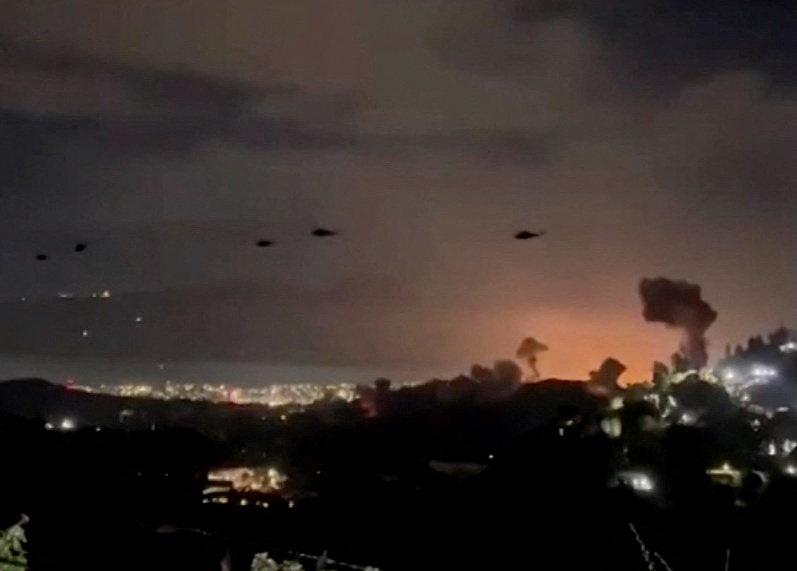
U.S. military forces captured Venezuelan President Nicolás Maduro during a large-scale strike that involved multiple explosions and low-flying aircraft sweeping through Caracas on Saturday, January 3, 2026.
“Protesters gathered outside Brooklyn jail where Maduro is held Protesters opposing the U.S. military strikes against Venezuela and the capture of President Nicolás Maduro gathered outside the Metropolitan Detention Center in Brooklyn on Sunday, calling for his release.”
The assault lasted less than 30 minutes and targeted both civilian and military installations, according to Maduro's government which accused the U.S. of conducting an "imperialist attack."

Venezuelan Vice President Delcy Rodríguez confirmed that some Venezuelan civilians and members of the military were killed in the strike, though she did not provide a specific number.
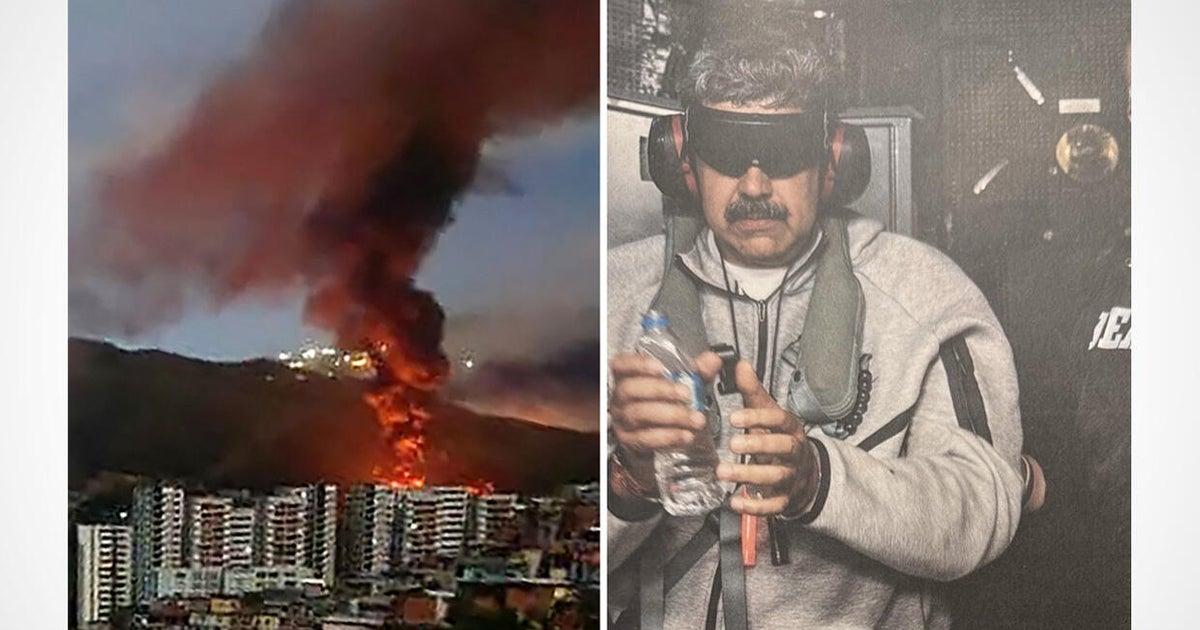
U.S. Joint Chiefs Chairman Gen. Dan Caine revealed that U.S. forces had meticulously rehearsed the maneuvers for months, learning extensive details about Maduro including "where he was and what he ate, as well as details of his pets and his clothes."
The operation resulted in the capture of both Maduro and his wife, who were subsequently taken to the United States and held at the Metropolitan Detention Center in Brooklyn on narcoterrorism charges.
Global Condemnation
The international community largely condemned the Trump administration's unprecedented intervention in Venezuela, with world leaders expressing grave concerns over the violation of sovereignty and dangerous precedent set by the unilateral military action. Brazilian President Luiz Inácio Lula da Silva condemned the attack on its neighbor as a "grave affront to Venezuela's sovereignty and yet another extremely dangerous precedent for the entire international community." UN Secretary-General António Guterres expressed "deep concern over the situation and the 'potential worrying implications for the region,'" though stopped short of explicitly criticizing Washington.
Beijing's reaction was described as "deeply shocked" by the brazen operation, while Russia issued a statement saying that the United States' act of armed aggression "causes deep concern and condemnation" without issuing direct condemnation itself. The European Union's response was notably more restrained, with foreign policy chief Kaja Kallas referencing the EU's prior calls for a transition and blandly calling for restraint, suggesting a desire to maintain diplomatic channels while avoiding direct confrontation with the U.S.
U.S. Strategic Goals
U.S. officials framed the capture of Maduro as both a matter of justice and strategic intervention aimed at destabilizing his regime and establishing American control over Venezuela's oil resources.
“US President Donald Trump proclaimed the United States' intent to 'run' the country 'until a safe, proper and judicious transition can take place.'”
President Donald Trump proclaimed the United States' intent to "run" Venezuela "until a safe, proper and judicious transition can take place," while Attorney General Pam Bondi boasted on X that the ousted dictator would face the "full wrath of American justice on American soil," making "justice" sound unmistakably like vengeance.
National Security Adviser H.R. McMaster described the operation as "the first step in U.S. intervention in Venezuela," explaining that the point was to bring Maduro to justice and replace his regime with a legitimate one.
McMaster also emphasized that the action was "mainly focused on drying up their cash flow," noting the interdiction of oil tankers and destruction of boats to cut off Maduro's access to narcotics funds.
The Trump administration appeared to view the operation primarily as a demonstration of power and an opportunity to gain control over Venezuela's vast oil reserves, with reports suggesting that companies and executives were already "tripping over one another to gain access to the riches."
Humanitarian Crisis
The capture of Maduro is expected to exacerbate Venezuela's already severe humanitarian crisis, with experts warning of potentially catastrophic consequences for food security and public order. Venezuela was already facing dire conditions before the intervention, with the economy having contracted more than 60% since 2013, nearly eight million people having fled the country, and over 80% of the Venezuelan population already classified as food insecure. Recent reports from Caracas reveal that people are rushing to stock up on food amid the uncertainty, with shelves quickly becoming empty as panic buying sets in.
The sudden removal of central authority by external force creates significant risks of security vacuum and violence similar to what occurred in Iraq and Libya, with potential outcomes including armed groups vying for territorial control, looting, and breakdown of public order. These conditions could severely disrupt food transportation and distribution networks, delay aid delivery, and force the closure of markets and shops due to community instability.
Domestic Reactions
Reactions within Venezuela to the capture of Maduro were sharply divided, reflecting the deep polarization that has characterized his presidency.
“In a demonstration of how polarizing a figure Maduro is, people variously took to the streets to protest his capture and celebrate it. At a protest in the Venezuelan capital, Caracas Mayor Carmen Meléndez joined a crowd demanding Maduro's return. 'Maduro, hold on, the people are rising up!' the crowd chanted.”
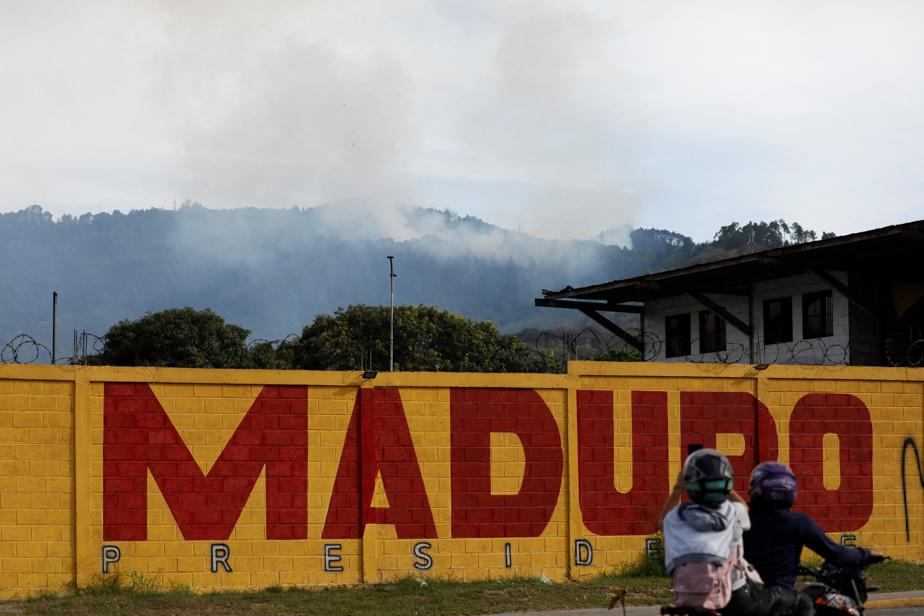
In Caracas, government supporters took to the streets, with Mayor Carmen Meléndez joining crowds chanting "Maduro, hold on, the people are rising up!" and "We are here, Nicolás Maduro. If you can hear us, we are!"
In a neighborhood long considered a stronghold of the ruling party, armed people and uniformed members of a civilian militia demonstrated their support.
However, other parts of the city remained eerily empty hours after the attack, with some areas still without electricity.
Caracas resident Noris Prada expressed the widespread fear, stating "How do I feel? Scared, like everyone. Venezuelans woke up scared, many families couldn't sleep."
International Norms
The unilateral U.S. military intervention in Venezuela represents what experts describe as a "historic breach in the dam of rules, norms, and institutions that have confined the use of force and violations of sovereignty for 80 years," fundamentally challenging the post-World War II international order. Lester Crown Nonresident Fellow for US Foreign Policy and International Order characterized the operation as part of a broader pattern in "the world according to Trump—where might reins, rules are trammeled, and victors gloat over spoils," suggesting that Trump's primary goal in ousting Maduro was proving he could do so and get away with it. The operation has raised profound questions about the future of international law and sovereignty, with analysts noting that by the time Americans awoke to the news on Saturday morning, "the goalposts had already moved" and "no one talked seriously about trying to reverse the coup."
The intervention has also sparked discussions about potential copycat actions, with online musings appearing about similar decapitation operations in Iran or even China taking similar moves against Taiwan. Trump's apparent disregard for the "Pottery Barn Rule"—the principle that "if you break it, you own it"—suggests a fundamental departure from traditional approaches to nation-building and intervention, raising concerns about the administration's capacity and interest in managing the complex aftermath of such operations.