Iran's War Drives Oil Higher as Bitcoin Surges, Undermining Safe-Haven Narrative
Key Takeaways
- Oil prices surge past $100 amid Strait of Hormuz tensions.
- Bitcoin near $70k, outperforms major assets amid Middle East tensions.
- Escalation fuels stock losses as oil and Bitcoin move higher.
Geopolitical Market Impact
Escalating tensions in the Strait of Hormuz have created significant market disruptions as Iranian conflict drives oil prices above $100 per barrel.
“Thursday, March 12, 2026 — Rising tensions in the Strait of Hormuz have sent oil prices soaring and given traders from all backgrounds serious headaches”
The strategic waterway between Iran, the United Arab Emirates, and Oman remains under substantial pressure due to ongoing conflict.

Confirmed attacks on cargo vessels and reports of potential mine-laying have significantly slowed traffic at one of the world's most critical energy chokepoints.
This situation has fueled a brutal rally in energy prices, reminding markets how quickly geopolitical shocks can ripple through financial systems.
Bitcoin has demonstrated its ability to maintain stability amid this global economic volatility.
Buyers have continually attempted to push past the $70,000 threshold despite the macroeconomic pressure from these events.
Bitcoin Market Performance
Bitcoin's performance during the Iran crisis has challenged traditional safe-haven asset narratives by outperforming established financial instruments.
Since the escalation of the Middle East conflict on February 28, the largest cryptocurrency has gained roughly 7%.

This represents significant outperformance compared to other major assets over the same period.
The Nasdaq 100 has remained largely steady while the S&P 500 has dropped about 1%.
Gold has slipped roughly 3% and silver has fallen nearly 9% during the same timeframe.
This outperformance occurs despite Brent crude briefly pushing back above $100 per barrel amid ongoing regional tensions.
The cryptocurrency's ability to maintain its value suggests a potential shift in how markets perceive digital assets during geopolitical uncertainty.
Market Sentiment Analysis
Despite Bitcoin's price resilience, market sentiment remains deeply pessimistic.
This creates a stark disconnect between trader positioning and actual price performance.
The crypto fear and greed index has persistently signaled extreme fear in recent weeks.
Traders maintain significant caution despite the lack of major price breakdown.
Market positioning paints a dour picture with annualized funding rates remaining negative since early March.
This reflects a growing bias for bearish short bets among traders.
The current negative funding stretch marks the longest period since April 2025.
Technical analysis shows support levels around $64,000–$66,000 and resistance near $74,000–$76,000.
The market is focused on sweeping liquidity pools near these critical price points.
Market Strategic Reorganization
The geopolitical crisis has accelerated a fundamental reorganization of financial markets.
This reorganization focuses on strategic dependencies rather than traditional classifications.
Oil has transformed from merely an energy trade into an inflation trade, war trade, and central-bank stress test.
AI has evolved beyond productive applications to become a military-grade dependency.
Bitcoin is being judged on whether it can function as an alternative cash asset without collapsing.
This crisis reveals markets increasingly value assets based on specific criteria.
The new focus is on connection to supply chains, state influence, critical infrastructure, and liquidity pipelines.
Traditional categories like commodities, tech, hedges, or risk factors are becoming less relevant.
Bitcoin's Market Evolution
Bitcoin's performance during the Iran crisis has both validated and challenged its market positioning.
“This week, Bitcoin has climbed again, even as global markets face tension from the Middle East conflict”
The cryptocurrency has demonstrated its role as an alternative asset in tense jurisdictions.
However, its maturity as a globally trusted safe haven remains debated.
Iranian crypto activity is drawing increasing U.S. scrutiny.
Blockchain researchers point to crypto use amid sanctions, currency pressure, and instability.
This reinforces the case for Bitcoin in constrained geopolitical environments.
Functioning within constrained regimes is different from being a globally trusted safe haven.
Bitcoin has proven its link to geopolitical stress scenarios.
Its status as a mature global safe haven remains the subject of intense debate.
More on Crypto

Bybit Pay Joins Mastercard Crypto Credential Network, Lets Users Send Digital Assets Using Verified Aliases
10 sources compared
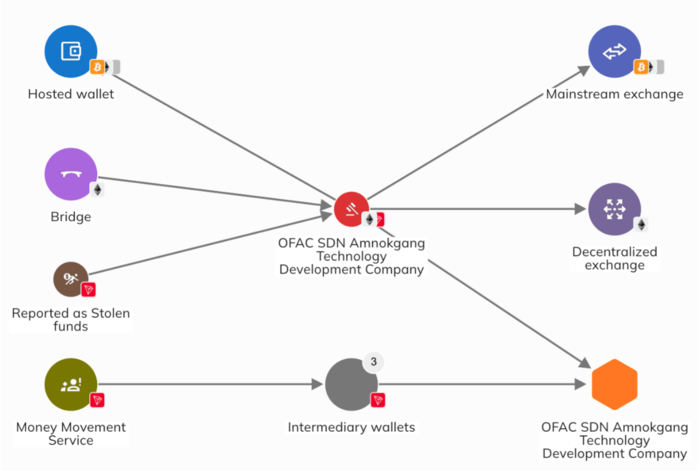
U.S. Treasury Freezes Crypto Network Feeding Nearly $800 Million To North Korea's Weapons Programs
10 sources compared

Europol and DOJ Freeze $3.4–$3.5M, Dismantle SocksEscort Proxy Network That Compromised 369,000 Devices
13 sources compared

BlackRock Launches iShares Staked Ethereum Trust (ETHB), Sparks Whale Buying in $15.5M Debut
10 sources compared