
U.S. Lifts Blockade of Iranian Ports as Trump, Iran Sign Initial Deal to End War
Key Takeaways
- Memorandum signed electronically to end the war and begin final negotiations.
- Reopening the Strait of Hormuz and easing sanctions are part of the deal.
- Initial agreement ends the war; 60-day window for a final agreement.
Deal signed, blockade lifted
The United States and Iran signed an initial agreement that kicks off a 60-day period of negotiations on a final deal to end the war, with the U.S. military saying it lifted its blockade of Iranian ports in accordance with the President’s direction.
In Washington, Vice President JD Vance told reporters that “If I was in the cabinet of the Israeli government, I might not be attacking the only powerful ally that I have anywhere left in the entire world,” as he responded to Israeli criticism of the deal.
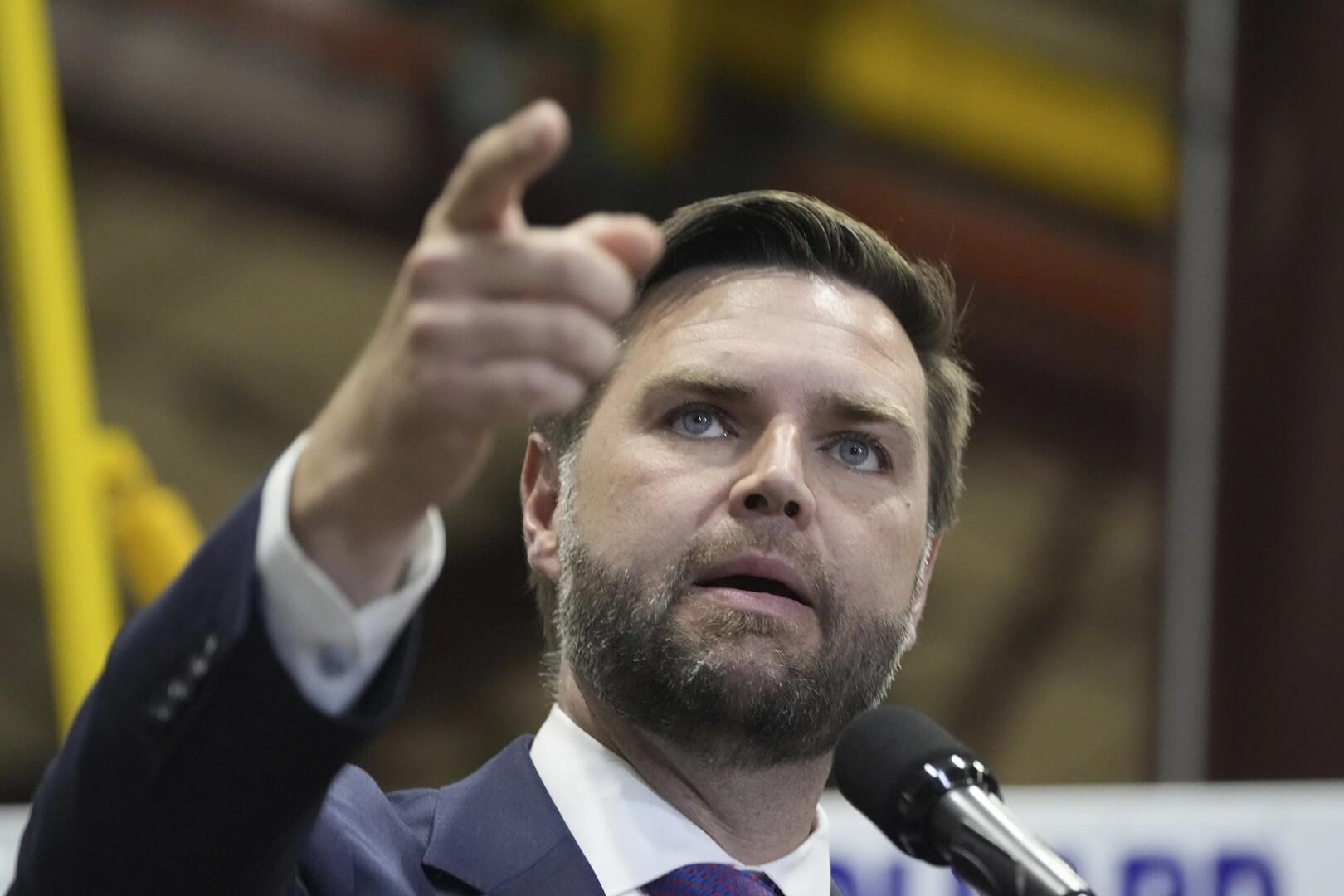
The U.S. Central Command said, “Today, U.S. forces lifted the blockade on all maritime traffic entering and exiting Iranian ports and coastal areas,” and a U.S. official said 146 vessels were directed over the span of the blockade, with nine disabled.
The agreement also set a clock for talks on Iran’s nuclear program, with the 60-day negotiations over Tehran’s nuclear capabilities scheduled to begin in Switzerland in coming days, after President Donald Trump and Iranian President Masoud Pezeshkian signed the deal a day earlier.
In the background of the diplomatic shift, the memorandum of understanding text described an “immediate and permanent halt to hostilities on all fronts, including Lebanon,” and the U.S. committed to fully end the naval blockade within thirty days.
Israel, Republicans, and Iran
As the deal moved into effect, Vance pressed back against Israeli criticism, saying “Anybody in Israel who thinks their biggest problem is the president of the United States needs to wake up and smell the reality of the situation that country is in,” while the U.S. expected a “complete ceasefire on all fronts” as President Donald Trump called on “everyone in the Middle East” to uphold commitments.
In Washington, Republican lawmakers attacked the memorandum’s concessions, and Senate Minority Leader Chuck Schumer called the agreement a “fiasco,” arguing Trump “gave away the store,” while Senate Majority Leader John Thune said the U.S. agreement with Iran was “a step in the right direction.”

Iran’s parliament speaker and lead negotiator Mohammad Bagher Ghalibaf warned that Tehran would follow Supreme Leader Mojtaba Khamenei’s guidance and said, “If they wish to tread that path again, they will receive an even harder slap,” as he described the U.S. as “once slapped during the war.”
Iran’s supreme leader Ayatollah Seyyed Mojtaba Khamenei authorized the signing despite holding a “different view,” and CNN reported that he said Trump had “out of desperation, resorted to various forms of pressure and leverage to bring about this outcome,” according to a text message read on Iran’s state broadcaster IRIB.
At the same time, the CNN report said the Strait of Hormuz would be managed by Iran’s Persian Gulf Waterway Management Authority (PGSA) following the agreement, and the maritime security threat level was downgraded to “moderate” by the United Kingdom Maritime Trade Operations (UKMTO).
Money, nuclear talks, and risks
The memorandum of understanding set out a financial framework that critics and supporters both focused on, including a plan worth no less than $300 billion for “the rehabilitation and economic development of the Islamic Republic of Iran,” while the U.S. also committed to ending all types of sanctions on Iran in accordance with a timeline agreed in the final agreement.
In a separate scrutiny of the fund, USA Today reported that the memorandum says the U.S. and its Middle East partners would “develop a definitive, mutually agreed plan with at least U.S.D. 300 billion for the reconstruction and economic development of the Islamic Republic of Iran,” and it noted Trump’s insistence that “We're not investing. We're not putting up 10 cents,” alongside his later claim that “There is no 300 Billion Dollar payment to Iran by the U.S. That’s Fake News!”
On the nuclear track, the official text released by the United States said Iran “reaffirms that it will not seek to obtain or develop nuclear weapons,” and it described down-blending on site under IAEA supervision as the minimum methodology for addressing stored enriched stockpiles.
The agreement also tied immediate economic steps to the negotiation window, with the U.S. beginning lifting its naval blockade and Iran making its best efforts to ensure safe, free passage for commercial ships for sixty days, while mine-clearing operations were to commence within thirty days.
Even as the deal promised a pathway to reopening the Strait of Hormuz, the sources also laid out enforcement and escalation language, including Ghalibaf’s warning that any breach or excessive demands would trigger a “crushing response,” and the CNN report that the 60-day negotiations would determine the final terms after the initial agreement.
More on Iran

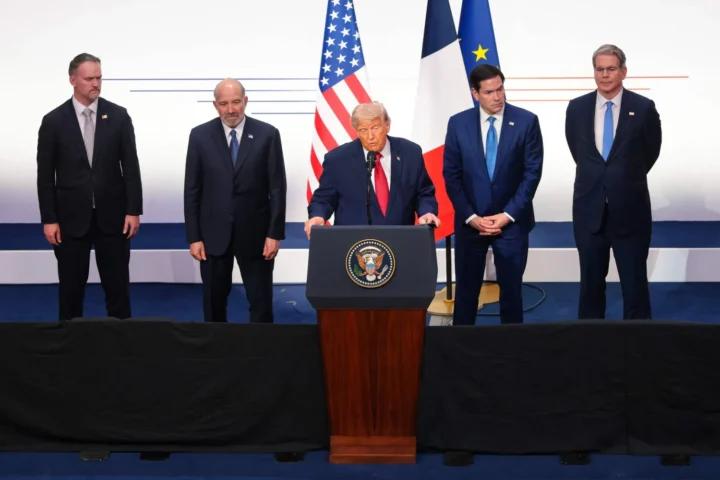
Trump Signs Iran MOU, Lifts Blockade, Reopens Strait of Hormuz for 60-Day Talks
14 sources compared
Donald Trump and Masoud Pezeshkian Sign U.S.-Iran MOU to Halt Fighting and Reopen Strait of Hormuz
15 sources compared
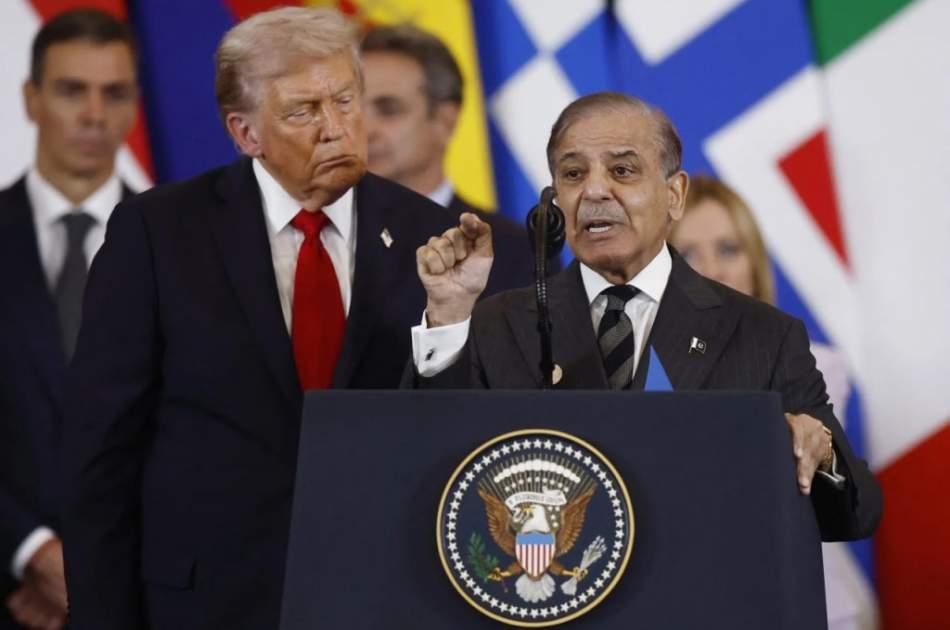
US Lifts Naval Blockade of Iranian Ports as JD Vance Says Oil Flows Through Strait of Hormuz
18 sources compared

Iran’s Supreme National Security Council Exempts Hormuz Transit Fees for 60 Days
28 sources compared