
US Lifts Sanctions on Iranian Oil for 30 Days to Ease Global Oil Prices
Key Takeaways
- 30-day narrowly tailored waiver permits sale of Iranian oil already at sea through April 19.
- Expected to add about 140 million barrels to global markets to ease prices.
- Does not permit new purchases or production; limited to oil already in transit.
Sanctions Waiver Announcement
The Trump administration has issued a temporary 30-day waiver on sanctions affecting Iranian oil currently stranded at sea.
This marks the third such sanctions relaxation in roughly two weeks as the U.S. seeks to stabilize global energy markets.

Treasury Secretary Scott Bessent announced the authorization on Friday, March 20, 2026.
He described it as a 'narrowly tailored' measure designed to address supply disruptions.
The waiver specifically permits delivery and sale of Iranian crude loaded before March 20.
The authorization remains in effect through April 19.
This comes amid escalating geopolitical tensions in the Middle East.
Iran's military actions have disrupted global energy supplies through the Strait of Hormuz.
This critical artery normally handles about 20 percent of the world's oil and gas flows.
Strategic Oil Rationale
US officials framed the sanctions waiver as a strategic maneuver to redirect Iranian oil supplies.
The goal is to move oil away from China and into broader global markets.

This aims to counter Iran's influence while addressing price pressures.
Treasury Secretary Bessent called it a calculated use of existing reserves against Tehran.
He stated: 'In essence, we will be using the Iranian barrels against Tehran to keep the price down as we continue Operation Epic Fury.'
The administration estimates approximately 140 million barrels will be available.
Bessent described this as 'roughly 10 days to 2 weeks of supply.'
The waiver is strictly limited to oil already in transit.
It does not permit new purchases or production.
Deliveries to Cuba, North Korea, and Russian-occupied Ukraine are excluded.
This approach mirrors similar sanctions relief for Russian oil recently.
Iran Response & Market Impact
Iran immediately disputed the US characterization of available surplus oil.
Iranian oil ministry spokesman Saman Ghoddoosi denied Tehran has significant crude supplies.
Ghoddoosi stated: 'Currently, Iran basically has no surplus crude oil left on the water or for supply in other international markets.'
He suggested the announcement aimed to manipulate market sentiment rather than reflect actual conditions.
Despite Tehran's denial, global oil markets reacted positively to the news.
Benchmarks strengthened on Friday but remained below $120 per barrel.
North Sea Brent crude gained 3.26% to settle at $112.19.
West Texas Intermediate rose 2.27% to $98.32.
Analysts warned the price relief may be short-lived.
The 140 million barrels represent only about 1.5 days of global oil consumption.
This highlights the scale of disruption caused by the ongoing conflict.
Analyst Criticism & Contradictions
The sanctions waiver has drawn significant criticism from analysts.
Critics argue the policy could indirectly benefit Iran's war effort.
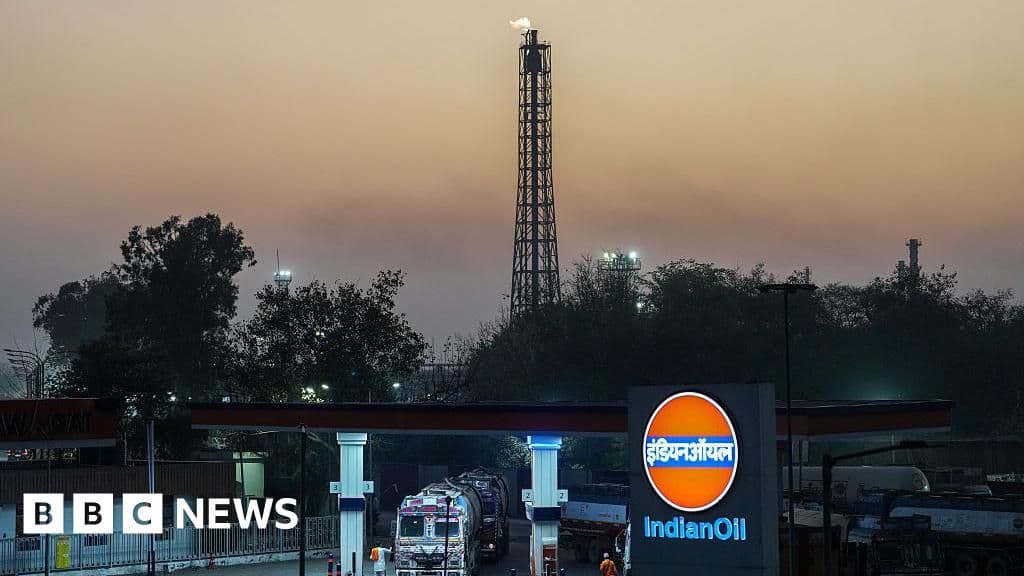
David Tannenbaum of Blackstone Compliance Services stated: 'To put it mildly, this is bananas... Essentially, we're allowing Iran to sell oil, which could then be used to fund the war effort.'
At current prices, the 140 million barrels could generate over $14 billion for Tehran.
The Treasury claims Iran will face difficulties accessing these funds.
This creates a fundamental contradiction in US strategy.
Washington seeks to weaken Iran militarily while facilitating oil sales.
CNN reported this as a 'desperate push to secure every available barrel of oil.'
Officials described the administration as 'running out of options to contain skyrocketing prices.'
Former US energy official Neelesh Nerurkar called it 'the biggest disruption to the oil markets that you can imagine.'
He emphasized 'the shortfall is so large that measures available are dwarfed by how much oil is not reaching the market.'
Geopolitical Strategic Balance
The sanctions waiver reflects broader geopolitical and economic calculations.
“policy, although its effects remain uncertain”
The Trump administration attempts to balance military objectives with economic stability.
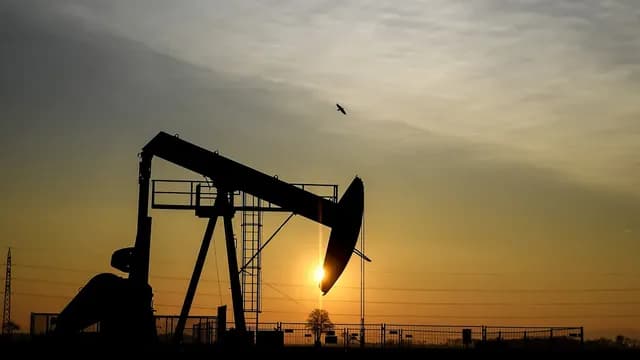
The US has worked to add around 440 million barrels of oil to global markets recently.
This includes strategic reserve releases and sanctions relief on other sources.
US Ambassador Mike Waltz described the waiver as 'very temporary'.
He aimed to 'defeat the Iranian strategy of driving energy prices so high.'
The policy shows Iran's economic leverage through Strait of Hormuz disruption.
Oil flows there dropped from 20 million barrels daily to minimal levels.
This represents one of history's largest supply disruptions.
US gasoline prices rose over 85 cents per gallon since the war began.
This creates domestic political pressure before midterm elections.
Officials debated releasing even more oil, showing constrained policy environment.
More on Finance
Nevada Judge Bars Kalshi From Offering Event Contracts
17 sources compared

Coinbase Launches Stock Perpetual Futures for Non-U.S. Users
12 sources compared

Coatue Management-Led Round Drives Kalshi's $1B Funding, Valuation Soars to $22B
12 sources compared

Fed Keeps Interest Rates Steady Amid Iran War Uncertainty
26 sources compared