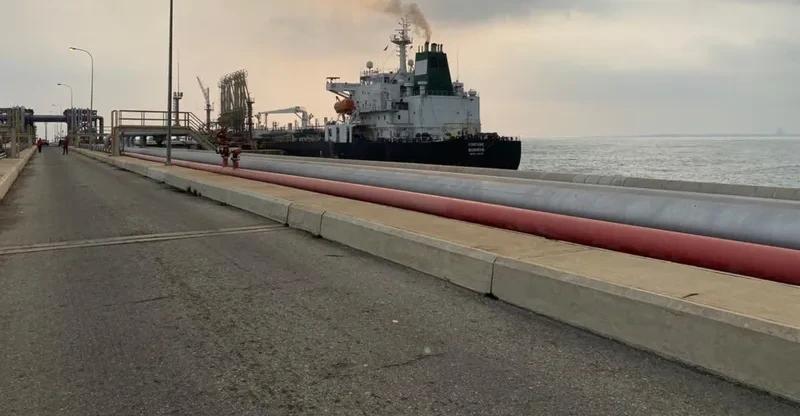
U.S. Navy Expands Iran Maritime Blockade to Cover Contraband Shipments Worldwide
Key Takeaways
- Blockade expanded to contraband shipments to Iran; boarding, inspection, and seizure authorized.
- Vessels worldwide are subject to boarding and cargo seizure under the expanded blockade.
- Blockade targets Iran-related shipping, increasing pressure on Tehran's economy.
Blockade expands, contraband list
The United States expanded its maritime blockade on Iran to cover a broader set of “contraband” shipments, with the U.S. Navy saying that any vessel suspected of heading to Iranian territory would be subject to verification and inspection.
“From the sea and the air: How a US naval blockade works A naval blockade can be carried out by surface ships at sea and planes by air”
In an updated statement, the Navy said, “These vessels, regardless of their location, are subject to boarding, inspection and seizure of cargo,” and Reuters reported the change after the blockade was imposed on Monday.

The contraband list described by Reuters and repeated in Asharq Al-Awsat includes “weapons, weapons systems, ammunition, nuclear materials, crude oil and refined petroleum products,” as well as “iron, steel and aluminum.”
MEXC, citing an official statement confirmed by Reuters, said the expanded scope “explicitly prohibits the maritime transport of weapons, ammunition, crude oil, petroleum products, steel, and aluminum to and from Iranian ports.”
The same MEXC report said the Pentagon formally announced the expanded blockade in a detailed press release and that U.S. Naval forces, “primarily from the Fifth Fleet headquartered in Bahrain,” gained enhanced authority to intercept and inspect vessels suspected of carrying the newly listed contraband.
ABC News described how the blockade began as a U.S. naval blockade of Iranian ports while reopening the Strait of Hormuz remained a sticking point in talks between the U.S. and Iran.
ABC News also quoted the warning message sent to ships at sea: “The U.S. has announced a formal blockade of Iranian ports and coastal areas. This is a legal action ... If you do not comply with this blockade, we will use force. The whole of the United State Navy is ready to force compliance. Out.”
How the blockade is enforced
U.S. officials and reporting described the blockade as a coordinated effort carried out by ships at sea and aircraft, with enforcement tied to whether vessels are leaving or headed to Iranian ports.
ABC News said the U.S. military began a blockade of Iranian ports on Monday as reopening the Strait of Hormuz remained a sticking point in talks between the U.S. and Iran over negotiations to end the war.
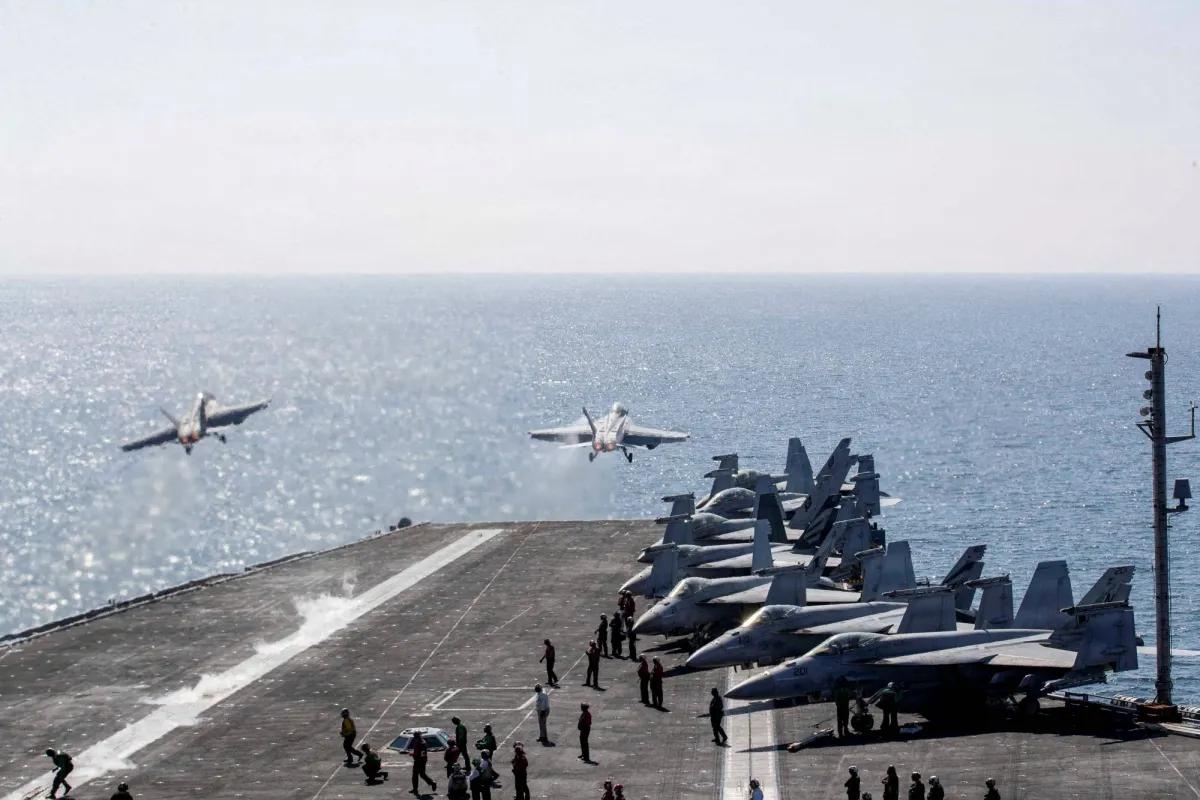
Late Tuesday night, ABC News reported, the head of U.S. Central Command Adm. Brad Cooper said the naval blockade had been “fully implemented” and that “U.S. forces have completely halted economic trade going into and out of Iran by sea.”
ABC News said “More than 10,000 U.S. sailors, Marines, and airmen, along with over a dozen warships and dozens of aircraft, are executing the blockade,” and it described the operational need for accurate intelligence about a ship’s origin and destination.
The same report said “Of the 16 U.S. Navy ships now in the Middle East, 11 are destroyers capable of intercepting vessels at sea,” and it described situational awareness using drones, intelligence, and reconnaissance aircraft like the E-2 Hawkeye.
ABC News also described destroyers issuing a warning by radio using a “carefully worded script,” including the message that “If you do not comply with this blockade, we will use force.”
It further explained that boarding parties could be composed of “sailors, Marines, or special operations personnel,” and it quoted Retired Adm. and Dean of the Center for Maritime Strategy James Foggo saying, “If you're looking for illegal shipments of arms or oil or anything else, you got to go on board.”
Foggo added, “If it's an oiler, you're looking at the records,” describing how inspectors would look for indications in records about where oil came from.
Threats, ceasefire pressure, and officials
The expanded blockade was accompanied by explicit threats about what the U.S. could do if Iran did not comply, and it was framed by U.S. officials as part of the pressure during a cease-fire period.
In a Reuters report carried by الخليج, Defense Secretary Pete Hegseth said the maritime blockade was “nothing more than an example of 'polite' conduct during the current cease-fire period,” and he told reporters that the U.S. was ready to strike Iran’s electricity generation stations and the energy sector if ordered.
Hegseth said, “We are preparing with greater force than ever before, and with better intelligence; we are ready to strike your critical dual-use infrastructure, and the remaining electricity generation plants you have, and the energy sector, and we would prefer not to have to do so.”
The same report said the administration of U.S. President Donald Trump expressed optimism about reaching an agreement to end the war with Iran while warning it would intensify economic pressure on Tehran if it continued to challenge.
It added that the blockade went into effect on Monday, during which the U.S. military forced “13 ships to turn back,” and it said Trump hoped the blockade would compel Iran to accept American terms for ending the war that included “opening the Strait of Hormuz.”
General Dan Kin, Chairman of the Joint Chiefs of Staff, said the American forces were “ready to resume major combat operations literally as soon as orders are issued,” and he added that U.S. Navy ships would pursue “any ship flying the Iranian flag and any ship attempting to provide material support to Iran.”
Kin also warned that “if they do not comply with this blockade, we will use force,” and he said ships attempting to break the blockade would be intercepted.
The Reuters-based report also said Kin noted that “no ships had been inspected yet,” even as the U.S. broadened the blockade to include shipments believed to be smuggled.
Regional and energy fallout
The blockade’s expansion was tied to concerns about global energy flows and the risk of wider disruption beyond the Persian Gulf, with energy officials warning about shortages and flight cancellations.
Asharq Al-Awsat reported that Europe faced “maybe six weeks or so (of) jet fuel left,” quoting the head of the International Energy Agency, and it warned of possible flight cancellations “soon” if oil supplies remained blocked by the Iran war.

The same report quoted IEA Executive Director Fatih Birol describing the situation as “the largest energy crisis we have ever faced,” stemming from the pinch-off of oil, gas and other vital supplies through the Strait of Hormuz.
Birol said, “It’s a dire strait now, and it is going to have major implications for the global economy,” and he warned that “the longer it goes, the worse it will be for the economic growth and inflation around the world.”
Asharq Al-Awsat also quoted Birol saying, “higher petrol (gasoline) prices, higher gas prices, high electricity prices,” and it said the impact would be uneven, with “the countries who will suffer the most” being “mainly the developing countries.”
It added that without a settlement that permanently reopens the Strait of Hormuz, “Everybody is going to suffer,” and it warned that “no country, no country is immune to this crisis.”
Shafaq News said an Iranian sanctioned supertanker entered Iranian waters through the Strait of Hormuz without interception, describing the vessel as a “very large crude carrier (VLCC), with a capacity of up to two million barrels of crude oil.”
Shafaq News also said the Wall Street Journal estimated potential losses at around “$435 million per day,” and it reported Iran warning that “no port in the Gulf or the Sea of Oman would remain secure if its own ports come under attack.”
Iran’s response and escalation warnings
Iran’s response to the blockade included claims of successful passage by sanctioned shipping and warnings of retaliation that could expand the conflict’s geographic reach.
Shafaq News reported that Iran’s Fars News Agency said an oil supertanker entered Iranian waters through the Strait of Hormuz “without interception,” describing the transit as taking place “openly despite US sanctions and maritime restrictions.”

The agency said the sanctioned “very large crude carrier (VLCC), with a capacity of up to two million barrels of crude oil,” sailed from international waters with its tracking system active and without concealment before reaching Iranian territorial waters “without interference.”
Shafaq News also said the passage came days after U.S. President Donald Trump unveiled a blockade aimed at curbing Iran’s oil exports, and it cited the Wall Street Journal estimate of potential losses at around “$435 million per day.”
In addition, Shafaq News reported that Iran warned “that no port in the Gulf or the Sea of Oman would remain secure if its own ports come under attack.”
The Sunday Guardian reported a broader Iranian threat, saying Iran warned it could disrupt shipping “not only in the Persian Gulf but also in the Red Sea and the Sea of Oman” if the United States maintained its naval blockade of Iranian ports at the Strait of Hormuz.
The Arab Weekly added that Saudi Arabia urged Washington to rethink the sea blockade over Gulf security risks, citing the Wall Street Journal and warning that Iranian retaliation could extend beyond the Gulf, potentially targeting other strategic waterways such as the Bab al-Mandab strait through Yemen’s Houthi movement.
More on Iran

US Naval Blockade Near Strait Of Hormuz Pushes Iran Into Broader Conflict Negotiations
11 sources compared

U.S. Implements Naval Blockade on Iran, Halting 13 Ships in Strait of Hormuz
10 sources compared
Pakistan Pushes to Include Lebanon in Broader Iran Ceasefire Talks
17 sources compared

U.S. Navy Turns Back Iranian Cargo Vessel After Bandar Abbas Attempted Spoofing
69 sources compared