Business · 01 May, 2026 · 6 min read
U.S. Oil Firms Sign Deals to Operate in Venezuela After Nicolás Maduro Removal
Venezuela signed agreements with Hunt Overseas Oil Company and Crossover Energy to operate in Orinoco. This move aligns with renewed U.S. investment interest post Maduro's removal and Washington pressure.
Characterization of Venezuela’s investability and the need for 'significant changes'.
11 of 12 outlets skipped it: production well-activity metric: only 8,491 of 31,000 oil wells are active; less than 30% produce..
14outlets compared
Same story, two versions
tap a side to read it in full
Politico
““The memorandums of understanding that the Trump administration facilitated would not immediately result in more oil being produced in Venezuela, but could open the door for additional supplies to be exported in the coming years.””Read the original ↗
Expansión
““Los inversores se han lanzado a comprar acciones… Se anticipan así a la explotación directa del crudo de Venezuela””Read the original ↗
One framing stresses that announcements don’t immediately raise output (MoUs as a pipeline); the other emphasizes market action anticipating direct exploitation—implying quicker impact expectations, which affects how investors price timelines and risk.
From “un-investable” to deals
U.S. oil majors and other energy firms are moving back toward Venezuela after the removal of President Nicolás Maduro in January, a shift reflected in both market activity and new commercial arrangements.
“Spanish spoken with a Texas twang”
In Caracas, the Wall Street Journal described “Spanish spoken with a Texas twang” as “engineers, lawyers and other emissaries of the U.S. oil industry have flocked to the heavily guarded hotel” to pitch “plans to revive the country’s rundown oil fields,” with “Dozens” meeting “with a receptiveDelcy Rodriguez, Venezuela’s acting president.”
The same broader turn appears in multiple deal announcements: SANA said Venezuela “has signed agreements with two American companies” and named Hunt Overseas Oil Company and Crossover Energy, while The Straits Times reported Venezuela signed deals “on April 30” and quoted interim president Delcy Rodriguez saying, “Please convey to President Trump, who is a man of action... that we have pledged our word to build solid foundations for long-term relations between the United States and Venezuela,” and that the agreements marked “where the interests of the United States and Venezuela come together”.
DW framed the shift as part of a wider normalization of economic ties, noting that “Iberia has resumed landing in Caracas” and “American Airlines has also announced plans to return to Venezuela,” alongside oil-sector changes.
Le Monde added a production-and-capacity backdrop, saying the Venezuelan Chamber of Petroleum (CPV) announced that “Less than 30% of Venezuela's oil wells actually produce crude,” and that only “8,491 of the country's 31,000 oil wells are active.”
Together, the sources depict a market and policy pivot in which new agreements and renewed corporate presence are being weighed against the country’s aging infrastructure and limited operating capacity.
Policy push and oil incentives
The renewed corporate interest is tied in the sources to U.S. policy direction after Maduro’s removal and to changes in Venezuela’s hydrocarbon framework.
Expansión said investors moved to buy U.S. oil companies’ shares as they anticipated “la explotación directa del crudo de Venezuela, tal y como ha dictaminado la Administración Trump,” and it linked the shift to “la intervención militar de Estados Unidos en Venezuela” and “los planes de transición avanzados por la Administración Trump.”E
Energy Digital Magazine described Trump’s stated intent in a press conference on “3 January,” quoting, “We’re going to have a presence in Venezuela as it pertains to oil,” and “We’re going to be taking a tremendous amount of wealth out of the ground.”
That same article connected the earlier hesitation of major oil companies to their demands for conditions, citing ExxonMobil CEO Darren Woods describing Venezuela as “un-investable” and saying he needed to see “some pretty significant changes” before investing.
It also described Venezuela’s revised oil reform bill as a mechanism to attract capital, including a hydrocarbons levy “of up to 15% on gross production,” royalty rates “capped at 30%,” and a framework that allows reductions in hydrocarbons income tax to maintain project viability.
Politico added that White House officials planned a trip to Venezuela to announce “memorandums of understanding” for oil and mining, saying the memorandums “would not immediately result in more oil being produced in Venezuela, but could open the door for additional supplies to be exported in the coming years.”P
Executives, officials, and competing views
The sources show a tension between political expectations for rapid investment and corporate calculations about risk and payback.
“I'd probably lean toward keeping Exxon out”
The New York Times reported that President Donald Trump told reporters, “I'd probably lean toward keeping Exxon out,” and said he “didn't like their response,” referring to comments by ExxonMobil chief executive Darren Woods at an event held “at the White House” in which Woods described Venezuela as “not investable.”
The New York Times framed the disagreement as a mismatch of priorities, quoting Vicki Hollub, chief executive of Occidental Petroleum, saying, “We're not going to aggressively put a lot more barrels on a market that's already oversupplied,” and it also quoted Mike Wirth, Chevron’s chief executive, saying on a November earnings call, “We're getting ahead of things,” and “We are having trouble retrieving the article content.”
Energy Digital Magazine provided a counterpoint from Chevron’s leadership, quoting Mike Wirth telling CBS that “[The policy] moves things in a positive direction. It still needs some work. It’s probably not enough to bring in the level of investment that would be desirable. So I think there’s progress that’s been made.”
DW included a statement from Delcy Rodriguez after Chevron announced it was set to expand oil extraction operations, saying the arrangement “will allow us to make significant progress in production. And the revenue generated from that production will go directly to the benefit of the Venezuelan people,” and that it would be “a shared benefit, good for the people of the United States and Venezuela.”
Politico added that Alex Fitzsimmons, the acting undersecretary of energy at the Energy Department, said oil production in Venezuela has “already started increasing,” while also warning that “more reforms will be needed,” including “rebuild the power grid infrastructure” and “get clear rules of the road.”P
Market signals and stock moves
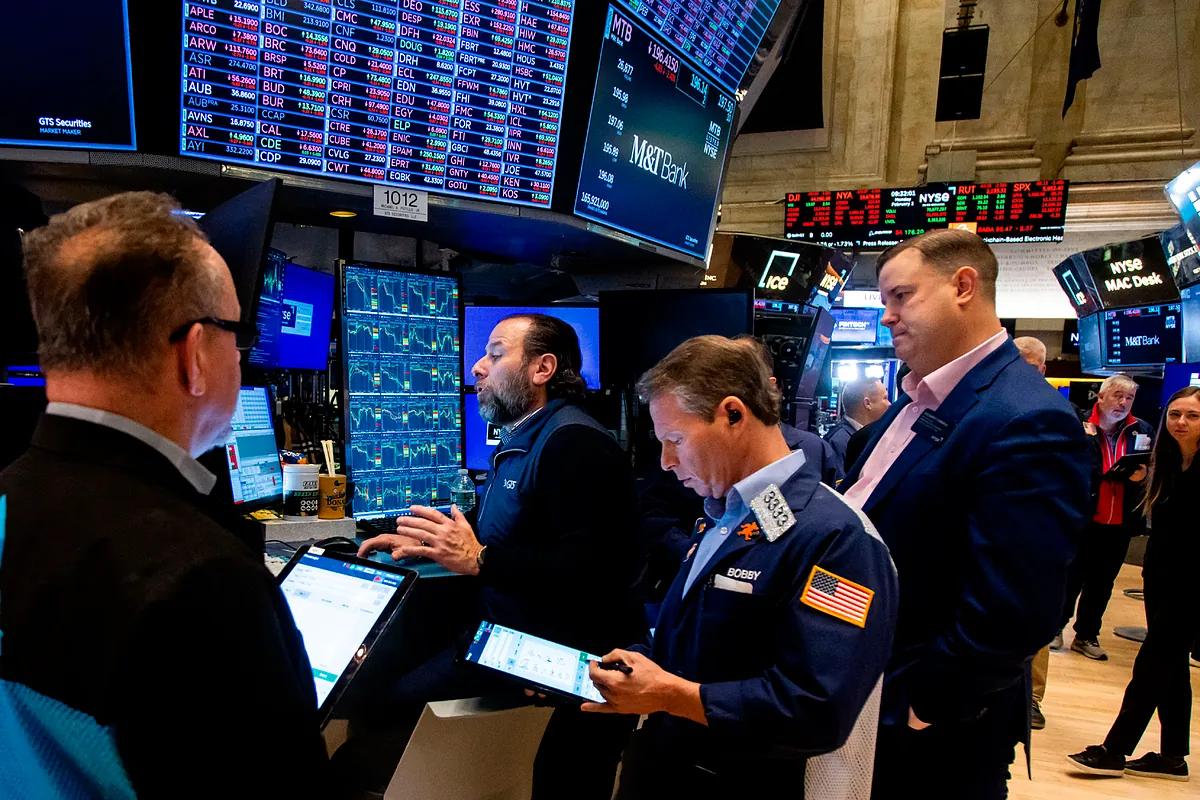
Beyond policy and corporate statements, Expansión described how investors translated the Venezuela shift into immediate buying across U.S. oil and related services.E
It said “Los inversores se han lanzado a comprar acciones de las principales petroleras estadounidenses” as they anticipated direct exploitation of Venezuelan crude, and it reported that Chevron’s shares “ha repuntado un 5,10%,” adding that the move corresponded to “a unos 16.000 millones de dólares” in market capitalization.
Expansión also reported ConocoPhillips’ advance at “2,59%,” translating into “3.090 millones de dólares” in capitalisation, and it said Exxon’s “revalorización del 2,21%” pushed its valuation by “11.400 millones de dólares” on the stock market.E
The same article extended the market reaction to oil services, reporting that Halliburton rose “7,84%,” Baker Hugues gained “+4,09%,” and Nabors Industries rose “+5,14%.”
It also tied the broader market context to U.S. indices, stating that the Dow Jones “ha cerrado en máximos históricos tras subir un 1,23% y finalizar el día en los 49.108 puntos,” while the S&P 500 rose “0,64% hasta los 6.902 puntos” and the Nasdaq ended at “23.395 puntos” after repumping “0,69%.”
In parallel, the Wall Street Journal’s Caracas scene described corporate emissaries meeting Delcy Rodriguez, reinforcing that the market narrative is matched by on-the-ground engagement.
Constraints, transparency, and next steps
While deals and stock moves signal momentum, the sources emphasize that Venezuela’s oil system still faces major constraints and that investors are pressing for clarity.
“electricity supply and massive investments in extraction equipment”
Le Monde reported that “electricity supply and massive investments in extraction equipment” remain difficulties, and it quoted Enrique Novoa calling for “a very large number of wells waiting to be maintained (repaired).”
DW added a transparency concern, with Ronald Balza telling DW that “it's tricky to gauge recent developments because the US has yet to provide transparent or regular payments for the oil Venezuela is delivering,” and it highlighted that “developing forecasts in terms of prices, employment and the allocation of public funds” is difficult under those conditions.
Politico described the White House’s approach as a staged process, saying memorandums of understanding “could open the door for additional supplies to be exported in the coming years” and that the trip would also focus on mining agreements tied to “existing mines” and “offtake agreements back to the U.S.”P
El Estímulo described the specific conditions U.S. executives asked for, including “cómo sería la estructura de los contratos con Pdvsa,” “cuáles serían los niveles de regalías,” and whether they could operate “sin riesgo de embargo de activos,” while also stating that Freeman saw “potencial de inversión” and called the conversations “constructivas.”
Energy Digital Magazine added that Chevron remains “the only company currently authorised to produce oil in Venezuela under US sanctions,” while other operators await approval to resume or initiate projects.